Contents
hide
- 01 Design Revolution: Three Styles for Different Users
- 02 Powertrain Revolution: Full Hybrid Lineup
- 03 Smart Cockpit: Shedding the “Outdated” Tag
- 04 Safety Upgrade: New Driving Assistance System
- 05 Global Pricing: Varied Strategies Across Markets
- 06 Market Prospects: Facing Fierce Competition
- 07 Buying Advice: How to Choose the Right Version
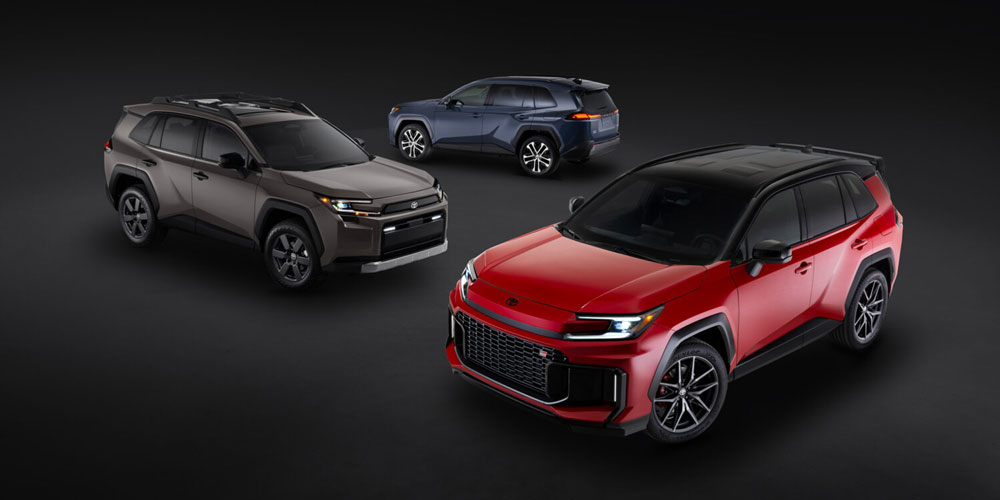
Toyota has officially launched the all-new 2026 Toyota RAV4 in North America. This significant launch marks the sixth generation of this best-selling model. For this generation, the company adopts a bold, comprehensive hybrid strategy. Consequently, Toyota equips the new Toyota RAV4 2026 with its fifth-generation hybrid system and a brand-new software platform. Additionally, it introduces, for the first time, special editions designed specifically for off-roading and sportiness.
As the best-selling SUV in the U.S. market, the RAV4 completely leaves the pure internal combustion engine era behind with the 2026 model year. Now, it offers only hybrid and plug-in hybrid versions. Remarkably, Toyota sets the starting price for the new 2026 Toyota RAV4 hybrid at $33,350 USD, which is $950 lower than the 2025 hybrid AWD version. Ultimately, this strategic move demonstrates Toyota’s strong commitment to popularizing hybrid technology.
01 Design Revolution: Three Styles for Different Users
Toyota thoroughly reinvented the design of the 2026 Toyota RAV4. Based on the TNGA-K platform, engineers developed the new vehicle, which now features optimized body dimensions and a more youthful exterior design.
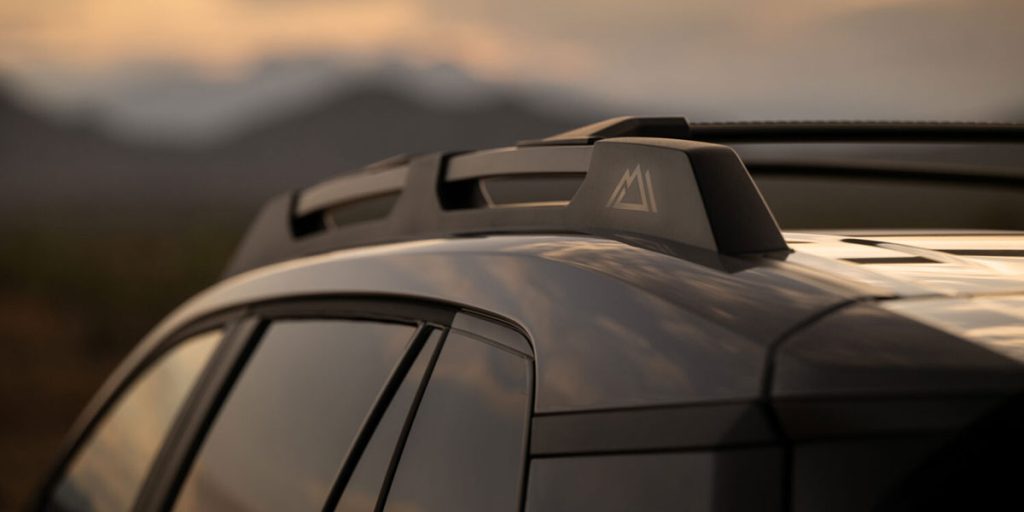
Specifically, the new RAV4 offers three distinct exterior design styles to cater to different user needs. The Core design style targets mainstream consumers with a more refined front fascia. Meanwhile, the company built the Adventure design style for outdoor enthusiasts, featuring practical configurations like all-terrain tires and a roof rack.
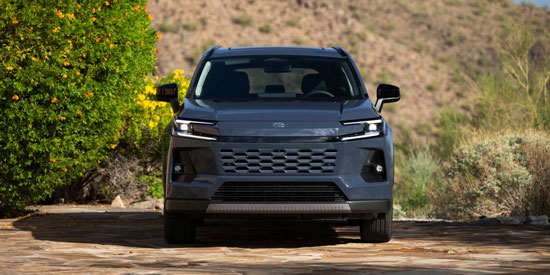
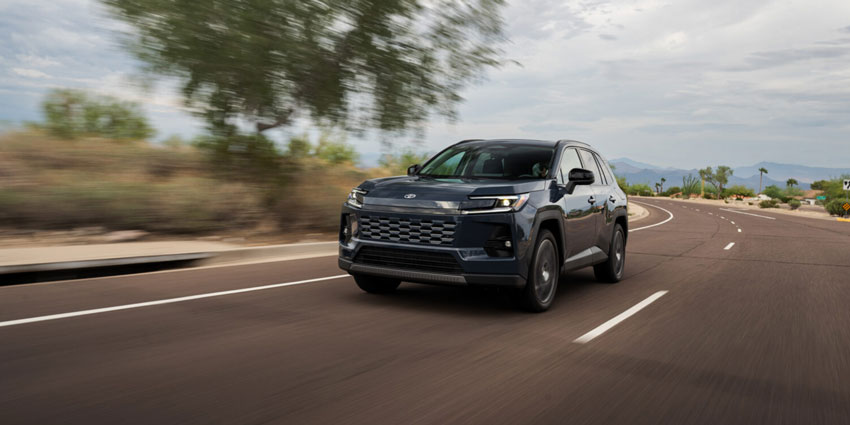
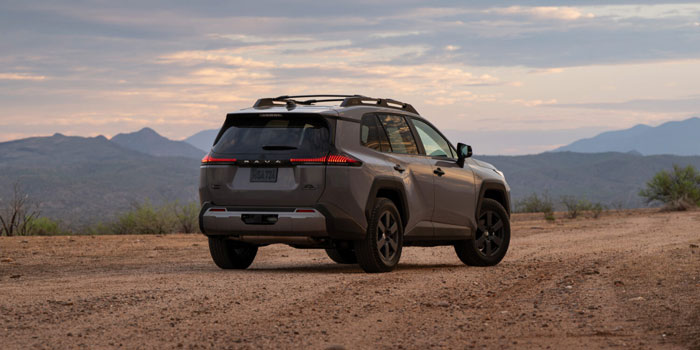
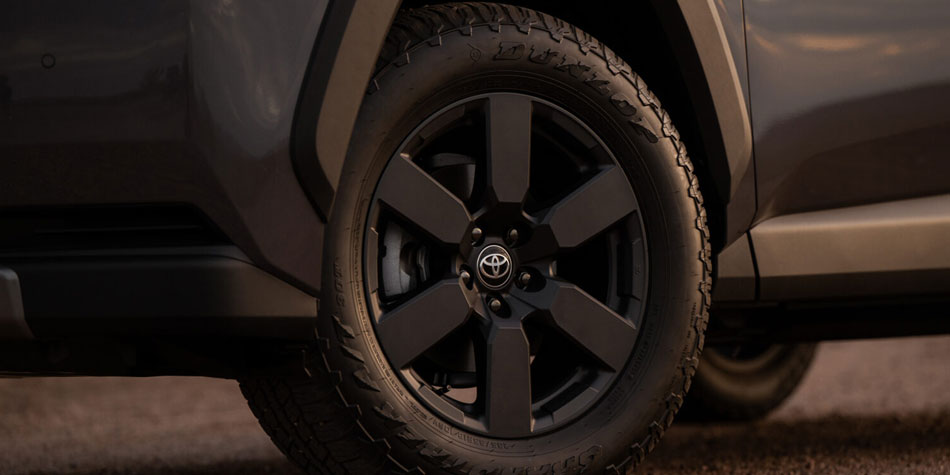
Notably, the first-ever GR Sport edition is the most eye-catching. As Toyota’s first performance-oriented RAV4, it offers significant improvements in both appearance and performance, even though it is not a full GR model.
For the front end of the Toyota RAV4 2026, Toyota designers made bold innovations. They adopted a so-called “Raptor-style” grille that is 22% larger than the current model. Furthermore, the headlight cluster features a C-shaped design with matrix lenses inside, a configuration that increases the low-beam illumination distance to 150 meters.
The side profile lines are more fluid, with a dual-character line running from the front fenders to the taillights, thereby creating rich light and shadow layers.
02 Powertrain Revolution: Full Hybrid Lineup
The most significant innovation of the 2026 Toyota RAV4 lies in its powertrain. Toyota decided to completely phase out pure gasoline engines, meaning it now offers only hybrid and plug-in hybrid versions. This decisive strategy makes the 2026 Toyota RAV4 hybrid the absolute mainstream in the market.
The new vehicle features an improved fifth-generation THS hybrid system. Here, engineers optimized the power control unit and battery pack, resulting in enhanced power output and efficiency.
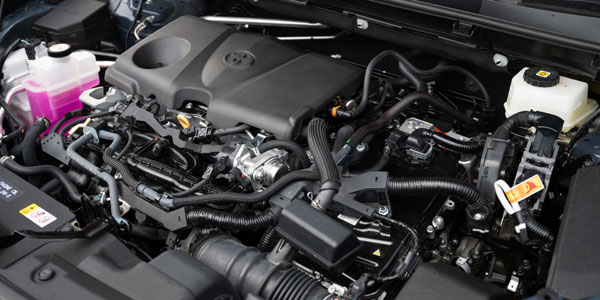
According to Toyota’s data, the 2026 Toyota RAV4 hybrid Front-Wheel Drive (FWD) version produces 226 horsepower, while the All-Wheel Drive (AWD) version produces 236 horsepower. This represents a respective increase of 23 hp and 17 hp over the current models.
For the plug-in hybrid version, it utilizes a more advanced sixth-generation plug-in hybrid unit. Its combined system power reaches 320 horsepower, and the pure electric range should reach 50 miles (approximately 81 km), thereby surpassing the current model’s 42 miles.
Finally, Toyota equips the RAV4 plug-in hybrid with a larger capacity battery pack, and certain variants also support DC fast charging.
03 Smart Cockpit: Shedding the “Outdated” Tag
The interior and technology of the 2026 Toyota RAV4 have made a qualitative leap, decisively moving past its previous “outdated” infotainment reputation. To achieve this, Toyota adopts a completely new smart cockpit design. As standard, a 10.5-inch central touchscreen comes with the vehicle, although buyers can upgrade to a 12.9-inch large screen.
The core innovation is the first-time adoption of Toyota’s new Arene software platform. Indeed, this marks a significant step in Toyota’s transition towards “software-defined vehicles.” The company built the new system on an automotive-grade Linux foundation and integrated AT&T 5G connectivity, which provides a smoother operational experience.
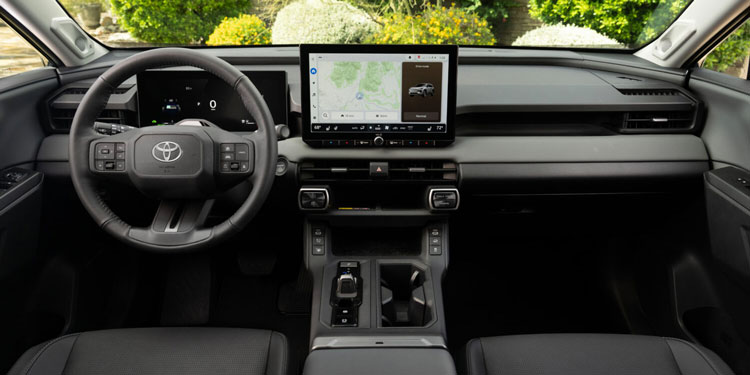
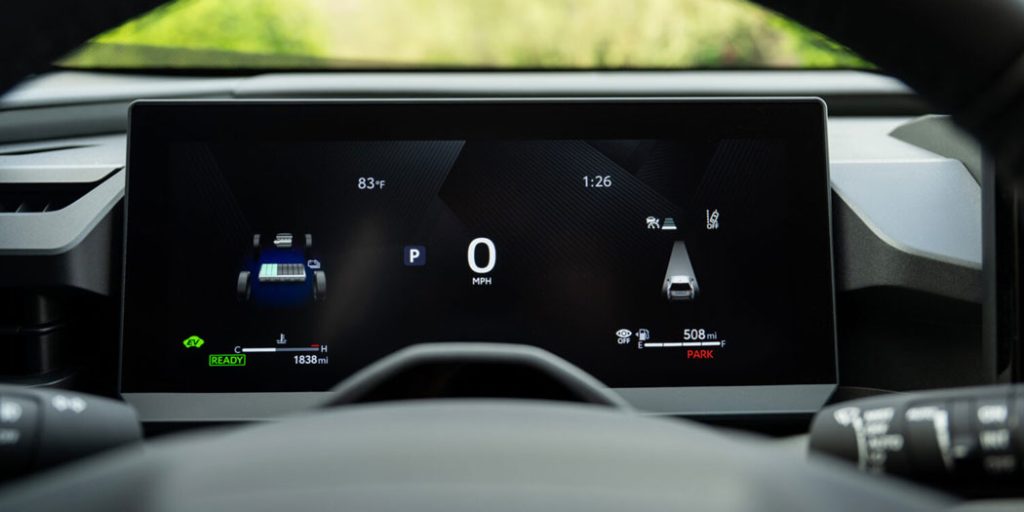
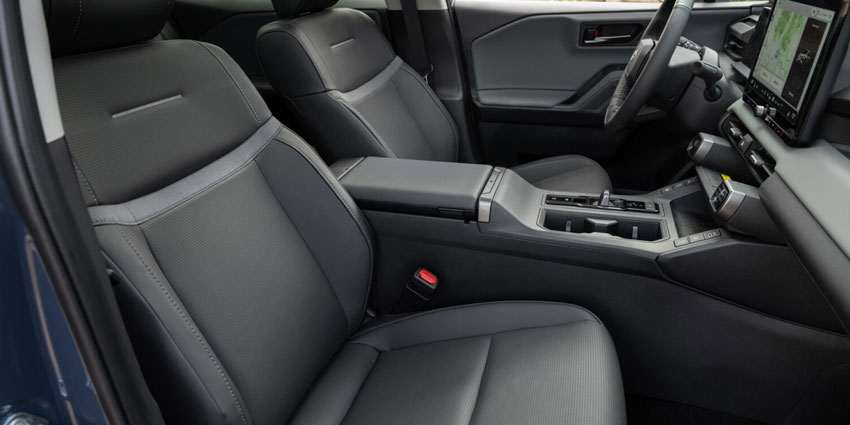
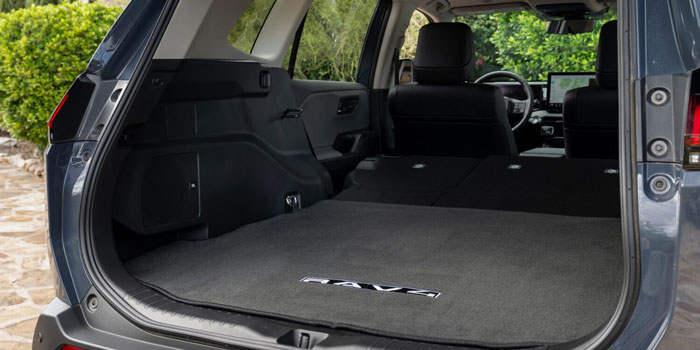
Moreover, the main screen supports fully customizable widget layouts. Users can arrange navigation, audio, and weather information cards as they would set up a smartphone home screen. A new “Quick Control Menu” sits in the upper right corner, allowing one-tap access to frequently used functions and eliminating the previous cumbersome operation of navigating through multiple layers.
The new AI voice assistant also no longer relies entirely on cloud connectivity. Therefore, even without a network signal, users can still activate it with “Hey, Toyota” to execute basic commands. Furthermore, the system supports a full-screen navigation map display on the digital instrument cluster for the first time, which enhances driving safety.
04 Safety Upgrade: New Driving Assistance System
The 2026 Toyota RAV4 also sees significant improvements in safety configurations. Notably, it becomes the first Toyota model equipped with the Safety Sense 4.0 suite, which Toyota upgraded in both hardware and detection capabilities.
For instance, the company fitted the new vehicle with more perception hardware. This suite includes a stereo camera whose recognition distance now reaches 180 meters, and millimeter-wave radar with coverage expanded to 270 degrees. Buyers can even equip top-tier variants with an optional lidar that has a detection range of up to 200 meters.
Toyota comprehensively upgraded the safety system functions as well. Consequently, the Full-Speed Range Dynamic Radar Cruise Control responds more swiftly, with its automatic stop-and-go response time in congested traffic now less than 0.8 seconds. Similarly, the Lane Tracing Assist system has a correction accuracy of ±5 cm and achieves a 98% success rate on highway curves.
It is particularly noteworthy that the Pre-Collision System can now recognize the trajectories of up to five vehicles ahead. By providing warnings 2 seconds in advance, it greatly improves active safety performance.
The 360-degree panoramic view monitor is also upgraded. It uses four 1080P cameras with a stitching error of less than 5 cm and supports 5 different viewing angles. The newly added “Transparent Hood” function can display obstacles under the vehicle in real-time during off-road driving, thereby improving passability in complex road conditions.
05 Global Pricing: Varied Strategies Across Markets
The 2026 Toyota RAV4 adopts differentiated pricing strategies across global markets. Below is a comparison of prices in major markets:
| Market Region | Starting Price (Local Currency) | Starting Price (Approx. USD) | Key Characteristics |
| United States | $33,350 USD | $33,350 | Entry price is $950 lower than the 2025 hybrid AWD version. |
| Italy | €45,200 | ~$49,000 | Full hybrid lineup, priced 5%-8% lower than the comparable Volkswagen Tiguan. |
| Australia | AU$45,990 | ~$30,000 | Includes new standard features like a digital driver’s display. |
| Middle East (GCC) | 115,000 – 125,000 AED (Gasoline version) | ~$31,300 – $34,000 | Wide price range, with hybrid versions priced higher. |
The U.S. market is the primary sales region for the Toyota RAV4. Here, the pricing strategy for the 2026 model year shows strong competitiveness. Specifically, the base hybrid LE FWD version starts at $33,350 USD, a price which includes the destination charge and is actually $950 lower than the 2025 hybrid AWD version.
In the European market, however, the Toyota RAV4 2026 adopts a different strategy. In Italy, for example, the new car starts at €45,200 (approximately 373,000 RMB), which is 5%-8% lower than the comparable Volkswagen Tiguan. Additionally, the AWD version costs €2,500 more than the FWD version, while the top GR Sport version is priced at €55,700.
06 Market Prospects: Facing Fierce Competition
As one of the world’s best-selling SUVs, the 2026 Toyota RAV4 faces increasingly fierce market competition. However, the new car shows significant improvements in hybrid technology, intelligent features, and design language. This enhanced product strength should help consolidate its leading position in the compact SUV market.
Compared to main competitors, the 2026 Toyota RAV4 shows advantages in several aspects. For example, its plug-in hybrid version’s pure electric range should reach 95 km (WLTC standards), exceeding the Honda CR-V PHEV’s 82 km and the Volkswagen Tiguan L PHEV’s 55 km.
Moreover, Toyota’s fifth-generation THS hybrid system also holds technical advantages, particularly leading in thermal efficiency and electric drive response speed.
Meanwhile, Toyota’s specific optimizations for the market inside China are worth mentioning. The version for this market has a wheelbase increased by 30 mm and rear knee room increased by 40 mm. Toyota also specially equipped it with heated/ventilated rear independent seats.
Nevertheless, in the Chinese market, the 2026 RAV4 will likely face intense competition from local new energy brands. Although Toyota has made significant strides in intelligence, it may still lag behind some Chinese new force brands, especially in terms of smart cockpit and advanced intelligent driving features.
07 Buying Advice: How to Choose the Right Version
For consumers considering purchasing the 2026 Toyota RAV4, here are some practical suggestions.
First, choose the powertrain based on your usage scenario. If you primarily commute in the city and have charging access, the plug-in hybrid version is an ideal choice because its 95 km pure electric range is sufficient for daily use. Conversely, for users in northern regions inside China or snowy areas, consider the three-motor hybrid version, as its electric AWD system significantly improves traction on slippery surfaces.
Second, pay close attention to configuration choices. Typically, the plug-in hybrid version’s “Technology Package” includes advanced configurations like lidar and AR-HUD. Therefore, if you have higher demands for intelligent driving, this optional package is worth considering.
For users who love outdoor activities, consider the Adventure Design category (called Rugged Design in North America). Its Woodland version comes with all-terrain tires and additional lighting, making it more suitable for off-road needs.
Regarding pricing, it is advisable to monitor the launch timing and promotional activities in various markets. Based on industry experience, discounts may appear after the new car has been on the market for a period.
It is especially important to note that the 2026 RAV4 no longer offers a pure gasoline version. This clearly marks Toyota’s firm resolve in its electrification transition. Consequently, consumers who still prefer traditional powertrains may need to consider other models or the used car market.
On the steering wheel of the top plug-in hybrid version, the GR badge reflects a subtle luster under the dashboard lighting. Simultaneously, on the infotainment screen, the Arene system seamlessly integrates real-time traffic data with personalized entertainment recommendations.
From the production line in Kentucky, USA, to showrooms in Italy, and from the Australian outback to city streets in Japan, this global strategic model heads to different markets. In doing so, Toyota shows unprecedented determination for electrification. Indeed, the company’s decisive move to eliminate pure gasoline versions directly responds to the urgent global demand for emissions reduction.
Ultimately, the new car’s pricing strategy cleverly balances technological upgrades with market acceptance. However, global consumers will decide its future, as they hold the steering wheels that determine if it can maintain a leading position in the electrification wave.
Looking for top-quality new or used cars? Trust DG Motors for fast, reliable service—or visit our Phnom Penh showroom today!