

Fluctuating global oil prices and advancements in electric vehicle technology lead more consumers to ask, “Is owning an electric car cheaper than a gasoline car?” This answer is not straightforward, as it depends heavily on your specific country, driving habits, and local policies.
From Norway to Cambodia, and from the United States to Japan, significant variations exist. Differences in electricity prices, fuel costs, government subsidies, and tax policies give electric vehicle economics distinct regional characteristics.
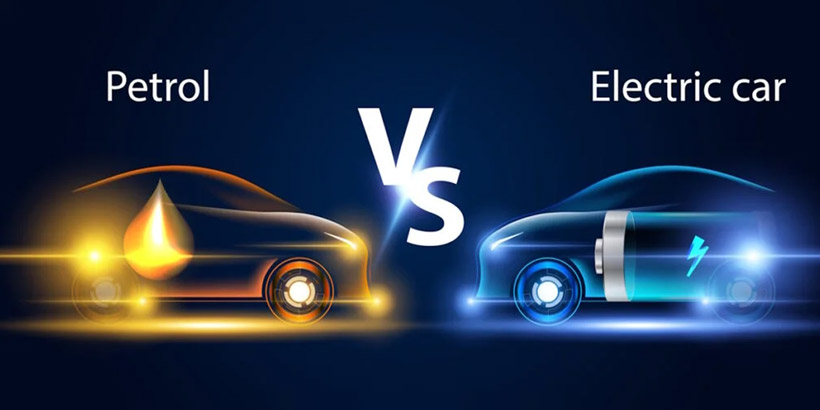
01 Global Electric Vehicle Trends
The global electric vehicle market is experiencing unprecedented growth. According to International Energy Agency data, global EV sales surpassed 10 million units in 2022. This marked a 55% increase from 2021.
Growth patterns vary across regions. In Norway, electric vehicles already account for nearly 80% of new car sales. Meanwhile, in emerging markets like Cambodia, adoption rates are still low but growing rapidly.
Global policies are also driving this shift. Major economies, including the United States, European Union member states, and China, have introduced EV purchase subsidies and tax reductions. These governments are also investing in charging infrastructure.
These policy changes directly affect electric vehicle ownership costs. Consequently, comparing EVs and gasoline cars across different countries becomes more complex.
02 Analysis of Upfront Purchase Costs
Consumers first consider the purchase price. In most markets, an electric vehicle’s sticker price remains higher than a comparable gasoline-powered car. For example, in the United States, a Tesla Model 3 starts around $40,000. A similar gasoline car, the Toyota Camry, starts at about $26,000.
However, government subsidies significantly alter this picture. In Germany, EV purchases can qualify for a subsidy of up to €6,750. In the United States, the Inflation Reduction Act offers a tax credit of up to $7,500.
The situation differs in some developing countries. In Cambodia, for instance, the selection of electric vehicles is relatively limited. Prices are higher, and government subsidies are fewer. This makes the upfront cost advantage of EVs less apparent compared to markets in Europe and America.
Interestingly, browsing lists for a car for sale in Cambodia reveals that used gasoline vehicles still dominate. This reflects differing market perceptions about cost structures.
03 Daily Use and Maintenance Costs
Electric vehicles hold their strongest advantage in daily operating costs. Electricity is generally cheaper than fuel. Moreover, EVs have simpler mechanical structures and require less maintenance.
Consider charging costs in the United States. Home charging averages about $0.04 per mile, while fast charging at public stations costs about $0.10 per mile. In contrast, fueling a gasoline car costs about $0.13 to $0.16 per mile.
The maintenance cost difference is even more pronounced. EVs do not require oil changes, spark plugs, or transmission fluid. Their brake systems also wear down more slowly due to regenerative braking technology. One study indicates EV maintenance costs are approximately 40% lower than for gasoline cars.
However, potential battery replacement costs can partially offset these savings. Modern EV batteries are designed to last longer than the vehicle itself in most cases. Still, an unexpected replacement may cost between $5,000 and $15,000, depending on the model and battery capacity.
04 Considerations for Long-Term Cost of Ownership
Analyzing the Total Cost of Ownership (TCO) shows electric vehicles are more economical in many scenarios. TCO includes the purchase price, fuel/electricity costs, maintenance, insurance, and depreciation.
A US Argonne National Laboratory study supports this. It shows that for a vehicle driven 150,000 miles, an EV’s TCO is lower than a gasoline car’s, even without government subsidies.
This advantage does not apply evenly everywhere. High electricity prices in countries like Italy and Germany shrink the EV cost advantage. Conversely, Norway enjoys a more pronounced benefit due to relatively low electricity prices and strong policy support.
Depreciation is another critical factor. Historically, EVs depreciated faster due to rapid battery technology updates. Now, as market acceptance increases and technology matures, this gap is narrowing. In some markets, specific EV models are approaching or even exceeding the resale value of comparable gasoline cars.
05 Regional Variations and Case Studies
Regional conditions heavily influence electric vehicle economics. In Norway, low electricity prices, generous subsidies, and free passage privileges make EVs a clearly more economical choice.
India presents a contrast. Although electricity is cheap there, higher EV prices and insufficient charging infrastructure make the TCO advantage less obvious.
In Southeast Asian countries like Cambodia, EV adoption faces unique challenges. Relatively higher electricity prices and limited charging infrastructure impact their economics. The scarcity of electric options in the car for sale in Cambodia market also plays a role.
Yet, this situation is changing. More automakers are entering the Southeast Asian market. Additionally, regional governments are committing to clean energy transportation. Therefore, the economics of EVs in these markets should gradually improve.
When strolling through Phnom Penh, Cambodia, you will notice more electric vehicles from brands like Hyundai and BYD weaving through traditional gasoline cars. These EVs represent technological progress and a quiet transformation of the global energy structure.
The wave of transportation electrification sweeps across the globe at varying speeds. It moves from EV-dominated streets in Oslo, Norway, to Tesla fleets in California, USA. It even reaches the gradually increasing electric options on websites listing a car for sale in Cambodia. This shift responds to environmental needs and represents a rational economic choice.
The true advantage of an electric vehicle extends beyond the cost of a single charge. It is reflected in the total balance sheet over a five- or ten-year ownership cycle. Continuous advancements in battery technology and the ongoing expansion of charging networks will likely tilt the economic comparison even more favorably towards electric vehicles.
Looking for top-quality new or used cars? Trust DG Motors for fast, reliable service—or visit our Phnom Penh showroom today!


