Contents
hide
- Mistake 1: Only Focusing on Appearance, Ignoring the Vehicle’s Essence
- Mistake 2: Only Budgeting for the Car Price, Ignoring “Car Ownership” Costs
- Mistake 3: Only Looking at Monthly Payments When Getting a Loan, Getting Trapped by “Zero Down Payment”
- Mistake 4: Not Test Driving, or Going Through the Motions of Test Driving
- Mistake 5: Buying the Top Trim = Car Knowledge? More Features, More Losses
- Mistake 6: Not Looking at the “Calendar” When Buying a Car, Wasting Money
- Mistake 7: Ignoring Used Cars, and Also Ignoring the “Physical Exam” of Used Cars
- A Summary Table: First-Time Car Buying Pitfall Avoidance Checklist
- Conclusion: Smart Buyers Avoid Pitfalls First, Then Make a Move
Buying your first car is undoubtedly one of the most exciting moments in life. However, this excitement can easily cloud your rational judgment. The good news is: these mistakes are entirely avoidable. This article will dissect the seven most common pitfalls for first-time car owners. At the same time, we will pay special attention to emerging markets in Southeast Asia. We will especially focus on the unique situation of cars for sale in Cambodia. This will provide you with a truly practical car-buying guide.
Mistake 1: Only Focusing on Appearance, Ignoring the Vehicle’s Essence
Typical Manifestation: You fall in love with a car’s appearance. Sleek body lines, cool headlights, a giant center console screen—it looks flawless. So you place an order immediately.


A vehicle is a tool, not an ornament. The automotive section of the Philippine Daily Inquirer clearly points out a fact. First-time car buyers often overlook the actual reliability, maintenance costs, and long-term value of a vehicle. In the United States, many young people are obsessed with the looks of a Jeep Wrangler or Ford Mustang. However, they never consider the fuel costs for daily commuting. In Phnom Penh, Cambodia, numerous young white-collar workers find used German luxury cars attractive. After purchase, they discover parts are hard to locate and repair costs are staggering.
Cambodia Perspective: Currently, in the market for cars for sale in Cambodia, second-hand Chinese brand vehicles are rapidly gaining ground. Local young consumers highly regard models from BYD, Chery, Geely, and others for their strong cost-effectiveness and durability. These cars may not be as “eye-catching” as European or American luxury cars, but they are easy to maintain, have ample parts availability, and offer economical fuel consumption. Do not pay for face value; spend on substance.
Pitfall Avoidance Strategy: List your real needs—how far do you drive daily? How many people do you carry? How large is your parking space? Let demand determine the model, not your eyes.
Mistake 2: Only Budgeting for the Car Price, Ignoring “Car Ownership” Costs
Typical Manifestation: You have a budget of $30,000, so you fixate on a car priced at $28,000, secretly glad you have “$2,000 left.” After picking up the car, you realize: insurance, taxes, fuel, maintenance… your wallet quickly empties.
Car purchase cost ≠ car usage cost. Many first-time car buyers cap their monthly payments within 15% of their income. However, they completely ignore ongoing expenses like fuel, insurance, maintenance, and depreciation.
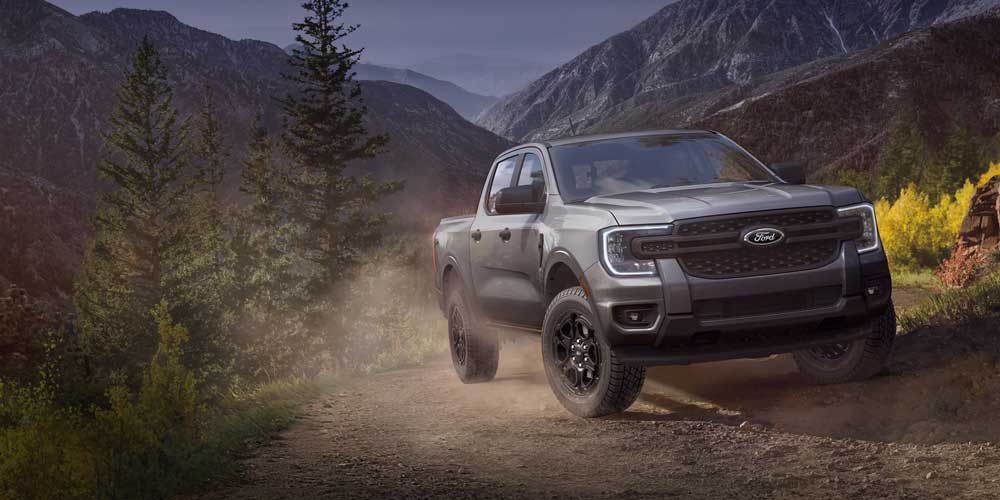
Real Case: In China, someone with a budget of 100,000 RMB forced themselves into an entry-level luxury car. As a result, a minor service cost 3,000 RMB, and replacing brake pads cost half a month’s salary. Eventually, the owner could only park the car downstairs, treating it like a prized possession seldom used. In Cambodia, the Ford Ranger pickup is widely popular, with an annual production capacity of 10,000 units at the Pursat province assembly plant. But consumers need to be clear-headed: new cars are nice, but ownership is not cheap.
Specific Price Reference:
- US Market: Toyota Corolla base model suggested retail price is about $22,000. Annual full coverage insurance premium is about $1,800-$2,200. This varies by model and driving record.
- Cambodia Market: Among cars for sale in Cambodia, annual insurance costs for used Japanese sedans (e.g., Toyota Camry) are about $800-$1,200. Annual maintenance costs for Chinese brand electric vehicles are typically 30%-40% lower than comparable fuel vehicles.
Pitfall Avoidance Strategy: Replace the “bare car price” mindset with a “full lifecycle cost” mindset. Before placing an order, ask the salesperson these three questions:
- “How much is basic maintenance? How often?”
- “Do I have to buy insurance here? How much is it outside?”
- “What is the approximate three-year residual value rate of this car?”
Mistake 3: Only Looking at Monthly Payments When Getting a Loan, Getting Trapped by “Zero Down Payment”
Typical Manifestation: The salesperson smiles and says: “Zero down payment! Monthly payments lower than your rent!” The salesperson’s words tempt you, and you sign the contract. Later, you realize—the interest rate is ridiculously high.
Zero down payment is one of the most profitable products in the automotive finance sector. Philippine automotive media explicitly warns: the interest rate for zero down payment schemes is usually 2-3 times that of normal car loans. These schemes also force-bundle high-priced insurance. In China, some consumers signed zero down payment contracts. They later found that a 100,000 RMB car ends up costing 150,000 RMB to repay. The annual interest rate can be as high as 15%.
Global Comparison:
- US Market: Buyers with good credit can get annual interest rates of 5%-7% through banks. A loan term of 36-48 months is optimal.
- Cambodia Market: With the upgrade of new car consumption, local banks are actively expanding car loan businesses. When purchasing a car for sale in Cambodia, be sure to compare interest rate quotes from more than three financial institutions. Some legitimate dealers cooperate with Chinese and American brands. They can provide compliant loan schemes with annual interest rates of 8%-12%.
Pitfall Avoidance Strategy: First negotiate the total price, then discuss monthly payments. You might stretch monthly payments to 72 months or 84 months to make them appear lower. However, the total interest you pay will increase significantly. Insist on a loan term of 36-48 months—this is the best balance between interest and monthly payments.
Mistake 4: Not Test Driving, or Going Through the Motions of Test Driving
Typical Manifestation: You drive around the dealership for 5 minutes on a monotonous road, never exceeding 40 km/h. The salesperson asks, “How is it?” You say, “It’s okay.” You sign the contract and pick up the car. The next day on the highway, the steering wheel feels as heavy as gym equipment. The seat is so hard it hurts your back. Wind noise is so loud you cannot hear the music.
Test driving is not a formality; it is the only opportunity for the “break-in” between the human and the car. Many new car buyers regret their purchase after driving off. The root cause is often perfunctory test driving. You cannot find subjective experience parameters—seat envelopment, blind spots, suspension softness or hardness, throttle response—in any review article. Only your body can verify them.
Cambodia Perspective: In Cambodia, traditional used car transactions have long relied on the “look at photos, listen to word of mouth” model. This makes it difficult for buyers to truly experience the vehicle’s condition when considering cars for sale in Cambodia.
Pitfall Avoidance Strategy: Test drive for at least 30 minutes. Cover urban areas, expressways, bumpy roads, and night conditions. Bring family members to sit in the back seat to feel the real riding experience. If you are a female driver but the test drive car only has seat memory settings for male drivers, clearly request adjustments—if it does not fit, it does not fit.
Mistake 5: Buying the Top Trim = Car Knowledge? More Features, More Losses
Typical Manifestation: You think, “Not buying the top trim means not buying the car at all.” Seat massage, automatic parking, rear seat entertainment screens, 20-inch wheels… you select them all. A year after picking up the car, you have used the seat massage twice and never used automatic parking. You have not turned on the rear screen yet.
Car features are a typical commodity with diminishing marginal utility. Spending the first $10,000 on the engine and transmission delivers extremely high utility. Spending the second $10,000 on leather seats and a sunroof provides acceptable utility. Spending the third $10,000 on electronic functions—whose names you cannot even remember—yields near-zero utility.
Real Data: A Chinese consumer report shows that users who blindly pursue top trims pay an average of 30,000-50,000 RMB more. They never use over 50% of the additional functions during the vehicle’s usage cycle. In the US market, consumers tend to prefer a “mid-trim + option package” strategy. They pay only for the functions they truly need.
Pitfall Avoidance Strategy: Distinguish between “needs” and “wants.” Cold regions need seat heating, but southern owners may not. Frequent night long-distance driving needs adaptive high beams, but purely urban commuters do not use them. Pay for functions with high usage frequency. Save money on functions that “sound cool.”
Mistake 6: Not Looking at the “Calendar” When Buying a Car, Wasting Money
Typical Manifestation: You rush into the dealership before the Spring Festival and find a car you like. The salesperson refuses to budge from the original price. You think, “I need the car for the New Year, so what if it is a bit expensive?” Your neighbor Lao Wang picked up the same model in June during the off-season. He paid a full $2,000 less than you.
Car sales have obvious seasonal cycles. June-August is the traditional off-season. During this time, car companies need to meet half-year sales targets. November-December is the year-end sales push. Then, dealers are willing to sell at a loss to meet manufacturer rebate targets. Conversely, demand peaks before the Spring Festival and in September during the back-to-school season. These peaks make buyers the weakest party in negotiations.
Cambodia Perspective: The market for cars for sale in Cambodia follows the same pattern. In 2025, Cambodia’s passenger car import value soared to $1.1 billion, a record high. The hotter the market, the calmer you need to be in timing your purchase. If you plan to buy American brand new cars (Ford, Chevrolet) or Chinese brand electric vehicles (BYD, Geely) in Cambodia, June or the end of December are often the windows with the most negotiation space.
Pitfall Avoidance Strategy: Use price comparison apps to set price drop alerts. Select 2-3 preferred models, input your target price, and let the system monitor for you. Remember: impulse is the friend of profit. Waiting is the friend of price.
Mistake 7: Ignoring Used Cars, and Also Ignoring the “Physical Exam” of Used Cars
Typical Manifestation: You firmly believe that “the used car market is too deep,” preferring to pay more for a new car. Or, you decide to buy a used car, but only look at a few photos online before paying a deposit. You do so without any third-party inspection.
It is an iron law that new cars depreciate 20% as soon as you drive them off the lot. In the US market, a three-year-old certified pre-owned (CPO) car is usually 30%-40% cheaper than a new car. It still enjoys the original manufacturer’s warranty. In Cambodia, used car prices are typically 30%-50% lower than new cars. This makes them highly attractive to first-time car buyers with limited budgets. Completely excluding used cars means giving up the option with the best cost performance.
But on the flip side: buying a used car without checking its condition is like throwing money into the sea. Accident cars, flood-damaged cars, odometer-tampered cars—sellers do not write these traps in their ad copy.
Cambodia Market Status: Japanese imported used cars have long dominated Cambodia. However, the market landscape is currently undergoing drastic changes. Chinese brand used cars, relying on good reputation and stable condition, are becoming a new force in the field of cars for sale in Cambodia. At the same time, the rise of formal trading platforms (such as Liberty Carz) has significantly enhanced the transparency of used car transactions.
Pitfall Avoidance Strategy: When buying a used car, you must do two things:
- Check maintenance records: Require the seller to provide complete dealership service records.
- Third-party inspection: Spend $80-$150 to have an independent technician conduct a comprehensive inspection of the vehicle’s condition. This money may be the highest return on investment in your car-buying process—it can save you thousands of dollars in future repair costs.
A Summary Table: First-Time Car Buying Pitfall Avoidance Checklist
| Error Type | Core Issue | Best Coping Strategy | Special Reminder for Cambodia Market |
| Only focusing on appearance | Ignoring reliability, maintenance costs | List real needs, distinguish “wants” from “needs” | Among cars for sale in Cambodia, Chinese brand used cars have outstanding cost performance. Do not “pay for face value.” |
| Incomplete budget | Missing insurance, fuel, depreciation | Calculate full lifecycle cost. Ask about maintenance prices. | Ford Ranger is locally assembled. New cars are popular. You need to calculate ownership costs in advance. |
| Loan impulse | Zero down payment/long term high interest trap | Negotiate total price first. Lock in 36-48 month term. | Compare bank interest rates. Legitimate dealers can offer 8%-12% loan schemes. |
| Perfunctory test drive | Not discovering seat, soundproofing, handling flaws | Test drive for at least 30 minutes. Cover various road conditions. | Choose platforms that support “online select + offline test” to avoid blind buying. |
| Excessive features | Paying for idle functions | Only select high-frequency practical features. Skip “gimmicky” configurations. | Cambodia has complex road conditions. SUV practicality outweighs mere interior upgrades. |
| Poor timing | Buying at peak season at high prices | Order in June off-season or December year-end push. | New car import value hits record high. You have more negotiation space in off-season. |
| Ignoring used cars/not inspecting | Missing cost performance, or buying problematic cars | Accept certified used cars. Must do third-party inspection. | Chinese brand used cars circulation volume is increasing. Liberty Carz and other platforms enhance transaction transparency. |
Conclusion: Smart Buyers Avoid Pitfalls First, Then Make a Move
Buying your first car is essentially an information war. Dealers negotiate prices every day, while you buy a car only once every 3-5 years. It is unfair, but that is reality.
Therefore, your advantage lies not in on-the-spot performance, but in advance preparation.
The market for cars for sale in Cambodia is undergoing historic changes. American brand new cars are lowering the entry barrier through local assembly. Chinese electric vehicles are seizing market share with technological advantages. Used car transactions are moving towards standardization and transparency. Opportunities have never been so abundant, and pitfalls have never been so hidden.
Looking for top-quality new or used cars? Trust DG Motors for fast, reliable service—or visit our Phnom Penh showroom today!