

Contents
hide
Since its launch in China in April 2025, the Nissan N7 has quickly become a key player in the 150,000-yuan pure electric sedan segment. The Dongfeng Nissan team led its development. This model has repeatedly topped sales charts for joint-venture electric vehicles in China. It also debuted overseas at the Tokyo Motor Show in October. This marks the first time Nissan has given a model researched, developed, and made in China a significant international role.
01 Model Positioning & Global Significance
The Nissan N7 is an “ultra-comfortable mid-to-large pure electric sedan.” The Chinese team carefully designed it for family users. This car uses Dongfeng Nissan’s new Tianyan architecture. It follows a “global standards + Chinese speed” R&D model.
Interestingly, the Chinese team handled product definition and local R&D and manufacturing for the N7. Nissan supported them with its global safety and quality systems.
This model represents a major shift for joint ventures from “trading market for technology” to “co-innovation.”
At the Tokyo Motor Show, the Nissan N7 attracted wide attention. Its frameless doors without triangular windows and a 0.208Cd drag coefficient kept Japanese visitors busy taking pictures.
More importantly, the N7 uses a battery management system that Dongfeng developed independently. It offers 22% better low-temperature range than Nissan’s classic Leaf.
02 Price Analysis & Global Comparison
The Nissan N7 starts at 119,900 – 149,900 yuan in China (about $16,500 – $20,600 USD). It comes in 5 variants.
By comparison, the Leapmotor C01 EV costs 139,800 – 158,800 yuan in China. The Changan Qiyuan A07 EV is priced at 119,900 – 159,900 yuan.
If the Nissan N7 launches officially in Cambodia, its price will likely be 15%-20% higher than in mainland China. Tariffs, transport costs, and local taxes mainly drive this increase.
Given the currently limited electric car options in Cambodia, the N7 could become a strong player in the local mid-to-high-end electric sedan segment.
Dongfeng Nissan also often offers purchase benefits for the N7. In June, it provided up to 8,000 yuan in trade-in subsidies. It also gave free upgrade packages for Pro and Max models, valued up to 19,888 yuan. These policies boost the model’s cost-effectiveness.
03 Design Highlights & Space
The Chinese team designed the Nissan N7’s exterior. It has a semi-enclosed front fascia and split through-type headlights. The body measures 4930x1895x1484mm, with a 2915mm wheelbase. This places it in the mid-to-large sedan category.
Its core strength is space use. An 83% “usable space ratio” leads its class. It achieves a feeling of “C-segment space in a B-segment footprint.”
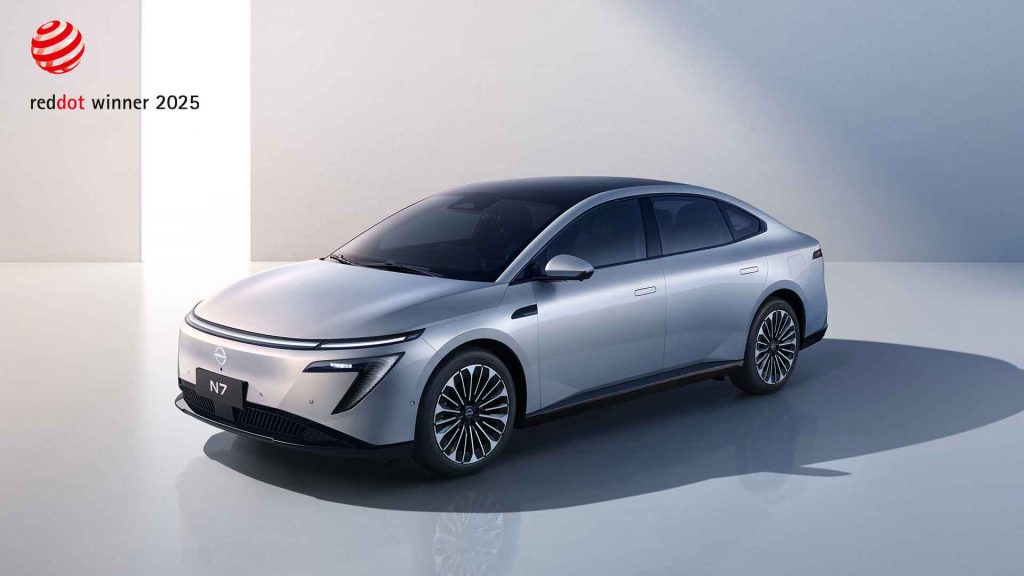
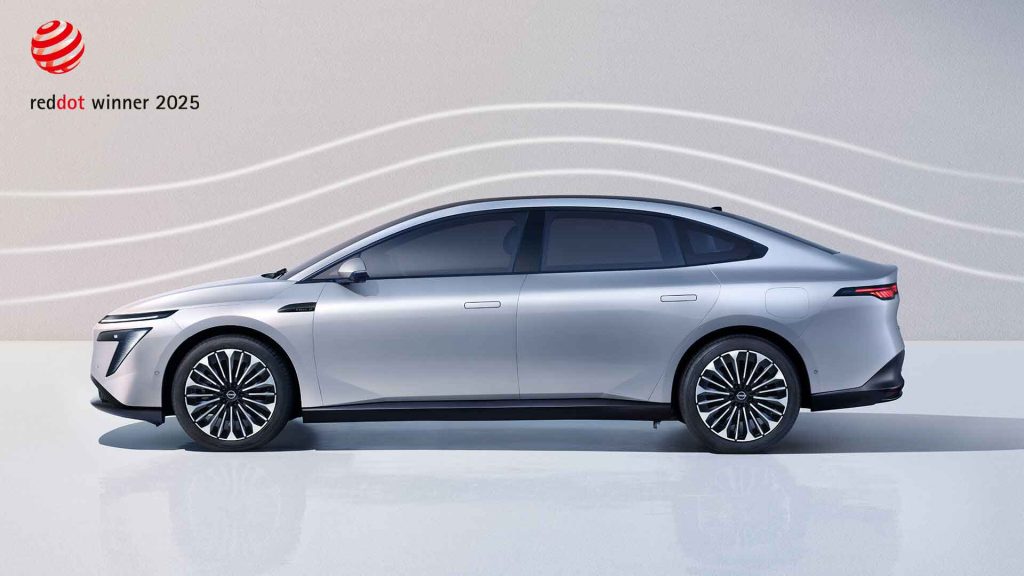

Practically, a passenger who is 180cm tall has about two fist-widths of headroom after adjusting the front seat. Rear legroom reaches around three fist-widths. The flat rear floor and 1895mm width prevent crowding, even with a full load.
For storage, the N7’s trunk offers 504 liters, including a 54-liter sunken area. With 12 interior storage spaces, it meets family trip needs.
04 Comfort & User-Friendly Features
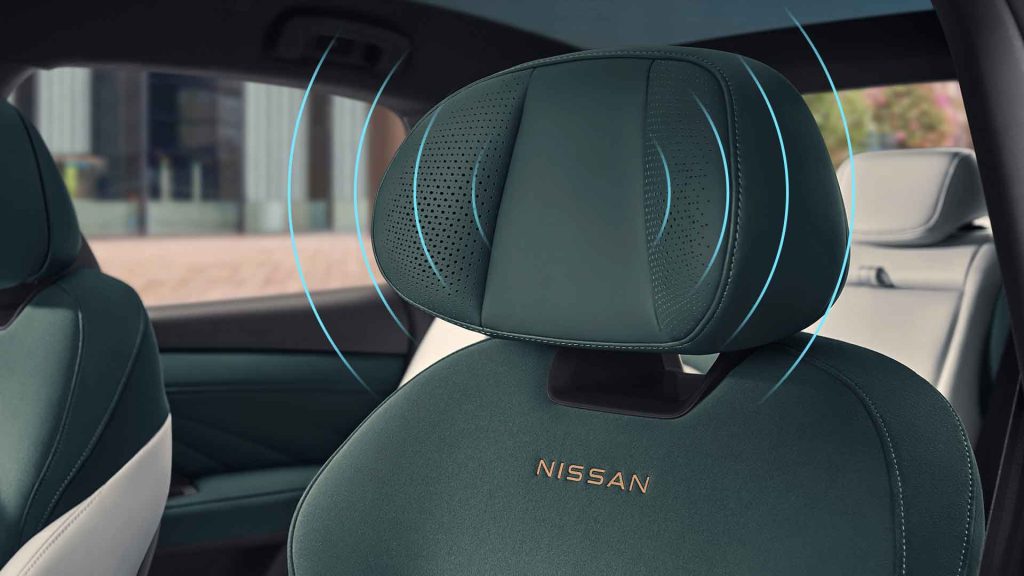
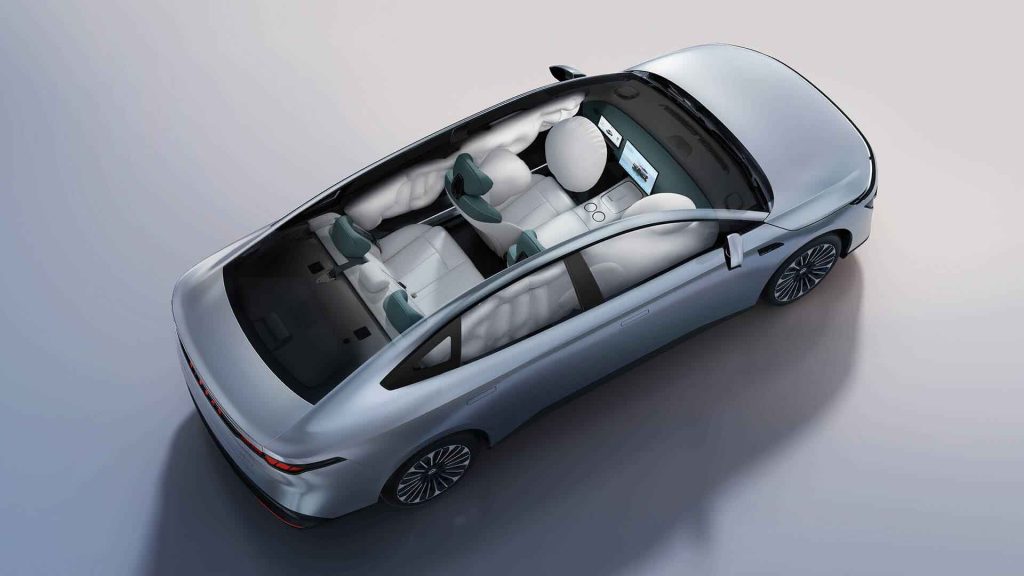
The Nissan N7 continues Nissan’s “sofa-like seat” tradition with smart upgrades. Its AI Zero-Pressure Cloud Cushion seats have 49 sensors and 19 airbags. They automatically sense a passenger’s body shape and adjust support.
The seat foam density is 75 kg/m³, among the highest in the industry.
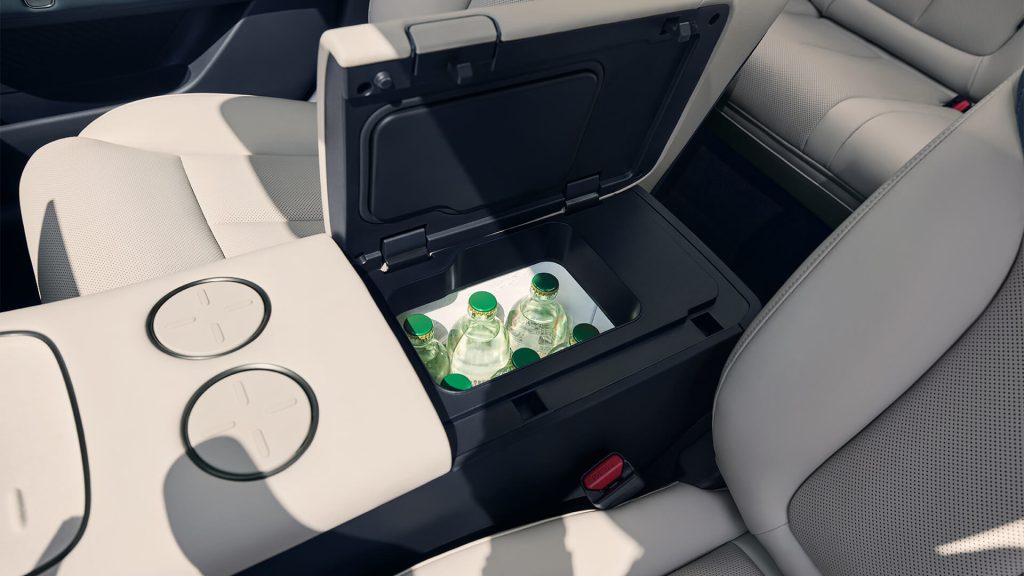
The car also includes a 5.8-liter intelligent cooling/warming box. It uses compressor-based cooling. Users can set temperatures from -6 to 10°C for cooling and 35 to 55°C for heating. This helps families with infants control breast milk storage temperature precisely.
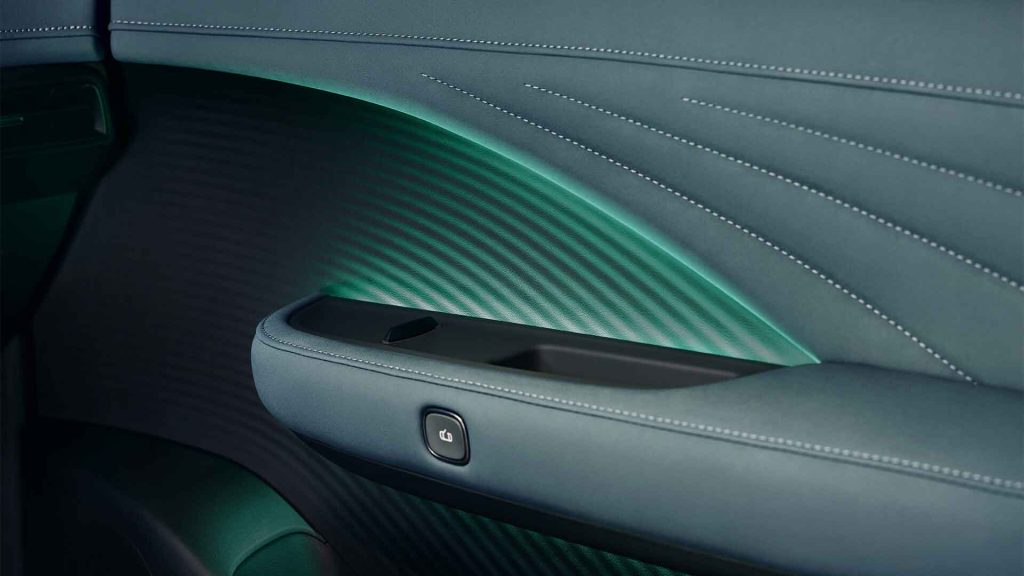
The 256-color light waterfall ambient lighting changes with the music. It acts as a “light and shadow toy” to calm children on long trips.
Additionally, the 4-square-meter one-piece panoramic glass roof blocks heat and UV light. The 12-speaker 910W audio system, with 2 retractable speakers, improves the driving and riding experience.
05 Smart Tech & Motion Sickness Mitigation
The Nissan N7’s intelligent cockpit uses the NISSAN OS system on a 15.6-inch 2.5K ultra-clear touchscreen. The Max variant has the Qualcomm Snapdragon 8295P chip for smooth operation.
The AI voice assistant “Xiao Ni” uses iFlytek’s Spark and DeepSeek-R1 large language models. It supports four-zone recognition and continuous multi-command input.
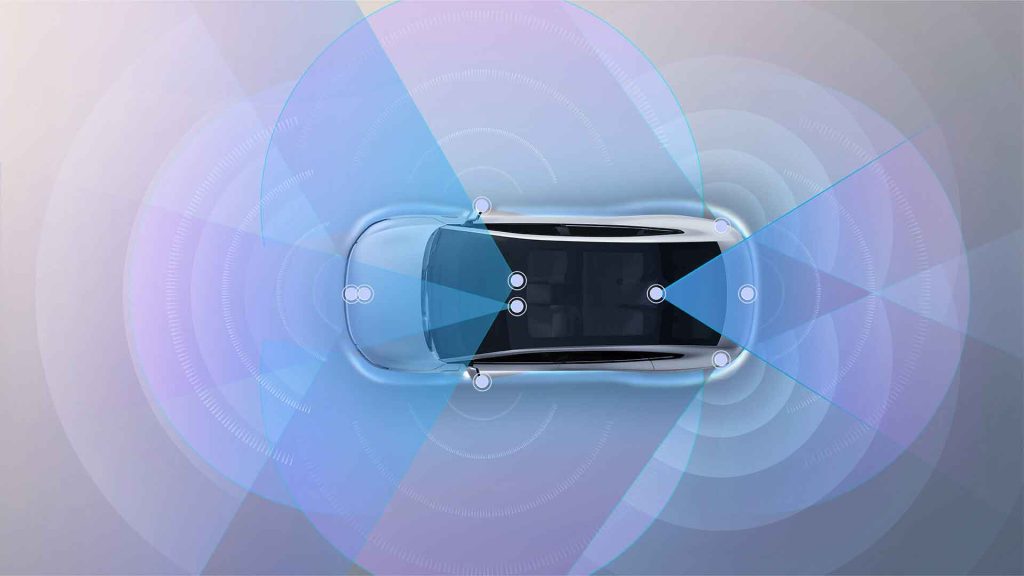
For intelligent driving, N7 partnered with Momenta to create the ProPILOT combined driving assistance system. It uses the NVIDIA DRIVE Orin X chip. The system enables Highway Navi-assist NOA, Urban Memory Navi-assist NOA, and all-scenario parking.
The omnipresent intelligent motion sickness mitigation is an N7 highlight. It optimizes kinetic energy recovery, improves chassis vibration absorption, and even uses specific scents to reduce passenger motion sickness.
This design helps elderly people and children who are sensitive to EV acceleration and braking.
06 Powertrain & Performance
The Nissan N7 uses a front-mounted single motor. It offers two power versions: 160kW (218 hp) and 200kW (272 hp). The lower power version accelerates from 0-100 km/h in 8.5 seconds; the higher power version does it in 6.9 seconds.
The car pairs with two LFP battery packs: 58 kWh and 73 kWh. These provide CLTC ranges of 510 km and 625 km, respectively.
For charging, the N7 supports 3C fast charging. The battery goes from 30% to 80% in 14 minutes, and from 10% to 80% in 19 minutes. However, it uses 400V fast-charging, not the newer 800V platform.
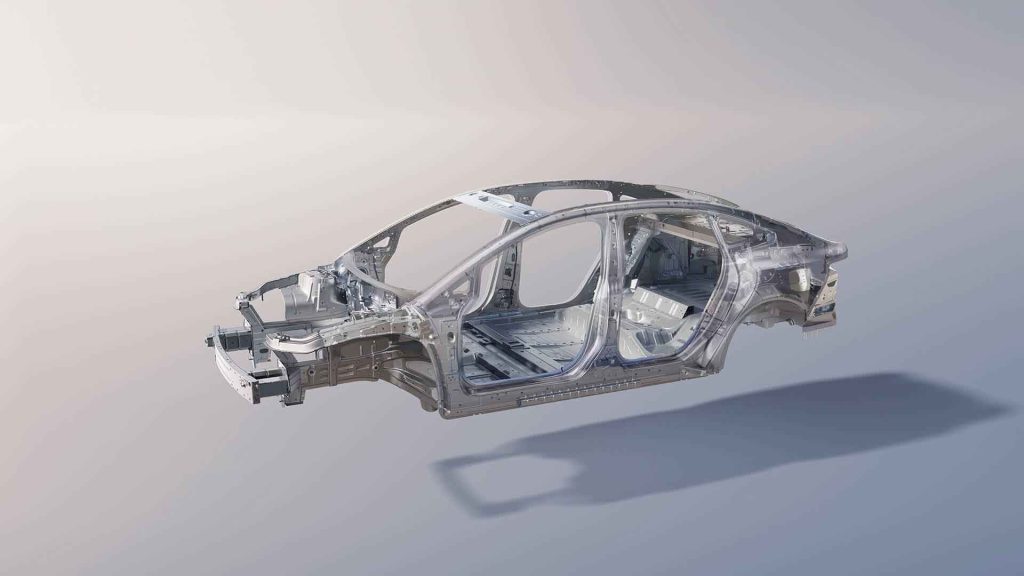
Nissan gave the N7 the industry’s first four-needle multi-cell non-thermal runaway ultra-safe battery. It passed 146 high-standard battery safety tests.
The battery also meets all requirements of the new 2026 Chinese national standard. This includes new rules for thermal diffusion, bottom impact, and post-fast-charge cycle safety.
07 Market Performance & User Feedback
The Nissan N7’s performance in China is notable. Sales grew steadily after launch: 665 units in April, 3,034 in May, 6,189 in June, 7,645 in July, and 10,148 in August.
The August delivery figure, exceeding 10,000 units, let it repeatedly claim the joint-venture pure electric sales crown.
However, September sales fell sharply to 6,410 units, showing intense market competition. Some user-reported issues deserve attention.
On CheZhi, complaints about the Nissan N7 have surpassed 130. They involve sales service disputes, infotainment system freezes/black screens, and abnormal motor noises, among other Nissan car issues.
The official response speed has not fully matched the problem emergence. Only 79 of 1,189 complaints are resolved. This is an area needing urgent improvement for a global model.
08 Global Market Prospects & Buying Advice
For global consumers, especially users in Cambodia, the Nissan N7 is a new choice. It blends the cost benefits of the Chinese supply chain with Nissan’s quality assurance.
Its Tokyo Motor Show appearance demonstrated the technical strength of “Intelligent Manufacturing in China” in the new energy vehicle sector.
If you want a 150,000-yuan family pure electric sedan, the Nissan N7 has clear advantages in space, comfort, and motion sickness reduction. Its lifetime warranty on three key electric components also addresses user concerns.
Before purchasing, note that new models often have minor issues. We recommend closely watching the official progress on fixing reported problems.
In emerging markets like Cambodia, charging infrastructure and after-sales service networks also need consideration.
The Nissan N7 shows a new path for joint venture brands in new energy—Chinese R&D leadership, blending global quality with Chinese smart technology.
As the N7 enters global markets like Cambodia, it could change how consumers in these regions view joint-venture electric cars. It may become a bridge linking “Intelligent Manufacturing in China” with global consumers.
Looking for top-quality new or used cars? Trust DG Motors for fast, reliable service—or visit our Phnom Penh showroom today!


