Contents
hide
- The Essence of Tariffs: An “Entry Ticket” to the Market
- The U.S. Market: Price Restructuring Under High Tariffs
- The European Market: Shifting from Tariffs to “Price Undertakings”
- Other Regions Globally: A Diverse Spectrum of Tariff Rates
- The Chinese Market: Transition from Protection to Competition
- Conclusion: The Global Game Behind the Price Tag
Imagine you’ve finally found the imported car you’ve been dreaming of for years. But when you’re ready to place the order, you discover the final price is thousands or even tens of thousands of dollars higher than the official suggested price. This extra sum often isn’t dealer markup; it’s the work of import tariffs hidden deep within the supply chain. From the 25% import tax imposed by the United States to the EU’s anti-subsidy investigations targeting Chinese electric vehicles, the global tariff map is undergoing dramatic shifts. For consumers worldwide, these policies ultimately boil down to one simple question: How much more will I have to pay?
The Essence of Tariffs: An “Entry Ticket” to the Market
An import tariff is a tax levied by a country’s government on foreign products entering its market. It acts like a threshold, directly inflating the landed cost of imported goods. A car manufactured in Germany, costing 50,000 euros, would see its tariff cost alone skyrocket by 12,500 euros when entering the U.S. market if faced with a 25% tariff. This cost doesn’t just disappear—where does it ultimately go?
The U.S. Market: Price Restructuring Under High Tariffs
The United States is one of the world’s largest automotive markets, and its tariff policies directly influence global car pricing. Currently, the U.S. tariff rates on imported passenger vehicles vary by country of origin, but recent policies show a general upward trend.
According to an analysis by the Yale Budget Lab, if the U.S. implements a 25% tariff on automobiles, it would cause the average price of new cars to rise by 13.5%. Based on the average new car price in the U.S. market of approximately $48,000 in the third quarter of 2024, this means consumers would pay about $6,400 more per vehicle. JPMorgan Chase’s estimates are even more specific: in the first year of tariff implementation, the cost per vehicle would increase by roughly $2,580 (5.8% of the average retail price), and by the third year, this figure would climb to $3,258.
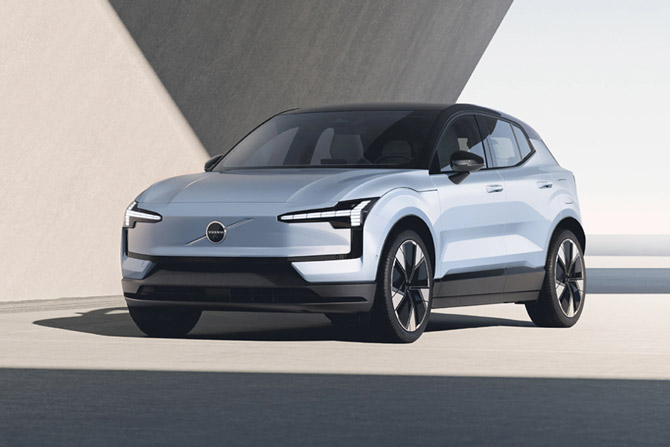
Who bears this huge cost? Analyses indicate that automakers and consumers will share the bill. For example, facing cost pressures, Porsche has adjusted its suggested retail prices in the U.S. market by 2.3% to 3.6%, depending on the model; BMW has also implemented price increases of 3-4% for models shipped from Mexico to the U.S. This poses an extremely high barrier for the plans of Chinese cars for sale in the U.S. market, as they actively expand global business. Due to U.S. tariffs on Chinese cars once reaching as high as 27.5%, and even the imposition of over 100% in punitive tariffs specifically on electric vehicles on top of that, the cost-effectiveness of direct Chinese brand exports to the U.S. is extremely low. This has forced brands like Volvo (under China’s Geely) to shift production of its EX30 model from China to Belgium to avoid heavy taxes, yet its starting price in the U.S. market was still forced up from the originally planned $35,000 to $46,195.
The European Market: Shifting from Tariffs to “Price Undertakings”
Compared to the “hard tariff barrier” of the U.S., the EU’s strategy resembles a more nuanced game. In 2024, the EU planned to impose countervailing duties ranging from 7.8% to 35.3% on Chinese-made electric vehicles. Stacked on top of the existing 10% tariff, some models faced a combined tariff rate as high as 48.1%.
However, there are no winners in a trade war. The high taxes quickly led to a sharp drop in Chinese exports to Europe. By 2025, both sides reached a new solution through negotiation. According to the “Electric Vehicle Trade Framework Agreement” released by the European Commission, the original punitive countervailing duties were replaced by a “minimum import price” mechanism. The agreement stipulates that the price of electric vehicles exported from China to the EU must not fall below 28,000 euros per vehicle.
This mechanism profoundly changes the game. For consumers, it means they are less likely to buy extremely cheap Chinese cars for sale in the European market; the price floor for entry-level electric vehicles is locked in. But it also leaves room for higher-value models. For instance, Chinese-branded electric vehicles equipped with advanced smart driving features and luxurious interiors can still be sold in Europe with reasonable profits. UBS analysis points out that this trend of “reciprocal tariff reduction” is actually beneficial for the industry, as it ensures reasonable profit margins and avoids endless price wars.
Other Regions Globally: A Diverse Spectrum of Tariff Rates
Globally, automotive tariffs are not a monolith.
- Canada: Adopts a quota system. According to the latest policy, Canada grants China an annual import quota of 49,000 electric vehicles. Within the quota, only a 6.1% most-favored-nation tariff applies, while anything beyond faces a 100% surtax.
- Southeast Asia (e.g., Thailand): Takes a welcoming stance. Thailand actively attracts Chinese automakers to build factories by reducing tariffs and offering investment incentives. Here, Chinese cars for sale often benefit from tax breaks rather than facing barriers.
- South America (e.g., Brazil): Is more pragmatic. Although Brazil imposes anti-dumping duties on some Chinese products (like tires, ranging from $1.25 to $1.77 per kilogram), its policies on complete vehicle imports are relatively stable.
- Russia: The market experienced a vacuum after Western brands withdrew, which Chinese automakers quickly filled. However, with a sharp increase in recycling fees by 70%-85% and tariffs raised to 20%-38%, customs clearance costs have surged, and final retail prices have risen accordingly.
The Chinese Market: Transition from Protection to Competition
Turning the perspective back to China itself. China currently imposes a 15% tariff on imported passenger vehicles (reduced from 25% in 2018). Against the backdrop where electric vehicles occupy half of the domestic market and Chinese brands hold a market share as high as 70%, UBS believes that China’s auto industry is now competitive enough and has room to further reduce import tariffs. If China lowers import tariffs, it would not only benefit luxury brands like BMW and Mercedes-Benz sold in the Chinese market but also stimulate domestic consumption, providing a buffer for dealers who have faced pressure on new car sales profits for many years.
Conclusion: The Global Game Behind the Price Tag
The next time you look at the price tag of an imported car, you’re not just seeing the cost of steel, rubber, and chips. You’re looking at a complex web of taxes woven from geopolitics, industrial policy, and trade negotiations.
- In the U.S., a 25% tariff means paying thousands more per vehicle, with consumers footing the bill for the “local manufacturing” vision through higher monthly payments.
- In Europe, the “minimum price commitment” sets a floor of 28,000 euros, maintaining market order but also raising the entry barrier.
- In the Global South, flexible tariff policies are reshaping the new landscape of the automotive industry.
For automakers, whether it’s circumventing tariffs through localized production in places like Mexico or Hungary, absorbing high tariff costs by enhancing product value, or flexibly adjusting the mix of Chinese cars for sale in different markets, dealing with tariffs has become a mandatory lesson in going global.
Tariffs—this Sword of Damocles hanging over the global automotive industry—always ultimately lands precisely on the consumer’s bill. In this fragmented era of globalization, understanding the tariffs in your country or region means understanding exactly where that extra money you paid for your beloved car actually went.
Looking for top-quality new or used cars? Trust DG Motors for fast, reliable service—or visit our Phnom Penh showroom today!