

From the US to China and across Southeast Asia, the 2025 Kia K5 has a global starting price near $10,500. In contrast, the Toyota Camry ranges from $28,400 in the US to $29,922 in the Middle East.
01 Global Price Differences
Pricing strategies for these mid-size sedans vary significantly by market. Buyers should first compare local price competitiveness.
Listed on Alibaba International at around $10,500 (for 1–9 units), the Kia K5 drops to $10,000 for bulk orders of 10 or more.
In China, its official starting price is 115,800 RMB (approx. $16,000), though some regional dealers offer it from 139,800 RMB.
The Toyota Camry adopts a more complex pricing approach. It starts at $28,400 in the US. In China, the new Camry begins at 179,800 RMB (about $24,800)—noticeably lower than its US price.
In Southeast Asia, including Cambodia, both models are usually imported. Their prices are influenced by tariffs and shipping costs.
02 Exterior Design Language
Exterior styling differs sharply, appealing to distinct aesthetic tastes and reflecting each model’s market positioning.
With a coupe-like silhouette, the 2025 Kia K5 measures 4980 mm long, 1860 mm wide, and 1445 mm high, on a 2900 mm wheelbase.
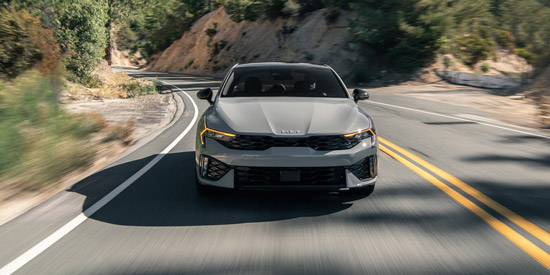
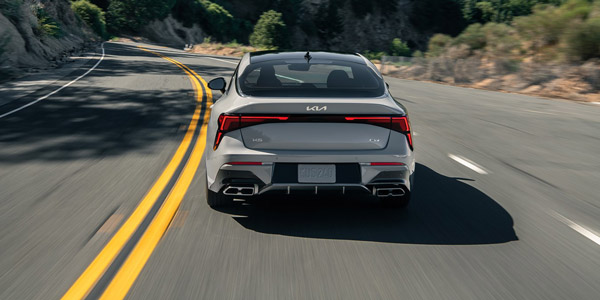
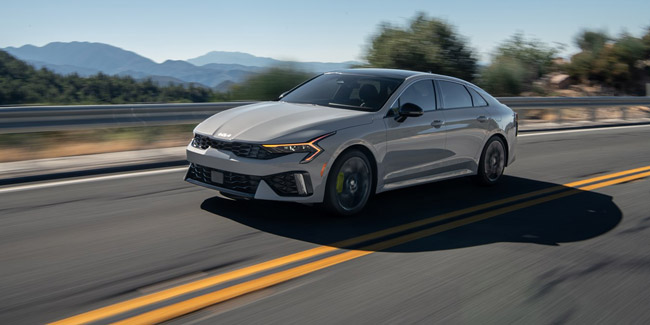
Its front features the signature Tiger Nose grille, blending black mesh into LED headlights. Lightning-shaped daytime running lights boost recognition, while chrome window trim adds sophistication.
The all-new Toyota Camry comes in standard, sport, and hybrid styles, keeping its iconic X-themed front fascia.
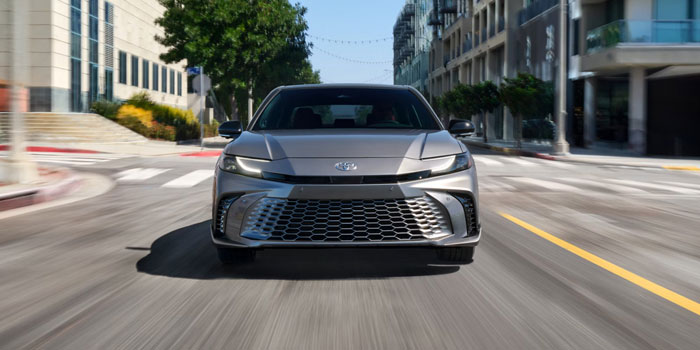
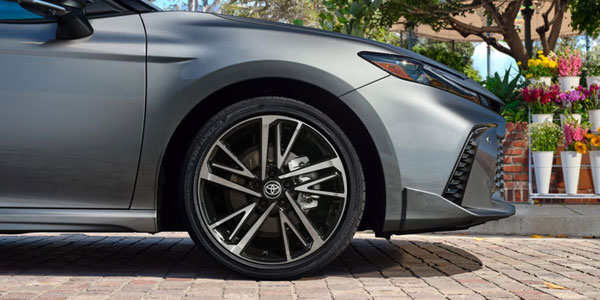
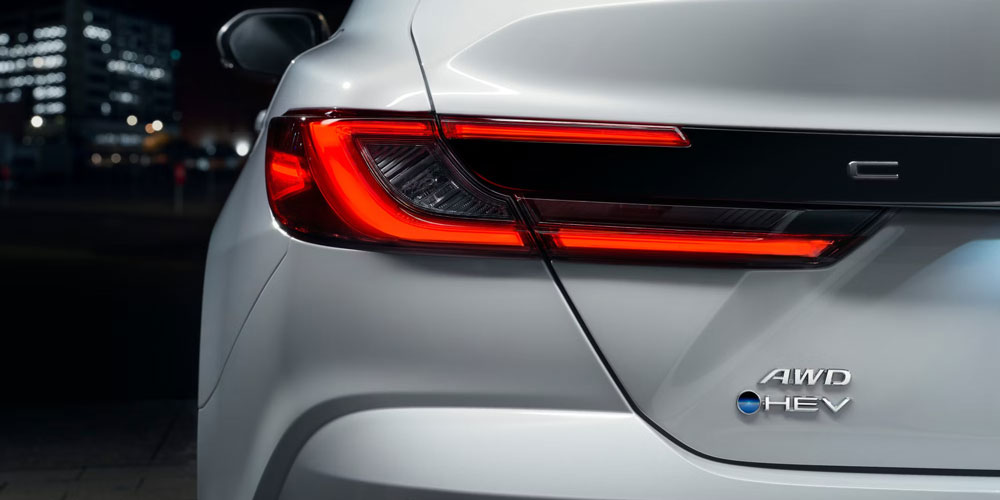
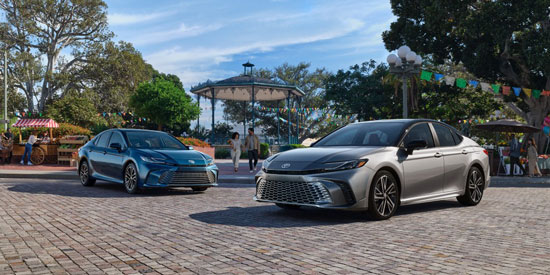
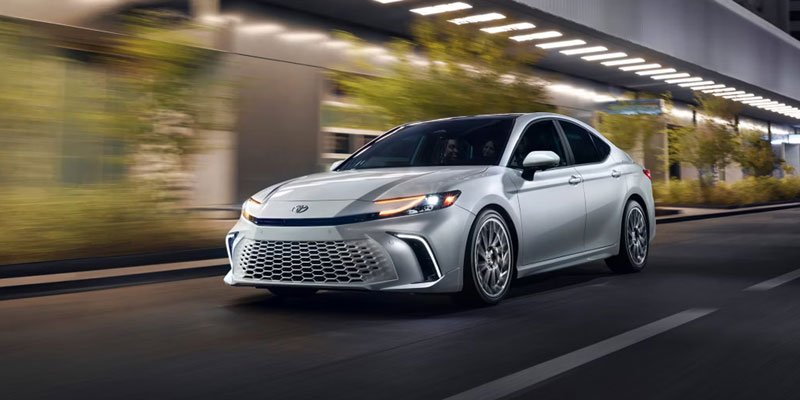
Dimensions are 4915 mm long, 1840 mm wide, and 1455 mm high, with a 2825 mm wheelbase that improves knee room over the prior generation.
03 Interior and Technology Features
Inside, each model follows a different philosophy in cabin design and technology, affecting both driving experience and comfort.
The K5 uses a driver-oriented dashboard for intuitive control. It includes an electronic rotary gear selector and a leather-wrapped steering wheel.
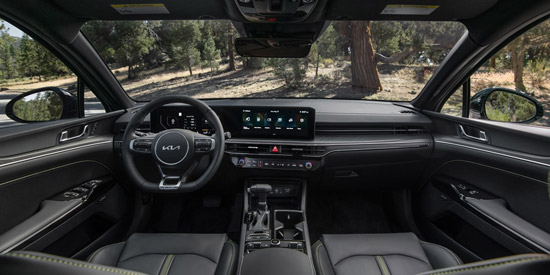
Base versions have a 7-inch digital cluster and 12.3-inch touchscreen, while higher trims upgrade to a 12.3-inch digital cluster paired with a 12.3-inch central display.
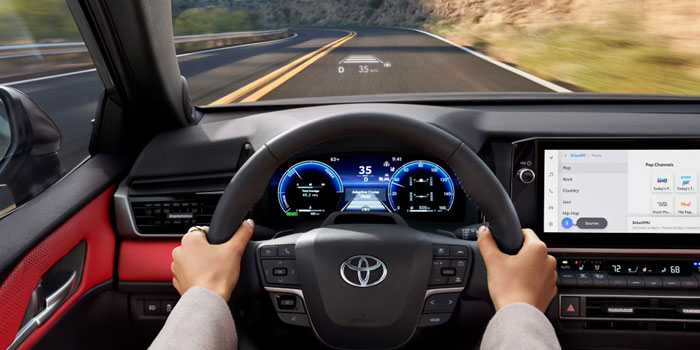
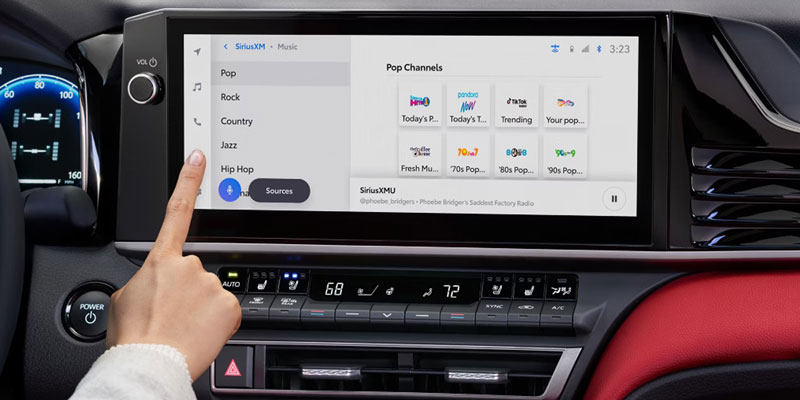
The new Camry features a wraparound cockpit with a floating touchscreen and full digital instruments, running Toyota’s latest smart connectivity system.
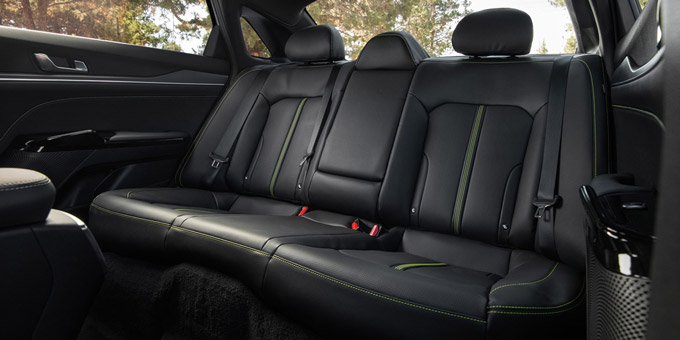
Higher trims add a panoramic sunroof. Rear seats offer extended cushions, 15% thicker padding, and optimized backrest angles.
04 Performance and Powertrain Comparison
Powertrain differences define their driving character. Buyers can choose based on whether they prioritize efficiency or performance.
The 2025 Kia K5 offers two engines: a 1.5T producing 125 kW (170 hp) with a 7-speed dry dual-clutch, and a 2.0T generating 176 kW (240 hp) mated to an 8-speed automatic.
The Toyota Camry provides a 2.0L naturally aspirated engine and a 2.5L hybrid system. The 2.0L delivers 131 kW with a Direct Shift-CVT, while the 2.5L hybrid produces a combined 160 kW via an E-CVT.
This hybrid uses the latest THS II system, achieving just 4.58 L/100 km WLTC fuel consumption on 92-octane gasoline.
05 Safety and Driver-Assistance Features
Safety is a key priority for mid-size sedan buyers. Both models emphasize protection, though their approaches vary.
Toyota Camry comes standard with the Toyota Safety Sense suite, including a Pre-Collision System (PCS) and Dynamic Radar Cruise Control (DRCC).
In AEB testing, it avoids collisions at 10–100 km/h and passes child “dart-out” scenarios at 40 km/h.
The 2025 Kia K5 is equipped with smart driving aids like lane keeping assist and forward collision warning. Some variants add blind-spot monitoring.
Both models perform well in safety evaluations, each earning an IIHS Top Safety Pick award.
For budget-conscious buyers—especially those in markets like Cambodia—the 2025 Kia K5 represents a high-value choice, with a global procurement price around $10,500 and generous features.
In the US, the Toyota Camry’s $28,400 starting price aligns with its reliability reputation, suiting buyers who prioritize long-term ownership costs and fuel efficiency.
The K5’s coupe-inspired styling and sporty drive target younger consumers. The Camry maintains its appeal to middle-aged families with a relaxed ride and hybrid efficiency.
When compared side-by-side, their differences extend beyond price. They represent distinct lifestyle choices: one embraces expressive, sporty aesthetics, while the other emphasizes practicality, efficiency, and rational sophistication.
Looking for top-quality new or used cars? Trust DG Motors for fast, reliable service—or visit our Phnom Penh showroom today!


