Contents
hide
- Pricing and Model Lineup: A Battle of Budgets
- Powertrain and Performance: Different Driving Philosophies
- Fuel Economy: Long-Term Consideration of Daily Expenses
- Space and Practicality: Trade-offs Due to Size Differences
- Safety Performance: Comparison of the Two SUVs
- Technology and Interior Features: A Battle of Tech Appeal
- Reliability, Warranty, and Resale Value
- Final Recommendation: Which Car Suits You Better?
Buying a new car is a major decision. Faced with two popular compact SUVs—the 2026 Hyundai Venue and the 2026 Toyota Corolla Cross—how do you choose? This article provides a comprehensive comparison across dimensions such as price, performance, fuel economy, space, safety, and reliability to help you find the one that best suits your needs.
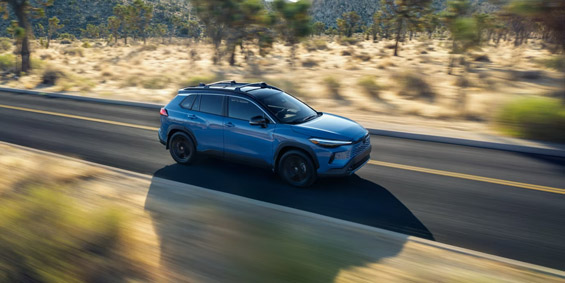
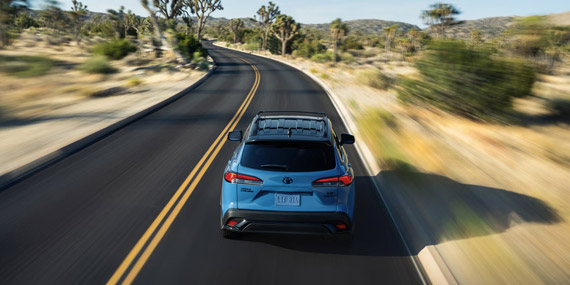
Pricing and Model Lineup: A Battle of Budgets
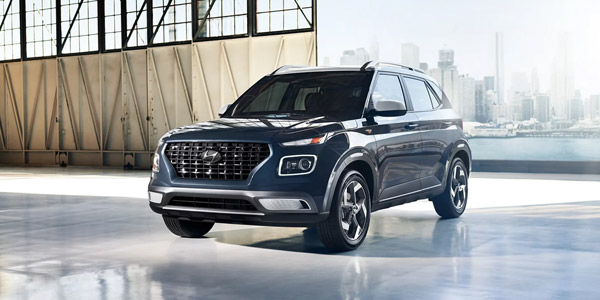
The 2026 Hyundai Venue is one of the most affordable new cars on the U.S. market today. The Hyundai Venue starts at $20,550 in the U.S. (excluding destination charges), and with $1,600 destination fee, the total comes to $22,150. The Venue is offered in two main trims: SE and SEL. The SEL trim adds comfort features such as keyless entry, heated front seats, and dual-zone automatic climate control.
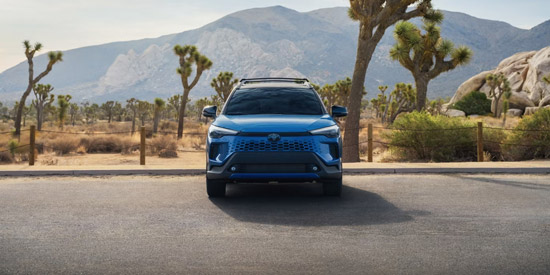
In comparison, the Toyota Corolla Cross in the U.S. has a higher starting price. The gasoline version of the Corolla Cross starts at $24,635, while the hybrid version starts at $28,995. If you choose the version that includes the $1,450 destination fee, the gasoline model starts at $26,085. The Corolla Cross XLE AWD version can exceed $35,000.
The price difference is clear. The Hyundai Venue has a significant pricing advantage, with a starting price about $4,000 lower than the gasoline Corolla Cross. This is a huge attraction for budget-conscious buyers.
Powertrain and Performance: Different Driving Philosophies
The Hyundai Venue is powered by a 1.6-liter naturally aspirated four-cylinder engine, producing 121 horsepower and 113 lb-ft of torque. It is paired with a CVT (continuously variable transmission) and is only available with front-wheel drive. This engine performs adequately for city commuting, but may feel slightly strained when overtaking on highways.
The Toyota Corolla Cross offers two powertrain choices. The gasoline version is equipped with a 2.0-liter four-cylinder engine, producing 169 horsepower and 151 lb-ft of torque. The hybrid version features a 2.0-liter hybrid system with a combined output of 196 horsepower and comes standard with all-wheel drive. According to Toyota USA, the gasoline Corolla Cross accelerates from 0-60 mph in about 8 seconds.
The Venue is positioned as a city commuter champion—light and agile. The Corolla Cross, especially its hybrid version, offers more abundant power reserves and the option of all-wheel drive.
Fuel Economy: Long-Term Consideration of Daily Expenses
Fuel economy is an important part of daily running costs. According to the U.S. EPA ratings, the Hyundai Venue achieves a combined fuel economy of 31 miles per gallon (29 city / 33 highway). This benefits from its lightweight body and small-displacement engine.
The front-wheel-drive gasoline Corolla Cross achieves a combined 32 mpg, while the all-wheel-drive version gets 30 mpg. The hybrid version performs excellently, with U.S. EPA ratings of 46 mpg city, 39 mpg highway, and 42 mpg combined.
In terms of fuel economy, the Corolla Cross hybrid is the clear winner. However, the Venue also offers quite respectable fuel efficiency, especially considering its ultra-low price, making daily running costs still manageable.
Space and Practicality: Trade-offs Due to Size Differences
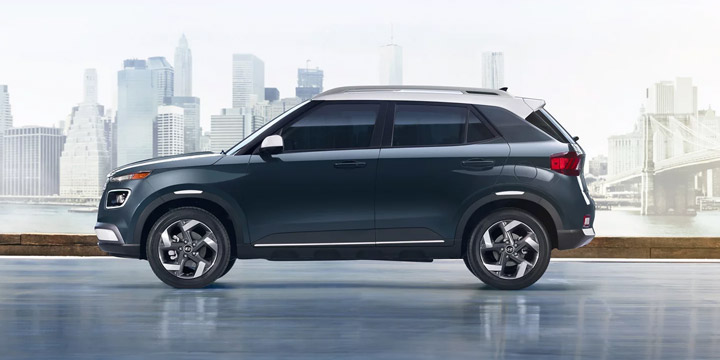
The Hyundai Venue has compact exterior dimensions. Its wheelbase is 99.2 inches, and its overall length is 159.1 inches. Interior passenger volume is 91.9 cubic feet. Cargo volume is 18.7 cubic feet, which expands to 31.9 cubic feet with the rear seats folded.
The Toyota Corolla Cross is noticeably larger. It measures 175.6 to 176.1 inches in length and about 71.9 inches in width. Interior passenger volume is 94.9 cubic feet. Cargo volume is 24 cubic feet, expanding to about 44 to 46.9 cubic feet with the seats folded.
The Corolla Cross wins outright in space over the Venue. Its longer body and wheelbase provide more spacious rear seating and a larger cargo area. The Venue’s advantage lies in its maneuverability for city driving and parking.
Safety Performance: Comparison of the Two SUVs
The Hyundai Venue comes with a generous list of standard safety features. Every 2026 Venue in the U.S. market comes standard with forward collision warning (with pedestrian detection), automatic emergency braking, lane departure steering assist, and driver attention monitoring. The SEL trim adds blind-spot monitoring and rear cross-traffic alert.



The Toyota Corolla Cross comes standard with the Toyota Safety Sense 3.0 suite, which includes adaptive cruise control, lane keep assist, and automatic emergency braking. Higher trims also offer blind-spot monitoring and rear cross-traffic alert.
Both vehicles offer comprehensive active safety features. In terms of passive safety, test results vary by market. The Venue sold in India received a 5-star safety rating from Bharat NCAP. The Corolla Cross generally receives high safety ratings in European and Asian markets, but received a 2-star rating in the African market due to specification differences.
Technology and Interior Features: A Battle of Tech Appeal
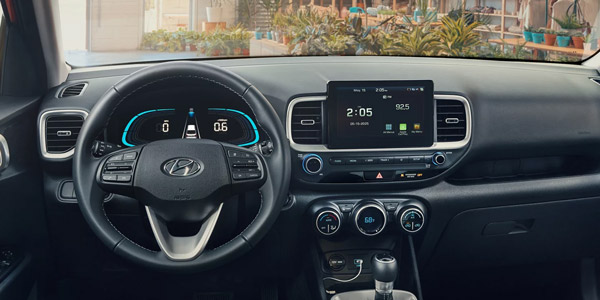
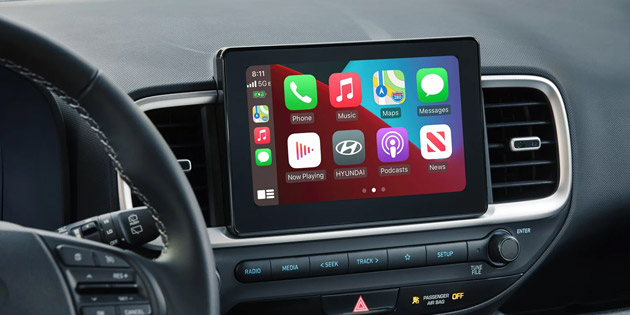
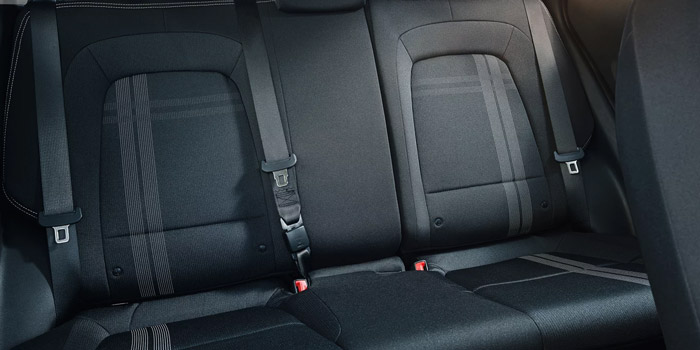
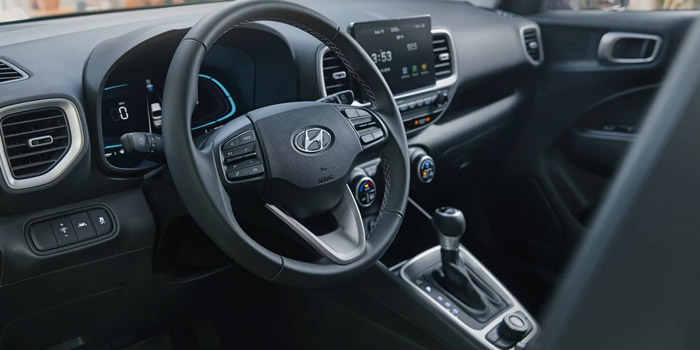
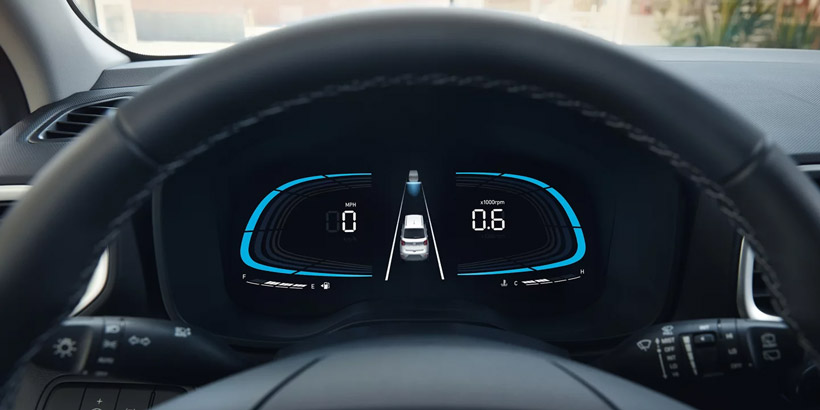
The Hyundai Venue’s interior design is simple and practical. The SE trim comes standard with an 8-inch touchscreen supporting wireless Apple CarPlay and Android Auto. The SEL trim adds comfort features such as wireless phone charging, dual-zone automatic climate control, and heated front seats.

The Toyota Corolla Cross offers richer technology features. Lower trims come with an 8-inch touchscreen and a 7-inch digital instrument cluster. Higher trims can be upgraded with a 10.5-inch touchscreen and a 12.3-inch digital instrument cluster, and support wireless Apple CarPlay and Android Auto.
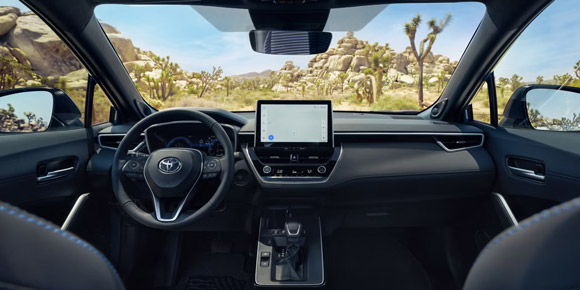
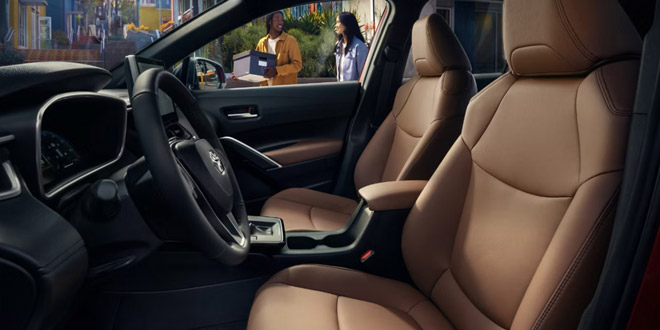
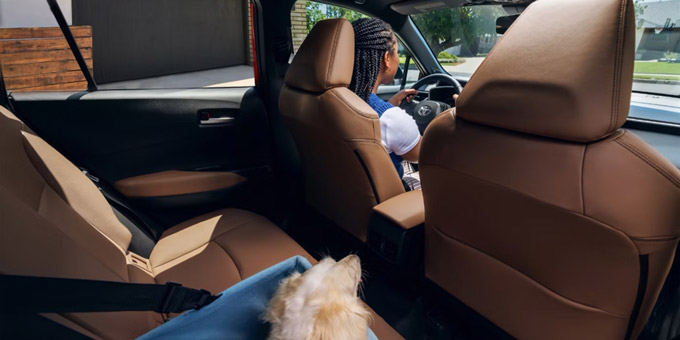
The Corolla Cross has the edge in technology features. The larger screen sizes and higher-spec digital instrument cluster enhance the interior’s tech feel. However, the Venue does not compromise on basic features, and the inclusion of standard wireless smartphone connectivity keeps it competitive.
Reliability, Warranty, and Resale Value
The Hyundai Venue has a consumer reliability rating of 4.7 out of 5, with about 68% of owners giving it a five-star rating. Hyundai offers a 10-year/100,000-mile powertrain warranty and 3 years/36,000 miles of complimentary maintenance, which is an industry-leading warranty policy.
The Toyota brand is renowned for its long-term reliability. The Corolla Cross inherits this brand DNA, with about 59% of owners giving it a five-star reliability rating. Toyota’s resale value is typically better than Hyundai’s, meaning you can recoup more money when selling the vehicle after several years.
The Venue has a more generous warranty policy, while the Corolla Cross has an advantage in long-term value retention.
Final Recommendation: Which Car Suits You Better?
Choose the 2026 Hyundai Venue if:
- You have a tight budget and want the lowest purchase price
- You mainly use the car for city commuting and don’t need much space
- You value the peace of mind from a strong warranty
- You need a small, agile vehicle that is easy to park
Choose the 2026 Toyota Corolla Cross if:
- You want the ultra-low fuel consumption of a hybrid system
- You have higher demands for interior space and cargo volume
- You need all-wheel drive to handle harsh road conditions
- You value long-term brand reliability and resale value
The Hyundai Venue, with a starting price of $20,550, is one of the best choices in entry-level SUVs, especially for first-time car buyers or city commuters. The Toyota Corolla Cross gasoline version starts at $24,635, and the hybrid version starts at $28,995 (all prices are for the U.S. market). Although it is more expensive, it offers a more comprehensive package—more space, stronger power, optional all-wheel drive, and excellent hybrid fuel economy.
In summary, the Venue focuses on extreme value for money and city maneuverability, while the Corolla Cross provides a more well-rounded overall performance. Your choice depends on your budget, your usage needs, and your consideration of the vehicle’s long-term value.
Looking for top-quality new or used cars? Trust DG Motors for fast, reliable service—or visit our Phnom Penh showroom today!