Contents
hide
- More than just electrification, it’s a complete transformation
- Explosive Performance: Redefining the Compact SUV
- Charging Strategy: A Wise Move, Huge Convenience
- Design and Interior: A Youthful Adventure
- Reliability and Warranty: The Toyota Hallmark
- 2026 Toyota C-HR EV vs. Key Competitors
- Global Perspective and Significance for the Cambodian Market
- Conclusion
In the increasingly competitive electric vehicle market, Toyota has finally played its “trump card.” The 2026 Toyota C-HR electric vehicle is no longer the unremarkable small gasoline-powered SUV we remember. Instead, it makes a powerful return with a brand-new dedicated electric platform, aggressive performance, and a revolutionary charging strategy. When it competes against rivals like the Volkswagen ID.4, Hyundai Ioniq 5, and Tesla Model Y, what advantages does it have to attract global consumers? Furthermore, what does this model mean for buyers looking for a car for sale in Cambodia? This article delves into the real reasons it stands out.
More than just electrification, it’s a complete transformation
The previous C-HR was known for its distinctive looks, but the driving experience was average. The 2026 Toyota C-HR EV completely changes that. Toyota builds it on the dedicated e-TNGA electric platform, which fundamentally differs from “conversion” models that originate from gasoline platforms. This platform offers a core advantage: a low center of gravity. Toyota installs the battery flatly under the chassis, which significantly enhances vehicle stability.
In the U.S. market, this car starts at $37,000 to $38,135, but don’t be fooled by this entry price. It comes standard with a dual-motor all-wheel-drive system across all trims. Consequently, you don’t need to pay a hefty premium for AWD traction like you do with some competitors.
Explosive Performance: Redefining the Compact SUV
If you think electric vehicles are just fuel-saving tools, the C-HR will challenge that notion. It features front and rear dual motors, delivering a combined output of 338 horsepower. According to official Toyota data and tests by multiple media outlets like Road & Track and The Drive, it accelerates from 0 to 60 mph in just 4.9 seconds.
This achievement directly pushes it into performance territory. For instance, compare it with competitors in the same class:
- Volkswagen ID.4: It focuses on comfort and family use, so its acceleration feel lags far behind.
- Hyundai Ioniq 5: Although it charges extremely fast, the base model’s performance is not as aggressive as the C-HR’s.
- Nissan Leaf: It maintains a traditional family orientation, therefore lacking this kind of sporty passion.
Editors at The Drive even pointed out that this C-HR’s acceleration is comparable to Toyota’s own performance gasoline-powered vehicle, the GR Corolla. Consequently, this performance, which punches above its weight class, helps it stand out among entry-level EVs that prioritize practicality but often neglect driving fun.
Charging Strategy: A Wise Move, Huge Convenience
In the past, Toyota insisted on its own charging standard, but the market response was lukewarm. However, with the 2026 Toyota C-HR EV, Toyota has made an extremely wise decision: fully adopting Tesla’s NACS charging interface.
What does this mean for buyers? In North America and markets about to follow this standard, C-HR owners can directly use the Tesla Supercharger network without any adapters. Moreover, under ideal conditions and using DC fast charging, the vehicle can charge from 10% to 80% in just about 30 minutes.
Now, compare it with competitors:
- Hyundai Ioniq 5: Although it boasts a high charging power of 350kW for faster speeds, its charging convenience in parts of North America still lags behind the C-HR’s, as it cannot natively access the Tesla Supercharger network without an adapter.
- Chevrolet Equinox EV: It offers good range, but its charging network coverage currently cannot compete with Tesla’s Supercharger network.
For consumers, the core of charging anxiety often isn’t about being a few seconds slower; rather, it is about “finding a reliable, working charger.” Toyota directly addresses this pain point.
Design and Interior: A Youthful Adventure
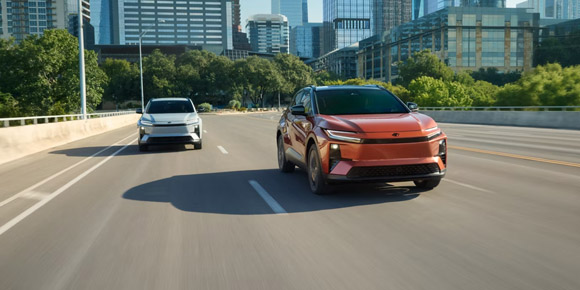
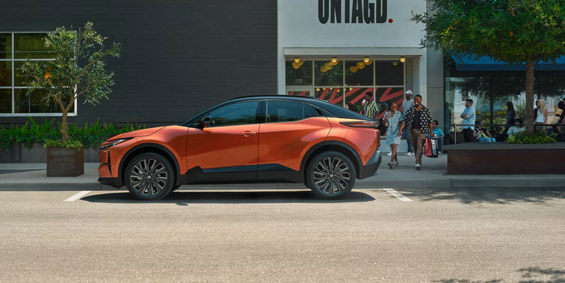
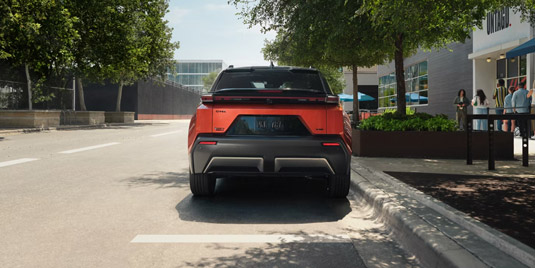
Stylistically, Toyota is no longer conservative. The 2026 C-HR features a “hammerhead shark” front fascia with sharp lines, flared wheel arches, and a very low stance, making it look like a futuristic crossover hot hatch. In fact, its design language is even more aggressive than the Toyota bZ4X, directly targeting younger consumers.
Inside, it comes standard with a large 14-inch central touchscreen running Toyota’s latest Audio Multimedia system, which supports wireless Apple CarPlay and Android Auto. Furthermore, higher trims also feature a JBL audio system and a panoramic sunroof.



However, domestic and international media have also pointed out its compromises. Road & Track notes that due to a shorter wheelbase than the bZ4X, rear legroom isn’t spacious, and the coupe-like styling somewhat sacrifices rearward visibility. But in exchange, you get a more agile and fun-to-drive vehicle.
Reliability and Warranty: The Toyota Hallmark
In the EV market, new players emerge constantly, but quality and stability remain question marks. The 2026 Toyota C-HR EV inherits Toyota’s renowned manufacturing craftsmanship. The doors close with a solid thud, and interior panels fit together seamlessly. Japanese assembly lines assure this “Toyota quality.”
Additionally, Toyota offers an 8-year or 100,000-mile warranty for its battery. This is a huge draw for consumers who value long-term ownership costs and don’t want their vehicle developing minor issues after a few years. This is especially true in emerging markets like Cambodia, where the robustness of the after-sales network and the vehicle’s durability are key purchasing considerations.
2026 Toyota C-HR EV vs. Key Competitors
For a more intuitive view of its advantages, let’s compare it with popular models on the market (based on U.S. market prices and EPA estimates):
| Feature | 2026 Toyota C-HR EV (SE/XSE) | Hyundai Ioniq 5 (AWD) | Chevrolet Equinox EV (AWD) | Tesla Model Y (AWD) |
| Price (U.S. Market) | $37,000 – $40,450 | ~$42,600+ | ~$40,095+ | ~$45,000+ |
| Powertrain | Dual Motor AWD (Standard) | Dual Motor AWD | Dual Motor AWD | Dual Motor AWD |
| Horsepower | 338 hp | 320 hp | 290 hp | ~425 hp |
| 0-60 mph | 4.9 sec | ~5.1 sec | Not Published (Family focus) | ~4.8 sec |
| Range (EPA est.) | 273-287 miles | ~290 miles | 307 miles | ~310 miles |
| Charging Port | NACS (Direct Tesla Supercharger access) | CCS (Adapter needed for Tesla network) | CCS | NACS |
| Core Strengths | High performance standard, charging convenience, Toyota quality | 800V ultra-fast charging | Long range, spacious interior | Brand cachet, software ecosystem |
As the comparison shows, the 2026 Toyota C-HR EV finds a perfect balance between price and performance. In fact, it’s arguably the only model under $40,000 that offers over 300 hp + AWD + access to a vast supercharger network.
Global Perspective and Significance for the Cambodian Market
From a global perspective, Toyota’s move here is well-considered. Unlike some brands launching mere “image projects,” Toyota is offering BEV, hybrid, plug-in hybrid, and even hydrogen fuel cell versions (though the fuel cell version is currently limited to California and Hawaii in the U.S.). This clearly shows that Toyota is seriously pursuing a multi-pathway strategy.
For the Southeast Asian market, particularly consumers keeping an eye on car for sale in Cambodia dynamics, the arrival of the 2026 Toyota C-HR EV is a positive signal. Although it is primarily launching in the U.S. and Japan for now, as global electrification accelerates, models like this—integrating high quality, strong performance, and convenient charging—have strong potential to enter the Cambodian market later.
In Cambodia, charging infrastructure is gradually developing. Consequently, introducing a Toyota EV that can directly utilize the locally expanding charging network (whether it eventually adopts CCS or NACS standards) would be extremely competitive. Furthermore, Toyota has a deep brand presence and an established after-sales service network in Cambodia—advantages many new EV brands cannot match. Therefore, for those inquiring about a car for sale in Cambodia worth waiting for, the 2026 Toyota C-HR EV is definitely an option to anticipate.
Conclusion
In summary, we can boil down the reasons why the 2026 Toyota C-HR EV stands out in the crowded EV market to three points:
- High Performance as Standard: You don’t need to pay extra for options; the entry-level version already boasts 338 hp and AWD.
- Solving the Charging Pain Point: By adopting the NACS interface, it unlocks direct access to the world’s most extensive supercharger network.
- Backed by Toyota Quality: While pursuing novelty, it retains Toyota’s most valuable assets—reliability and high resale value.
Although it compromises slightly on rear seat space and some interior details, it is undoubtedly one of the most noteworthy electric SUVs in 2026 for younger consumers seeking driving pleasure and practical convenience. Whether on the streets of North America, Europe, or potentially in Cambodia in the future, this car has the potential to become a striking sight. Ultimately, if you are looking for a fun and reliable electric vehicle, it’s worth focusing your attention on this brand-new Toyota C-HR.
Looking for top-quality new or used cars? Trust DG Motors for fast, reliable service—or visit our Phnom Penh showroom today!