As we step into 2026, the global automotive industry is undergoing a profound transformation. Supply chains are gradually recovering, yet fresh geopolitical pressures and cost challenges follow closely behind. For consumers planning to purchase a new vehicle this year, the burning question remains: How much will a new car cost in 2026?
The answer is not one-size-fits-all; it hinges on your location and the model you choose. From intense price wars in China to stubborn inflation in the United States, from Europe’s energy transition to Southeast Asia’s market diversification, the global auto market exhibits unprecedented complexity. This article will guide you through price trends in major automotive markets and offer practical advice for buyers. If you have your eye on Southeast Asia, we will also explore the latest conditions for a car for sale in cambodia.
Global Overview: Three Core Drivers Shaping the 2026 Auto Market
Before diving into specific countries, we must understand the three critical factors influencing global new car prices in 2026.
First, cost-push replaces demand-pull. Unlike previous years when robust demand drove prices up, the upward pressure in 2026 mainly originates upstream. The price of lithium carbonate, a key raw material for power batteries, soared to roughly $170,000 per ton in early 2026—a massive jump from the lows of 2025. Simultaneously, the explosive growth of the AI industry has squeezed the production capacity of automotive-grade memory chips, causing DDR5 prices to skyrocket by 180% over the past three months. This alone adds about $200 to the chip cost per vehicle.
Second, the electrification transition is slowing and uneven. Global battery electric vehicle sales continue to rise, but the growth rate has decelerated from 29% in 2025 to around 19% in 2026. Concerns over charging infrastructure and total cost of ownership are steering consumers toward more pragmatic choices like hybrids, leading to price divergence among different powertrain types.
Third, geopolitics and trade policies are redrawing the landscape. Tariffs imposed by the United States and other nations on imported vehicles and components, along with adjustments to new energy vehicle subsidies worldwide, directly alter the final on-road price. For instance, Russia effectively doubled the cost of imported cars by significantly raising its scrappage tax.
In-Depth Look at New Car Prices in Major Countries and Regions
Let’s examine specific countries and regions.
China: Intensifying Price Polarization with Clear Value Advantage
China remains a price trough in the global auto market, but it is experiencing sharp structural polarization internally.
In the budget segment (under 150,000 RMB, about $21,000), the price war rages on. Because consumers are extremely price-sensitive, automakers hesitate to raise prices; instead, they trim features or offer limited-time discounts to sustain sales. For example, some entry-level electric vehicles are priced as low as 69,800 RMB.
In the mainstream segment (150,000–300,000 RMB, about $21,000–$41,000), the competitive focus has shifted to “adding features while stabilizing prices.” Automakers no longer simply cut prices; they now incorporate intelligent driving systems and high-performance chips—once reserved for premium models—into mainstream cars, allowing consumers to access more advanced technology for the same money.
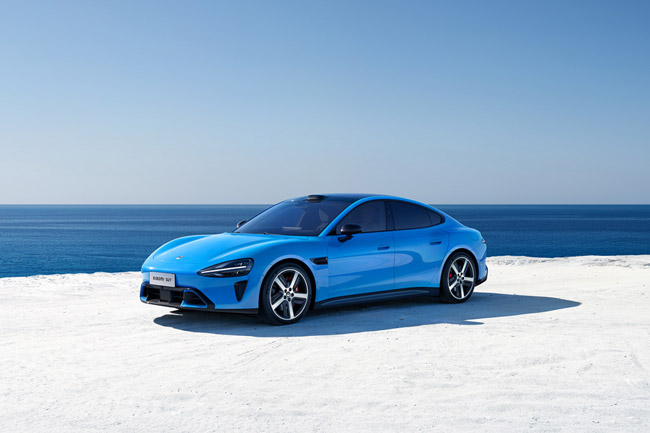
In the premium segment (above 300,000 RMB, about $41,000), prices remain firm. Manufacturers support premium pricing by equipping vehicles with disruptive technologies such as solid-state batteries and centralized electronic architectures. For instance, the next-generation Xiaomi SU7 has confirmed a price increase due to rising costs.
Overall, the average transaction price for a mainstream new car in China in 2026 will be around $25,000—a figure that represents exceptional value for money.
United States: Consistently High Prices, Tariffs Add Fuel to the Fire
For American consumers, buying a new car in 2026 remains expensive. Persistent inflation and new tariff policies keep the average transaction price at a lofty $52,000, with some models exceeding $62,000, making the U.S. one of the most costly markets globally.
The main reason is the American preference for high-margin pickup trucks and large SUVs, which inherently carry higher price tags. Additionally, tariffs on imported auto parts increase manufacturing costs for nearly all models, estimated to add roughly $1,000 to vehicles assembled in the U.S.
Notably, with the Federal Reserve maintaining high interest rates, monthly loan payments impose a heavy burden. A growing number of consumers are being priced out of the new car market, turning instead to used cars or extending the life of their current vehicles.
Europe: High Costs and Electrification Hurdles
In Europe, new car prices also remain stubbornly high. In Germany, the average price is about $40,000; in the United Kingdom, it reaches as high as $61,000, influenced by the pound sterling exchange rate and a larger share of luxury models.
The reasons are multifaceted. Beyond soaring energy costs and supply chain disruptions, stricter environmental regulations add to per-vehicle expenses. For example, new EU rules mandating a minimum percentage of recycled plastics force automakers to invest heavily in R&D and supply chain adjustments. Meanwhile, although battery prices are falling, Chinese brands in Europe tend to prioritize profit margins over low-price competition, so European consumers cannot yet enjoy the affordable electric vehicles seen in China.
Russia: Import Dependence Fuels Price Surge
Russia stands out as a special case in recent years. Geopolitical disruptions to production and supply chains, combined with a government-imposed sharp increase in the scrappage tax on imported cars, have driven new car prices up by 46%, to an average of $45,500.
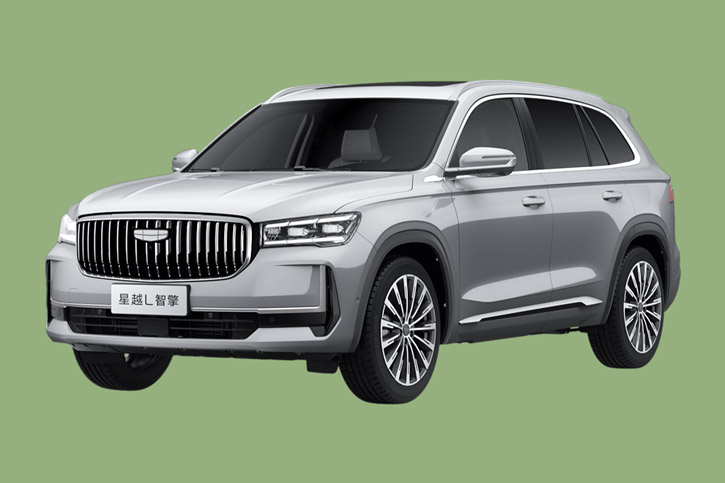
Interestingly, while Chinese brands (such as Chery and Geely) now hold nearly half the Russian market, their prices far exceed those in China. Take the Geely Monjaro (known as the Xingyue L in China): it sells for around $27,000 in China but ranges from $51,000 to $58,000 in Russia. This is mainly due to hefty tariffs and the costs of “semi-knocked down” assembly, which nearly double the vehicle price.
Other Asian Markets: Value-for-Money Options
In contrast, Japan and India remain the cheapest countries globally to buy a car, with average prices of $22,400 and $11,000, respectively. Compact economy cars dominate absolutely in both nations.
In Southeast Asia, the market shows diversification. Thailand, as a regional production hub, boasts localized assembly lines for pickup trucks and electric vehicles, offering relatively competitive prices. For consumers looking at a car for sale in cambodia, the final price depends heavily on the importing country’s tax rates. Because Cambodia lacks a strong domestic auto industry, new cars are mainly imported from Thailand, Indonesia, or China. Consequently, the final retail price typically runs 20–30% higher than in the country of origin. A family SUV priced at $25,000 in China could cost a Cambodian buyer approximately $32,000 to $35,000.
| Country/Region | Avg. New Car Price (2026, USD) | Key Market Characteristics |
| China | ~25,000 | Price polarization; fierce competition in economy segment; technology premium in high-end segment |
| United States | ~52,000–62,000 | Consistently high prices; preference for pickups/SUVs; tariffs inflate costs |
| Germany | ~40,000 | High regulatory costs; significant energy price impact |
| United Kingdom | ~61,000 | High proportion of luxury cars; exchange rate influence |
| Japan | ~22,400 | Dominated by compact economy cars |
| India | ~11,000 | Global price trough; micro-cars dominate |
| Russia | ~45,500 | High import tariffs; large premium on Chinese brands |
| Cambodia (imported) | Origin price +20–30% | Import-dependent; final price heavily influenced by tariffs and transport costs |
Segment Trends: Price Movements by Vehicle Type
Electric Vehicles vs. Gasoline Cars: The Gap Narrows
It has long been common knowledge that electric vehicles cost more than gasoline cars. However, in China in 2026, entry-level EVs have achieved “first-purchase parity” with gasoline models, with average transaction prices holding steady around $25,000. In the U.S., EVs still carry a 15–20% premium over comparable gasoline cars, but as battery costs decline and more affordable models debut, this gap is projected to close around 2028.
Hybrids: The Pragmatic Choice
Anxieties over range and charging are reviving interest in hybrid vehicles across the U.S. and Europe. Although hybrids typically cost 5–10% more than their gasoline counterparts, the fuel savings over the vehicle’s lifetime fully offset the initial premium. Hence, they are viewed as the most pragmatic option today.
Premium and Luxury Cars: Technology-Driven Premiums
In the segment above 300,000 RMB (about $41,000), price wars have limited impact. Whether it is China’s “9 Series” flagship models or America’s full-size SUVs, manufacturers maintain—or even raise—price levels by integrating cutting-edge technologies such as advanced driver assistance and AI-powered cockpits.
2026 Car Buying Advice: When to Buy? How to Choose?
Based on the information above, if you plan to buy a car in 2026, the following suggestions may assist you:
- Define Your Budget and Monitor Local Policies. First, establish your budget. Keep a close watch on changes in government subsidies, tax incentives, and tariff policies in your country or region. For instance, the phase-out of China’s purchase tax exemption for new energy vehicles directly impacts 2026 prices.
- Essential Users Can Time Their Purchase. If you are buying an economy family car, the potential for significant further discounts is minimal. When you spot a reasonable offer on your preferred model, consider purchasing to avoid possible price increases as upstream costs continue to feed through.
- If Not Eager for the Latest Tech, Wait for Maturity. If you are intrigued by technologies like solid-state batteries or Level 3 autonomous driving and do not have an urgent need, it may be wise to wait. These technologies are expensive in early mass production and typically debut in high-end vehicles. Waiting for them to trickle down is often more rational.
- Keep an Eye on Southeast Asia. If you are in Southeast Asia—for example, searching for a car for sale in cambodia—compare models from ASEAN production countries like Thailand and Indonesia, as they generally benefit from lower import duties. Moreover, Chinese brands are expanding their official channels in the region, offering better after-sales service.
In summary, the global automotive market in 2026 is one of divergence. In China, you can buy the world’s most cost-effective electric vehicles. In the U.S., you pay a significant premium for your preferences. In Russia and parts of Southeast Asia (like Cambodia), import dependence adds substantial extra costs. No matter where you are, thorough research and a clear understanding of your needs are key to making informed decisions in a complex market environment.
Looking for top-quality new or used cars? Trust DG Motors for fast, reliable service—or visit our Phnom Penh showroom today!