Suppose you drive less than 10,000 miles (approximately 16,000 km) per year. When choosing your next vehicle, you might be hesitating: should you buy a hybrid with newer technology and better fuel economy, or a traditional gasoline car? This is a classic dilemma faced by consumers worldwide. To help you make an informed decision, we provide an in-depth analysis from the perspectives of cost, driving environment, and future resale value.
Core Considerations for Low-Mileage Drivers: Cost and Habits
For low-mileage drivers, the core of the choice lies in the trade-off between “initial investment” and “operational savings.” Hybrids typically cost several thousand dollars more than their gasoline counterparts. You need to determine whether the lower fuel consumption can save you enough money during your ownership period to make up this price difference.
1. Purchase Cost: The Upfront Price Gap is Significant
In major global markets, incorporating hybrid technology means higher manufacturing costs.
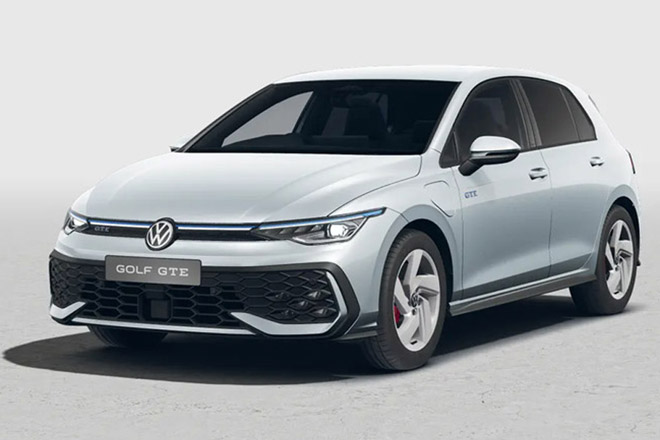
Using the UK market as an example: The starting price for a Volkswagen Golf 1.5 eTSI mild hybrid is around £32,000, while the plug-in hybrid (PHEV) version with the same engine starts at approximately £36,000.
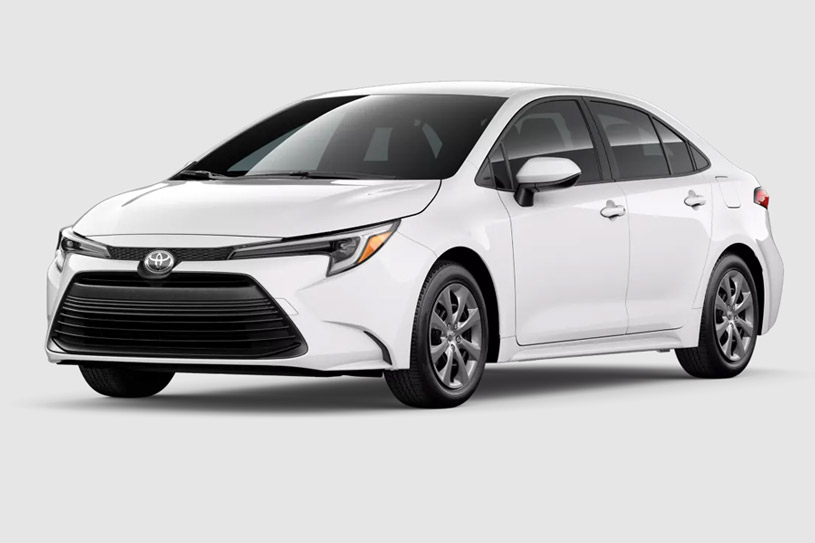
Using the US market as an example: A Toyota Corolla hybrid is typically about $2,000 to $3,000 more expensive than its pure gasoline version. For someone driving only 10,000 miles a year, this upfront cost is the primary challenge you’ll face.
2. Fuel Economy: Advantage Mainly in City Driving
The biggest advantage of hybrids is in congested city traffic. They can recover energy during braking and run on electric power at low speeds, significantly reducing fuel consumption. However, their advantage diminishes when cruising on highways.
Based on actual test data from Australia, we can clearly see this difference:
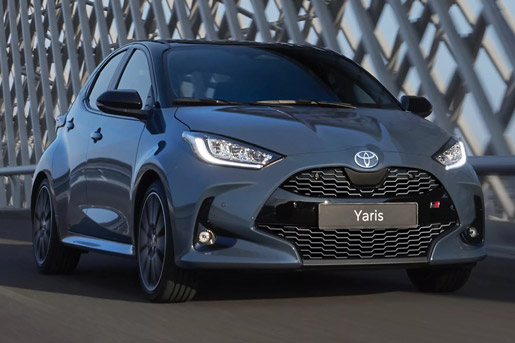
- Toyota Yaris Hybrid: Combined fuel consumption is only 3.3L/100km.
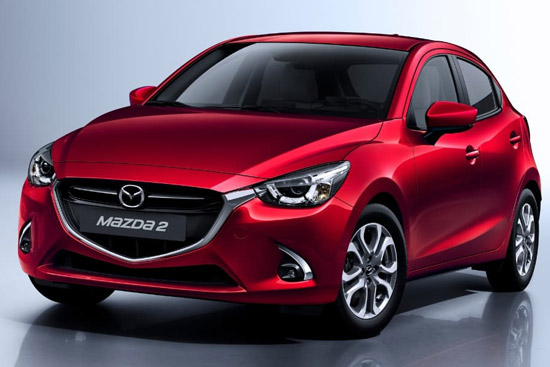
- Comparable pure gasoline car: e.g., a Mazda2 has a combined fuel consumption of around 5.0L/100km.
Conclusion: If your 10,000 miles are primarily city commutes, a hybrid can save you a considerable amount on fuel. But if it’s mostly highway driving, the fuel savings will be less significant.
3. Total Cost of Ownership: When Do You Break Even?
Academic research suggests that plug-in hybrids (PHEVs) are the most economical choice in most cases, but battery electric vehicles (BEVs) only become cost-advantageous when the daily driving distance exceeds 160 kilometers. Clearly, low-mileage users do not meet this condition.
Assuming you drive 10,000 miles (approx. 16,000 km) per year, let’s do a simple calculation using UK fuel prices (as of October 2025, gasoline at approximately £1.34/liter):
- Pure Gasoline Car: With fuel consumption of 5.0L/100km, the annual fuel cost is approximately £1,520.
- Hybrid: With fuel consumption of 3.5L/100km, the annual fuel cost is approximately £1,064.
- Annual Savings: Approximately £456.
- Payback Period: If the hybrid is $3,000 (approx. £2,400) more expensive than the gasoline car, it would take over 5 years to recoup the price difference through fuel savings. For low-mileage users, this period could be even longer.
4. Maintenance and Repairs: More Than Just Saving Money
- Gasoline Car Advantages: Simple structure, cheaper repairs. No concerns about high-voltage battery replacement.
- Hybrid Advantages: Because the engine engages less, brakes wear down more slowly, and service intervals might be longer. However, if the hybrid system (especially the high-voltage battery) fails after the warranty expires, repair costs can be substantial.
- Key Point: Studies show that hybrid systems (especially Toyota’s THS system) are known for reliability, but their complexity is a real factor.
Specific Market Insight: Why is the Cambodia Case Worth Considering?
When considering buying a new car, the market dynamics for car for sale in cambodia provide an excellent reference sample, particularly helpful for predicting a vehicle’s long-term value retention. Although the Cambodian market prefers right-hand drive vehicles and has its own specificities, the challenges it faces are universal.
In the Cambodian market, Chinese automobile brands have risen rapidly by offering low prices and rich features, directly challenging the traditional position of Japanese brands like Toyota and Honda. However, a key issue affects consumer decisions: lower second-hand value retention.
Parts Availability Determines Resale Value
- Dominance of Japanese Cars: The reason used Japanese cars have long dominated the Cambodian market is the extremely stable supply of their parts. As Phnom Penh used car dealer Chan Pulla stated: “Parts for Japanese cars are everywhere – new, used, or imported, you can find them.”
- Challenges for Chinese Brands: Some Chinese brand cars offer excellent value when sold as new, but owners often face waiting weeks for parts when repairs are needed. This directly leads to their rapid depreciation in the second-hand market.
What This Means for You: Regardless of where you live, choosing a model with a large local presence and a stable parts supply is far more important than chasing the latest technology trends. If you only drive 10,000 miles a year, the resale value when you sell the car might have a greater impact on your total cost than the small amount of fuel money you save. By checking the dynamics of your local “car for sale in cambodia” market (meaning looking for indicative local market data like that of Cambodia), you’ll find that a reliable after-sales service network is the biggest guarantee for long-term ownership.
Driving Experience and Future Trends
Beyond money, the driving feel is also an important factor.
- Driving Smoothness: Hybrids are extremely quiet and smooth in stop-and-go traffic because they can start on electric power. Gasoline cars offer more immediate acceleration feedback and a more linear engine sound.
- Environmental Restrictions: In Europe, many cities have established Low Emission Zones (ULEZ, etc.) with strict limits on older diesel cars, but they are generally friendlier to hybrids (especially non-plug-in hybrids). If you live in a city center, a hybrid might exempt you from future traffic restrictions.
- Policy Direction: The UK has announced a ban on the sale of new pure gasoline and diesel cars by 2030, with hybrids allowed to be sold until 2035. This means that if you buy a new gasoline car now, its technological lifespan might just cover the period until the ban takes effect.
Conclusion: How Should Low-Mileage Users Choose?
Based on global data and market case studies, we offer the following suggestions:
Choose a Gasoline Car If:
- Budget Sensitive: You cannot accept the initial price difference of several thousand dollars.
- Highway Dominant: Your 10,000 miles per year are mostly driven on uncongested highways.
- Plan Short-Term Ownership: You intend to change cars within 3-4 years. In this case, the fuel savings are unlikely to cover the hybrid’s initial premium.
- Local Repairs Inconvenient: Similar to the difficulties faced by certain models in the Cambodian market, if hybrid repairs are inconvenient and parts are hard to find in your area, a pure gasoline car is the safer choice.
Choose a Hybrid If:
- City Commute Dominant: Most of your driving is in the city with heavy traffic. This is where hybrids offer the best fuel savings and a superior driving experience.
- Plan Long-Term Ownership: You intend to keep the car for 8-10 years. The longer you keep it, the more the fuel savings will add up and justify the cost.
- Value Technology and Quietness: You seek a more modern technological experience and a quieter cabin environment.
- Consider Future Compliance: You are concerned about potential stricter traffic restrictions on fuel vehicles in city centers in the coming years.
Looking for top-quality new or used cars? Trust DG Motors for fast, reliable service—or visit our Phnom Penh showroom today!