Contents
hide
- Brand Core Philosophy: The Game Between Practicality and Sportiness
- Power and Driving Experience: Smoothness vs. Zest
- Space Magic: Who Can Pack Up the Family’s Happiness?
- Maintenance Costs and Resale Value: Accounts Families Must Calculate
- Choices from a Global Perspective: From Phnom Penh to New York
- Conclusion: Which One to Choose Ultimately?
When you choose a reliable vehicle for your family, the battle between Toyota and Honda is always unavoidable. These two Japanese car brands enjoy a great reputation globally. However, for family users, the specific choice often causes hesitation. Which brand actually suits your family better? This article will deeply analyze their differences and tell you where you can find these reliable models.
Brand Core Philosophy: The Game Between Practicality and Sportiness
First, you need to understand the underlying logic of the two brands.
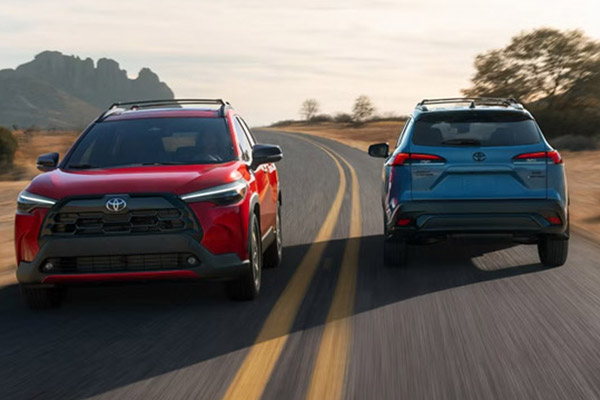
Toyota’s core value is extreme durability and conservatism. It commits to manufacturing cars that “never break down.” As many experienced drivers say, Toyota cars usually have simple structures and use mature technology. For example, the Toyota Corolla Cross (known as Frontlander in some markets) comes with a 2.0L naturally aspirated engine. Although its power delivery isn’t aggressive, it excels in stability and reliability. Its goal is to be that silent but never-failing member of the family.
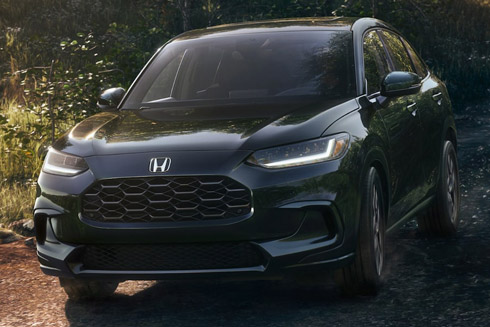
Honda is often called the “space wizard” and “tech enthusiast.” It prefers to incorporate driving pleasure and spatial intelligence into its cars. Take the Honda HR-V, for instance. Even as a family SUV, it still offers a 1.5L turbocharged engine, making daily driving more spirited. At the same time, Honda excels at excavating astonishing passenger space within limited body dimensions.
In short: If you pursue ultimate peace of mind and low failure rates, Toyota is usually the standard answer; if you don’t want to give up driving fun and value space utilization, Honda might be more to your liking.
Power and Driving Experience: Smoothness vs. Zest
Differences in the powertrain directly impact daily driving feelings.
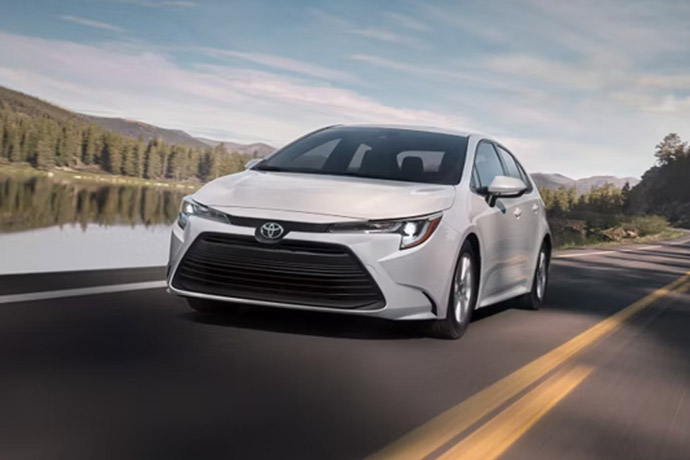
Toyota prefers smoothness and fuel efficiency. On the Toyota Corolla or RAV4, we often see 2.0L naturally aspirated engines or the mature THS hybrid system. According to test data from CATARC (China Automotive Technology & Research Center) in February 2026, the WLTC combined fuel consumption of the Corolla Hybrid version is as low as 4.1L/100km. This tuning makes the vehicle extremely smooth during start-up and traffic jams, making it very suitable for picking up children or transporting elderly family members.
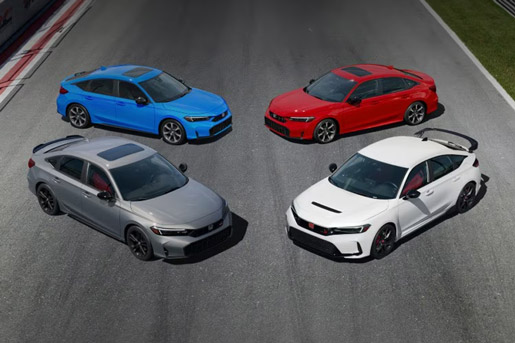
Honda tends towards sporty tuning. Even on models equipped with CVT transmissions, Honda utilizes G-Design Shift technology to expand the gear ratio range, allowing it to handle greater torque. This explains why the 1.5T versions (182 hp) of the Honda Civic or Integra feel more peppy and have more confidence during highway overtaking. However, it’s worth noting that a sportier tuning might imply slightly higher long-term maintenance costs.
Space Magic: Who Can Pack Up the Family’s Happiness?
For family users, space is a fundamental need.
Honda is the undisputed master of space optimization. Take the Honda HR-V and Breeze (Hao Ying) as examples. They follow the “MM Concept” (Man Maximum, Machine Minimum). Although the HR-V’s body length (4569mm) is only slightly longer than the Toyota Corolla Cross’s (4490mm), its rear legroom is nearly a fist’s width larger. The second-row seats in the Honda Breeze also offer multi-angle adjustment, allowing family members to sit more comfortably during long trips.
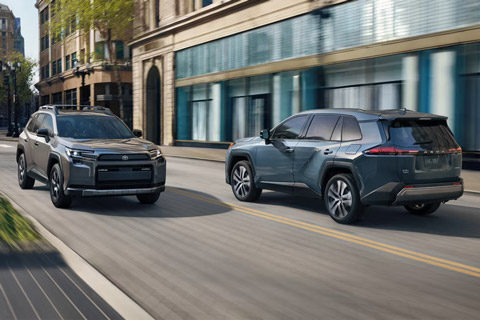
Toyota focuses more on practicality and neatness. The trunk space in the Toyota Wildlander (Wei Lanka) is very regularly shaped, and the center armrest features a dual-layer structure with meticulous storage details. Although it slightly lags behind Honda in its ability to “steal” rear legroom, its seats still offer high comfort and good contouring.
Maintenance Costs and Resale Value: Accounts Families Must Calculate
This is the part family users care about most.
Toyota has a clear advantage in long-term ownership costs.
- Maintenance Costs: In the Chinese market, the minor maintenance cost for the Toyota Corolla Cross is approximately 400-500 RMB (about 55-70 USD at current exchange rates), slightly lower than the Honda HR-V’s 500-600 RMB.
- Reliability: Toyota’s CVT transmission, due to the addition of a launch gear, structurally avoids low-speed steel belt wear, resulting in extremely low failure rates. An experienced driver summarized: “In the first five years, both cars are stable; after ten years, Toyota’s durability advantage becomes more apparent.”
- Resale Value: Toyota models are generally more popular in the used car market. For example, the resale value of the RAV4 and Corolla Cross consistently ranks among the top for joint venture SUVs, meaning you can recover more funds when selling them in the future.
Honda offers more freshness in terms of texture and technological experience. Although its resale value is also excellent, due to the complexity of turbo technology, the wear rate under long-term, high-load use is theoretically higher than Toyota’s naturally aspirated models.
Choices from a Global Perspective: From Phnom Penh to New York
Whether you are considering a commuter car in New York, USA, or looking for a family companion in Southeast Asia, the car-selection logic mentioned above applies similarly.
Take the rapidly developing Southeast Asian market as an example. Local consumer choices also confirm this trend. According to industry observations, the Cambodian automotive market is undergoing significant changes. If you are paying attention to Cambodia car sale information, you will find the market landscape very interesting.
The Cambodia car sale market currently presents a situation where new cars and used cars coexist. According to data from the Cambodia Automotive Industry Federation, the new car market share grew to approximately 55% in 2025. On the streets of Phnom Penh, Toyota and Honda models are everywhere. This is no accident.
For families considering purchasing from a Cambodia car sale platform:
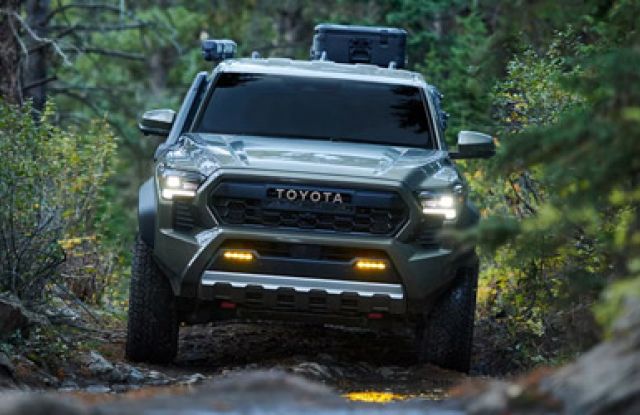
- Toyota’s rugged and durable characteristics are very suitable for the still relatively complex road conditions in some parts of Cambodia. Especially SUVs like the RAV4 or Corolla Cross not only have strong off-road capability but also benefit from dense service networks and easily found spare parts.
- Honda’s hybrid technology shows its advantage when fuel prices fluctuate. Cambodian consumers and the middle class are increasingly concerned about fuel economy, so Honda’s i-MMD hybrid models (like the Breeze Sharp Hybrid, with city fuel consumption as low as 5.5L/100km) are also highly attractive.
Furthermore, the price factor is also crucial. In Cambodia, imported cars are often priced in US dollars. For example, a Honda Breeze Hybrid version priced at approximately 199,900 RMB in the Chinese market will have a different on-road price in Cambodia depending on tariffs and specifications. According to local economic analysis in Cambodia, the average selling price of Japanese car brands is more competitive compared to European and American brands, which is one reason Toyota and Honda can capture major market share. If you are browsing Cambodia car sale advertisements, whether it’s a brand new Toyota Wildlander (whose hybrid version is also very popular in the US market) or a used Honda Odyssey (known as the “Dad’s God Car”), you will find these two brands occupy a significant portion.
Conclusion: Which One to Choose Ultimately?
Returning to the initial question, we give you a clear answer:
Choose Toyota in the following situations:
- You hope that after ten years, you still only need regular maintenance and don’t want to visit repair shops. Toyota’s structural simplicity and durability are the family’s most enduring companion.
- You live in a “specific foreign country” area with many unpaved roads or inconvenient repair services. Toyota’s extensive dealer network means you can get it repaired wherever you go.
- You highly value resale value. Toyota models enjoy extremely high recognition in the used car market. Whether in China or the Cambodia car sale market, they are hard currency.
Choose Honda in the following situations:
- You don’t want your driving passion to be worn down by daily chores. Honda’s 1.5T powertrain can bring a smile to your face when you’re driving alone.
- You have a large family or frequently need to load bulky items. Honda’s “space magic” allows you to get larger passenger space with a smaller body size.
- You pursue the latest smart cockpit experience. Compared to Toyotas from the same period, Honda often offers more refined interiors and smoother infotainment systems.
Ultimately, there is no absolutely bad car, only the car that doesn’t suit you. We suggest you personally test drive the Toyota Corolla Cross and the Honda HR-V. A car carries the rush of commuting, the tenderness of picking up kids, and the joy of road trips. No matter which model you finally choose, or which one you might look for in the future on platforms like Cambodia car sale, as long as it fits your lifestyle, it is the best family car for you.
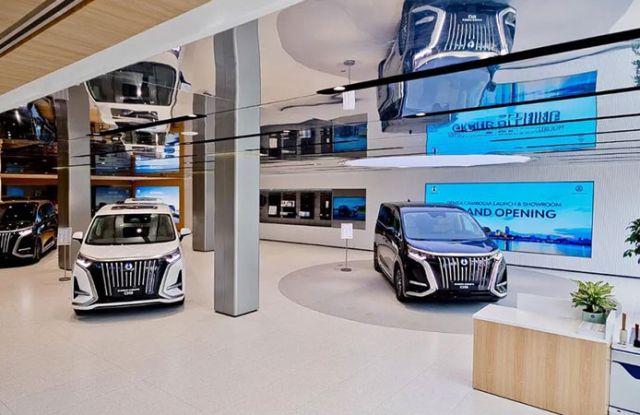
Looking for top-quality new or used cars? Trust DG Motors for fast, reliable service—or visit our Phnom Penh showroom today!