Contents
hide
- Historical Background: The Birth of Two Legends
- Powertrain and Performance: British Brute Force vs. German Precision
- Off-Road Capability: All-Terrain Conqueror vs. Road Trip Traveler
- Interior, Design, and Space: British Flair or German Pragmatism
- Reliability and Running Costs: Which One Survives the Test of Time
- Classic Status and Investment Value: Which Is More Worth Collecting?
- Final Verdict: Which One Stands the Test of Time Better?
Let’s turn the clock back to 2006. The luxury SUV market was in the midst of a revolution. Consumers were beginning to abandon traditional hardcore off-roaders, instead pursuing vehicles that combined on-road performance with off-road capability. That year, two iconic models engaged in fierce competition. On one side was the 2006 Range Rover Sport, an all-new member of the Land Rover family. On the other was the BMW X5 (E53), the pioneer that created the “Sports Activity Vehicle” (SAV) concept, entering the final year of its product lifecycle. Both promised luxury, performance, and practicality. But the question is: nearly two decades later, which one stands the test of time better? This article provides an in-depth analysis of these two classic luxury SUVs in terms of design, performance, reliability, and long-term value.
Historical Background: The Birth of Two Legends
First, let us look back at the origins of these two vehicles.
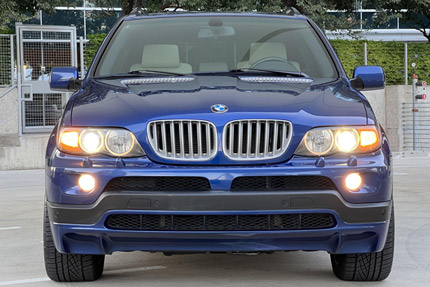
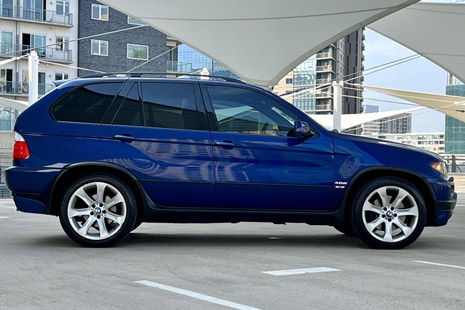
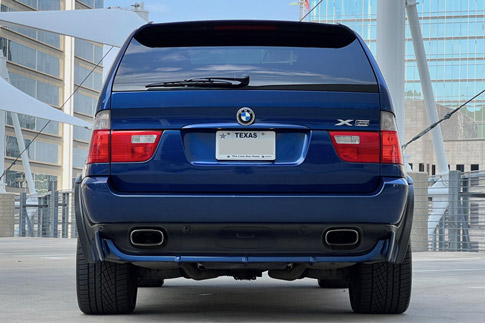
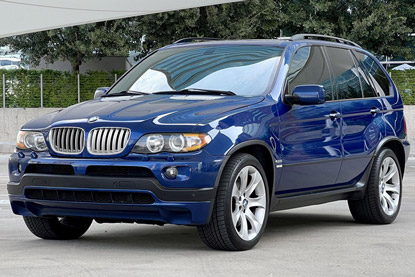
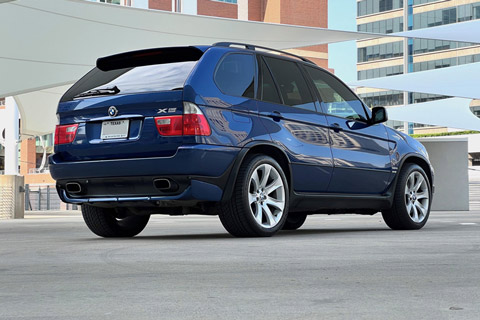
The BMW X5 (E53) debuted in 2000. It completely reshaped the SUV market landscape. BMW did not position the X5 as a traditional off-roader. Instead, it created an entirely new category: the Sports Activity Vehicle (SAV). The X5 was developed based on the E39 5 Series sedan platform. This heritage endowed it with sedan-like handling precision, making it unique in its class. In 2004, the X5 received a significant mid-cycle facelift, updating the headlights, grille, and bumper design to give it a more modern appearance. By 2006, the E53 X5 boasted a rich powertrain lineup ranging from an inline-six to a 4.8-liter V8.
The Range Rover Sport, on the other hand, was an entirely new species. In 2005, Land Rover decided to fill the market gap between the LR3 and the flagship Range Rover. Thus, the Range Rover Sport was born. It shared its platform architecture with the LR3 but with a wheelbase shortened by 6 inches and a sleeker, more dynamic roofline. Land Rover’s goal was clear: to create a vehicle that could challenge the on-road performance of the BMW X5 and Porsche Cayenne while retaining Land Rover’s legendary off-road DNA. This bold endeavor captured global attention. The Range Rover Sport was a resounding success in its first year on the market, quickly becoming one of Land Rover’s best-selling models.
Powertrain and Performance: British Brute Force vs. German Precision
When it comes to engines, both offer potent V8 power, but with very different characters.
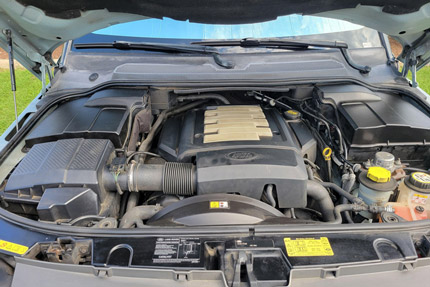
The 2006 Range Rover Sport came with two engines. The base HSE model used a Jaguar-sourced 4.4-liter naturally aspirated V8, producing 300 horsepower and 315 lb-ft of torque. The more potent supercharged version featured a 4.2-liter V8, delivering 390 horsepower and 410 lb-ft of torque. The supercharged model accelerated from 0-60 mph in approximately 7.2 to 7.6 seconds. The engine note was deep and muscular, exuding British muscle car character. Both the base and supercharged versions were paired with a ZF six-speed automatic transmission, which was praised for its smooth shifts and quick responses.
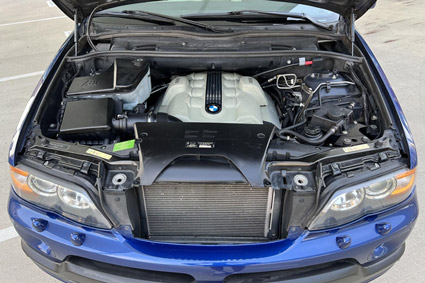
In comparison, the 2006 BMW X5 (E53) offered an even wider range of powertrain options. The entry-level model was powered by a 3.0-liter inline-six engine producing 231 horsepower. The 4.4-liter V8 delivered 286 horsepower, while the 4.6-liter V8 reached 340 horsepower. The range-topping 4.8is variant, equipped with a 4.8-liter V8, could sprint from 0 to 100 km/h in just 6.5 seconds. Across the lineup, the X5 came with a five-speed or six-speed automatic transmission and featured a full-time all-wheel-drive system with a fixed 38:62 torque split. This rear-biased setup ensured agile cornering behavior and driving enjoyment.
In short, the Range Rover Sport had the edge in outright power. But the X5 fought back with a lighter body and more refined chassis tuning. If you crave the thrill of straight-line acceleration, the Range Rover Sport is more to your taste. If you prefer precision handling through corners, the X5 is irreplaceable.
Off-Road Capability: All-Terrain Conqueror vs. Road Trip Traveler
This is the area where the gap between the two is widest.
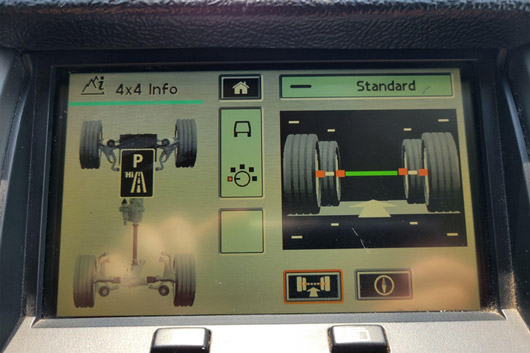
The Range Rover Sport comprehensively outshines the X5 in off-road capability. It is equipped with a full-time four-wheel-drive system, a dual-range transfer case, an electronically controlled center differential lock, and height-adjustable air suspension. More crucially, Land Rover’s exclusive ‘Terrain Response’ system made its debut on the Range Rover Sport. By simply turning a dial, the driver could let the system automatically adjust power delivery, suspension, and traction control parameters according to conditions such as mud, snow, sand, and rocks. In 2006, ‘4×4 Australia’ magazine named the Range Rover Sport TDV6 its ‘4WD of the Year,’ praising it for ‘blurring the boundaries between on-road touring and off-road adventure.’
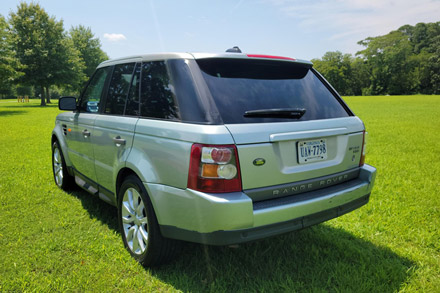
The BMW X5’s off-road ability is, by contrast, quite limited. The X5 features a full-time all-wheel-drive system and independent suspension, but its design philosophy is centered on on-road performance. The E53 X5 only offers mild off-road capability and cannot handle serious off-road scenarios. In a classic off-road comparison test by Carwow, the X5 exceeded expectations but was nearly destroyed by the end, while the Range Rover, though battered, could still keep going. Of course, the vast majority of owners would never subject their luxury SUVs to such extreme conditions. But this difference reflects two fundamentally different engineering philosophies: the Range Rover Sport was born for all terrains, while the X5 was built for paved roads.
Interior, Design, and Space: British Flair or German Pragmatism
Once inside, the two vehicles present completely different atmospheres.
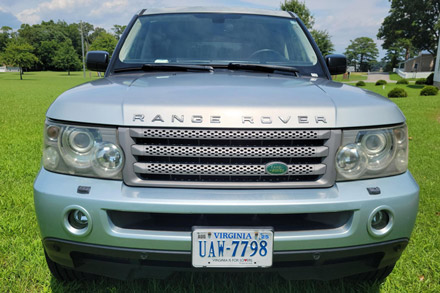
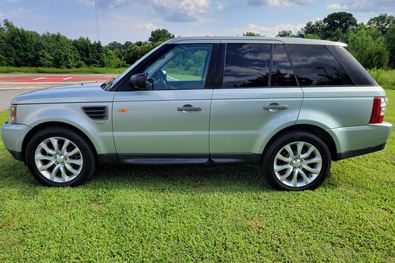
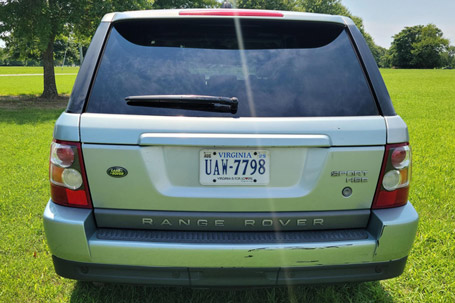
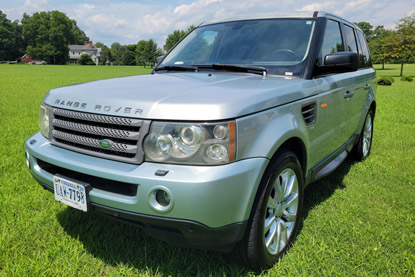
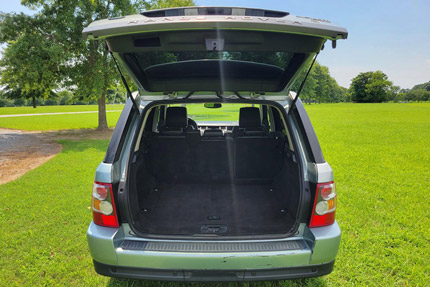
The exterior design of the Range Rover Sport still looks fresh today. Its boxy body lines, three-section grille, and floating roof design create an aura that is both stately and sporty. The standard 19-inch wheels and wide stance draw admiring glances on the street. However, interior material quality is a weak point. Some reviews pointed out that, for a vehicle in this price range, the cabin materials lacked tactile quality and felt noticeably plasticky. Rear-seat space is also rather tight, especially with taller passengers on board.
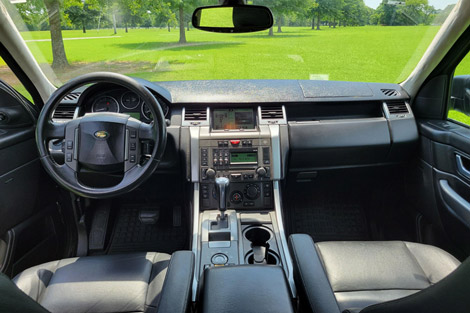
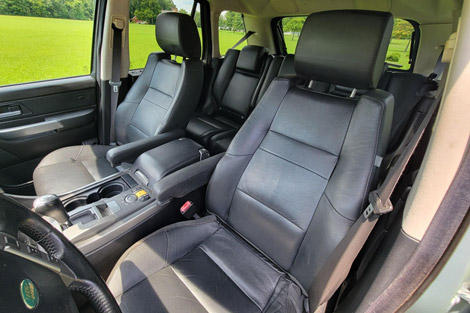
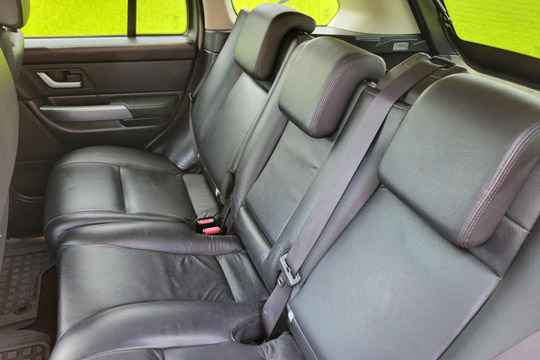
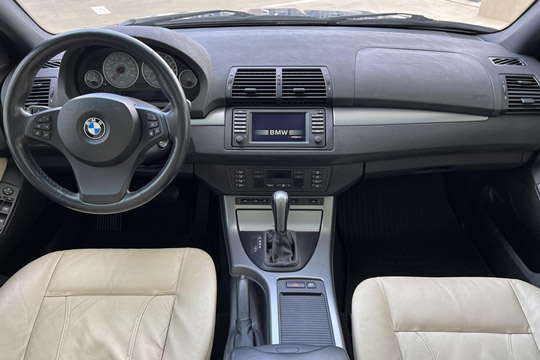
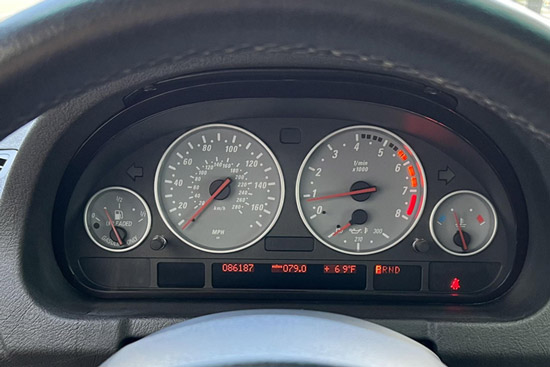
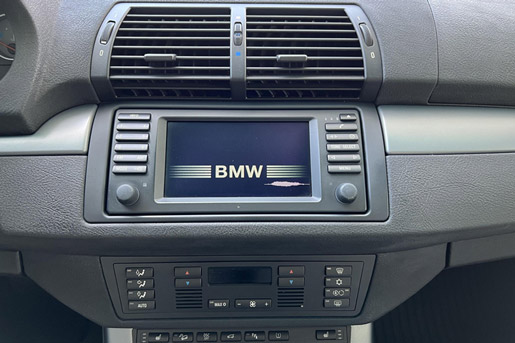
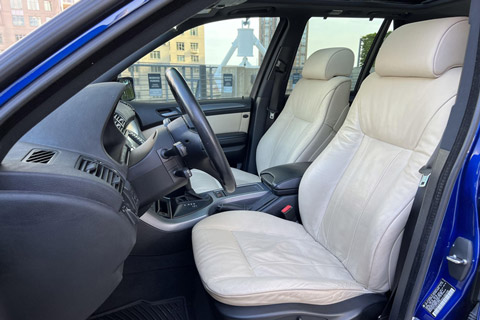
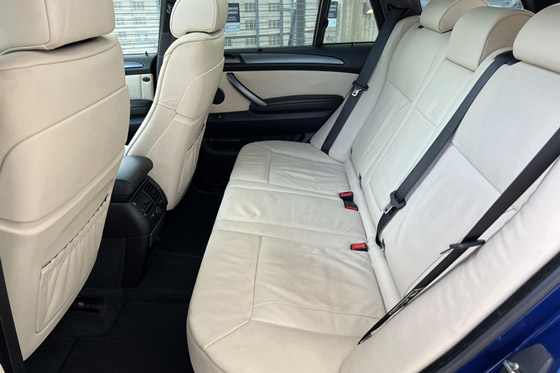
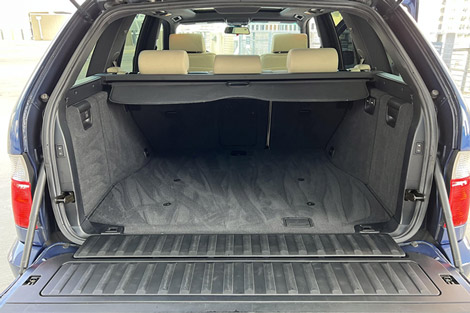
The BMW X5’s interior, on the other hand, embodies typical German pragmatism. The design is clean and intuitive, with clearly laid-out controls and solid, durable materials. The X5’s cockpit is driver-focused, creating a sense of oneness between car and driver. However, the E53 X5 does not excel in rear-seat space either. For a vehicle of this size, rear legroom and headroom are merely average. The two cars are evenly matched in terms of space practicality. The choice comes down to your aesthetic preference: British sense of occasion or German functionality.
Reliability and Running Costs: Which One Survives the Test of Time
Reliability is the core criterion for measuring ‘standing the test of time.’ Frankly, neither vehicle is flawless in this area, but the differences are significant.
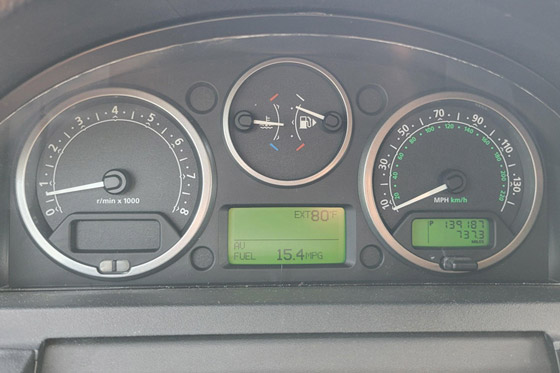
The Range Rover Sport’s reliability reputation has long been below the industry average. Common issues include battery control unit failures, front brake noise, faulty coolant level sensors, worn anti-roll bar bushings, and various electronic glitches. Land Rover has historically issued multiple recalls for the Range Rover Sport, for reasons including fuel pump leaks, upper tailgate spoiler detachment, and brake booster oil ingress, among other serious safety hazards. Spare parts are expensive, and fuel economy is abysmal — city fuel consumption can be as low as 8 miles per gallon.
The BMW X5 E53 also has reliability issues, but of a different nature. According to an authoritative BMW blog, the most reliable engine in the E53 X5 is the M54 inline-six. The V8 versions are more troublesome, especially the N62 engine fitted after 2003. Common faults with this engine include aging valve stem seals, valve cover oil leaks, coolant leaks, and secondary air injection system failures. The cooling system is another major weak point: the water pump, thermostat, and expansion tank are prone to cracking, which can lead to engine overheating. That said, with proper maintenance, the M54-powered E53 X5 can achieve an engine lifespan of 280,000 to 480,000 kilometers.
In terms of fuel economy, the X5 has a slight advantage. For reference, the 2006 X5 4.4i’s EPA ratings are 16 mpg city / 22 mpg highway, compared to 14 mpg city / 19 mpg highway for the Range Rover Sport HSE. Moreover, the X5 also holds a slight edge in residual value. Data from iSeeCars shows that the BMW X5 retains 4.3 percentage points more of its value than the Range Rover Sport.
It is crucial to point out that both vehicles have been on the market for over 18 years. The comprehensive aging of mechanical and electronic systems is an unavoidable reality. Regardless of which one you choose, repair costs are likely to far exceed the purchase price itself. For budget-conscious buyers in emerging markets, this warrants very careful consideration.
Classic Status and Investment Value: Which Is More Worth Collecting?
As they age, both vehicles are gradually entering ‘modern classic’ territory. This means their values may have bottomed out and could even begin to appreciate.
The Range Rover Sport carries a strong brand halo. The Land Rover name itself evokes rich associations with adventure, royalty, and rugged off-roading. The design of the first-generation Range Rover Sport (L320) is still widely admired today. On classic car auction platforms, well-preserved 2006 Range Rover Sports have already been described as ‘one of Land Rover’s most desirable modern classics.’ However, high maintenance costs are the biggest obstacle to its becoming an ideal collector’s item.
The BMW X5 E53, as the vehicle that pioneered the Sports Activity Vehicle category, holds undeniable historical significance. Hagerty, the authoritative classic car valuation authority, has already listed the E53 X5 as a potential collector car worth watching. Prices for low-mileage, well-maintained E53 X5s are steadily rising on the classic car market. In particular, M54 inline-six versions equipped with a manual transmission are increasingly sought after by automotive enthusiasts.
Overall, the X5 holds a slight advantage in the ‘investment value’ dimension due to its lower barrier to ownership and broader enthusiast base. But if you place a higher value on brand prestige and unique charisma, the Range Rover Sport remains well worth considering.
Final Verdict: Which One Stands the Test of Time Better?
After a comprehensive comparison, here are the conclusions.
The 2006 BMW X5 (E53) is the more rational choice. It offers superior on-road handling, a wider range of powertrains, lower long-term ownership costs, and slightly more dependable value retention. The M54 inline-six version is especially recommended. The X5 is the kind of car you fall in love with for its driving experience, not just its looks.
The 2006 Range Rover Sport is the choice with more soul. It possesses greater off-road capability, a more distinctive brand personality, and a more commanding exterior presence. If you frequently tackle challenging road conditions, or if you simply appreciate Land Rover’s unique British charm, the Range Rover Sport will not disappoint. But you must be fully prepared — both mentally and financially — for its higher running costs.
Time is the fairest judge. Eighteen years on, these two vehicles have stood the test of time in very different ways — the X5 through solid engineering fundamentals, and the Range Rover Sport through its distinctive brand character.
Looking for top-quality new or used cars? Trust DG Motors for fast, reliable service—or visit our Phnom Penh showroom today!