Contents
hide
- I. Three Common Types of Scratches and How to Quickly Identify Them
- II. Light Scratches: DIY, Easily Done (DIY Repair Guide)
- III. Moderate Scratches: Touch-Up Pen in Hand, Minor Scrapes Are No Problem
- IV. Deep Scratches: Leave It to the Professionals for Peace of Mind
- V. Scratches on Special Areas: Quick Fixes for Plastic Parts like Bumpers
- VI. Prevention is Better Than Cure: Daily Car Care Guide
- VII. Frequently Asked Questions (FAQ)
No matter how carefully we take care of our cars, some scratches will inevitably appear over time. Don’t panic—most scratches can be repaired by yourself at a very low cost. The crucial first step is to figure out exactly what type of scratch you are dealing with. Misjudging the scratch will waste time and money, and could even make it worse. For example, sanding a light scratch that only needs polishing will only backfire.
I. Three Common Types of Scratches and How to Quickly Identify Them
A car’s paintwork is not just a simple layer of color. Modern automobiles typically consist of three layers: the Clear Coat, the Base Coat, and the Primer. Once you understand this structure, you will know how to assess the severity of a scratch.
1. Light Scratch (Clear Coat Scratch)
Characteristics: The scratch remains only in the outermost clear coat layer. It looks very fine, almost like a strand of hair. When you run your finger over it, you cannot feel any indentation or snagging. It may be visible in sunlight but becomes inconspicuous when viewed from a different angle.
Common Scenarios: Swirl marks from improper car washing, light brushes with tree branches, or fingernail scratches around door handles.
2. Moderate Scratch (Base Coat Scratch)
Characteristics: The scratch has penetrated the clear coat and damaged the underlying base coat (color layer). You can see the primer color showing through, which differs from the car’s body color. For instance, a white car will show black or gray primer. Running your finger across it reveals a distinct unevenness or groove.
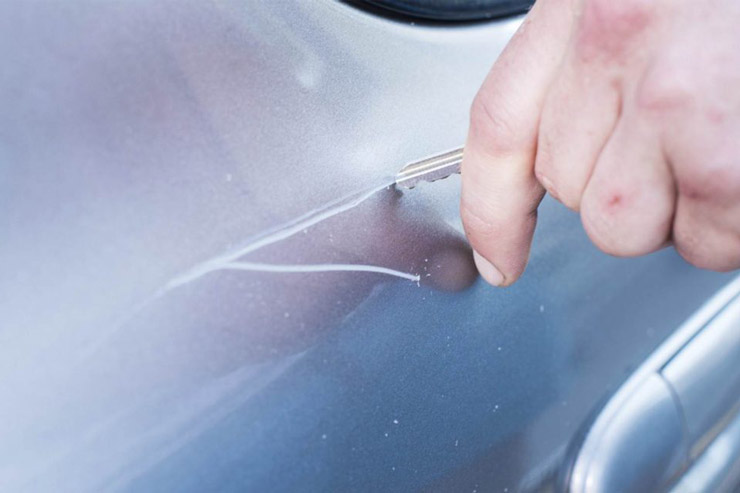
Common Scenarios: Minor scrapes, accidental key scratches, or door dings from adjacent cars in a parking lot.
3. Deep Scratch (Primer/Metal Scratch)
Characteristics: The scratch has cut right through the clear coat and base coat, reaching the primer, or even exposing the silvery-gray metal layer underneath. This is the most severe type of scratch. If left untreated, the exposed metal will rust quickly, and the cost of repair will skyrocket.
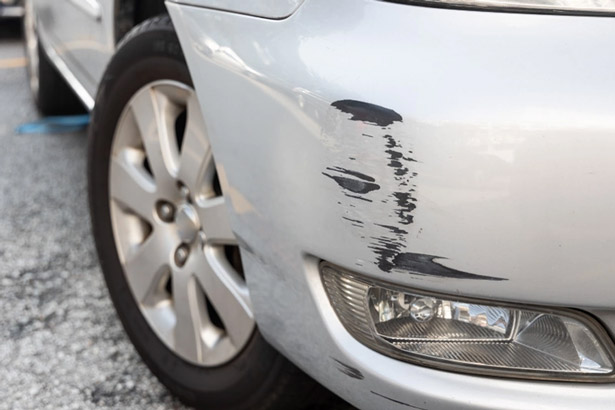
Common Scenarios: Serious collision accidents, hitting a hard object on the side of the road.
II. Light Scratches: DIY, Easily Done (DIY Repair Guide)
Method 1: The Toothpaste Trick
This is the most well-known and simplest DIY repair method worldwide. When done correctly, toothpaste works surprisingly well on light scratches.
What You Need:
- A clean soft towel or microfiber cloth
- A sponge
- A tube of white toothpaste (not the gel type or clear toothpaste)
Step-by-Step Instructions:
- Thorough Cleaning: First, wash the scratched area thoroughly with car wash soap and water. This step is crucial because any sand or grit left in the scratch will cause secondary damage when you start rubbing.
- Dry the Area: Use a clean towel to dry the area completely.
- Apply Toothpaste: Squeeze an appropriate amount of toothpaste onto the soft towel or sponge. Note: Make sure to use regular white toothpaste without abrasive granules; otherwise, you might make things worse instead of better.
- Gentle Buffing: Using a circular motion, gently and evenly buff the scratched area. Maintain light pressure and do this for about 30 seconds to 1 minute.
- Clean and Inspect: Wipe away the toothpaste residue with a damp cloth and check the results. If the scratch has faded but not completely disappeared, you can repeat the process. Finally, buff the area to a shine with a dry towel.
Method 2: Professional Scratch Remover / Rubbing Compound
If the toothpaste trick doesn’t yield noticeable results, or if the scratch is slightly deeper, you can purchase a bottle of scratch remover or rubbing compound from an auto supply store.
What You Need:
- A bottle of scratch remover (e.g., 3M, Turtle Wax, or similar brands)
- A clean microfiber cloth
Step-by-Step Instructions:
- Clean and Dry: Just like the toothpaste method, wash and dry the area first.
- Apply Product: Squeeze the rubbing compound onto the soft cloth.
- Directional Buffing: Rub back and forth in a straight line, following the direction of the scratch. Continue for approximately 2-3 minutes until the scratch is visibly diminished.
- Finishing Touch: Wipe away any excess compound with a dry cloth. After the repair, it is highly recommended to apply a coat of car wax to the area to protect the newly exposed paint surface.
III. Moderate Scratches: Touch-Up Pen in Hand, Minor Scrapes Are No Problem
If neither toothpaste nor rubbing compound does the trick, you are likely dealing with a moderate scratch. At this point, you need to bring out the “secret weapon”—a touch-up paint pen.
What You Need:
- A color-matched touch-up paint pen (purchase online or at an auto parts store based on your car’s exact make, model, and year)
- Fine-grit sandpaper (2000-grit or higher recommended)
- Masking tape (optional)
Step-by-Step Instructions:
- Clean and Remove Rust: Wipe the scratched area meticulously with an alcohol pad to remove all grease and contaminants. If there is slight surface rust, use 2000-grit wet sandpaper to gently sand away the rust spots.
- Shake the Paint Well: Like using correction fluid, shake the touch-up pen vigorously for at least 30 seconds before use to ensure the paint inside is thoroughly mixed.
- Apply Thin Layers: Using the pen tip, gently dab the paint into the scratch groove. Remember: Do not apply too thick a coat at once. Apply a very thin layer, wait 5-10 minutes for it to dry completely, then apply a second layer, then a third, until the primer is fully covered.
- Dry and Level: After the touch-up paint has dried (ideally wait 24 hours), use fine-grit sandpaper with water to gently level the surface, then polish with a rubbing compound to blend the old and new paint surfaces.
Important Reminder: Touch-up paint may result in a slight color mismatch; this is normal. If your car is Pearl White or has a special metallic finish, the difference might be more noticeable. Nonetheless, as an emergency repair, it remains the best option available.
IV. Deep Scratches: Leave It to the Professionals for Peace of Mind
When a scratch is deep enough to expose bare metal, or if the affected area is large, the risk of DIY repair is too high. At this stage, it is wise to hand the car over to a professional body shop or dealership.
What Does the Professional Repair Process Look Like?
Professional repainting is a complex, multi-step process that includes cleaning, sanding, applying primer, base coat, and clear coat. Technicians also work inside infrared paint curing booths to ensure the paint hardness meets required standards.
How Much Does It Cost? How Long Does It Take?
- Cost: The price for professional repair varies by region, car model, and extent of damage. Typically, repainting a single panel (like one door) costs between 500 and 2,000 RMB. For high-end luxury brands, the cost of OEM paint materials is higher, so fees are generally 30%–50% more than mainstream brands.
- Time: Generally requires 3 to 8 hours. If the scratch is accompanied by a dent that requires bodywork repair, both the time and cost will increase accordingly.
After discovering a deep scratch, it is best to address it within 72 hours to effectively prevent metal oxidation and rust formation.
V. Scratches on Special Areas: Quick Fixes for Plastic Parts like Bumpers
If the scratch appears on plastic components such as the bumper or wheel arch trim, the repair method can be even simpler.
What You Need:
- Heat gun or hair dryer
- Plastic trim restorer
Step-by-Step Instructions:
- Clean the Area: Wash the scratched area with soapy water.
- Heat Repair: Using a hair dryer (set to the hottest setting) or a heat gun, apply heat from about 15 cm (6 inches) away with a sweeping motion. The heat softens the plastic and can allow shallow scratches to “heal” themselves.
- Apply Restorer: After heating, spray a coat of plastic trim restorer evenly over the scratch. Wipe gently with a soft cloth after it dries.
VI. Prevention is Better Than Cure: Daily Car Care Guide
While learning how to fix scratches is useful, the best approach is always to prevent them from happening in the first place. Developing good maintenance habits will keep your car looking newer for longer.
- Scientific Washing: Do not use one dirty rag to wipe the entire car from top to bottom. Use a pressure washer to rinse off mud and grit first, then wash with a clean sponge and pH-neutral car shampoo.
- Regular Waxing: Regular waxing acts like a protective coat for the paint, effectively resisting fine scratches and UV damage.
- Avoid Hazards: When parking, try to stay away from construction zones, overgrown branches, and trees that drip sap.
- Prompt Treatment: As soon as you spot a scratch, especially one that exposes the primer, address it quickly to prevent rust from spreading.
In many automotive markets around the globe, used car buyers pay close attention to the vehicle’s exterior condition. For instance, if you are browsing listings for a car for sale in Cambodia, you will find that vehicles with well-maintained paintwork command significantly better prices and sell much faster.
VII. Frequently Asked Questions (FAQ)
Q: Can toothpaste really repair car scratches?
A: Yes, but only superficial clear coat scratches. The principle involves using the mild abrasive particles in toothpaste for micro-polishing.
Q: How long after using a touch-up pen can I wash the car?
A: It is best to wait at least 24 hours to allow the paint to fully dry and cure. Washing the car immediately after repair may wash away the freshly applied paint.
Q: What are the consequences of leaving a deep scratch untreated?
A: If left untreated, the exposed metal will react with moisture and oxygen in the air, causing rust. Once rust forms, it will spread to the surrounding healthy paint, eventually leading to bubbling and peeling across the entire panel. The cost of repair will increase exponentially.
Q: Approximately how much money can I save by repairing scratches myself?
A: Handling a light scratch yourself (with toothpaste or scratch remover) costs almost nothing or just a few dozen yuan. Taking the same issue to a professional detailing shop for polishing might cost 100–200 RMB. Handling a moderate scratch yourself (with a touch-up pen) costs about 20–40 RMB, whereas a local respray at a body shop costs at least several hundred yuan.
VIII. Conclusion
Remember the three-step rule: Diagnose first, then act, and for deep damage, seek professional help.
Most minor scratches can be easily resolved with a tube of toothpaste costing a few yuan or a touch-up paint pen. Not only do you save a significant amount on repair bills, but you also acquire a practical skill to keep your beloved car looking pristine. For deep scratches, decisively turning to a professional is truly the most responsible choice for your vehicle.
Looking for top-quality new or used cars? Trust DG Motors for fast, reliable service—or visit our Phnom Penh showroom today!