In today’s global context, the automobile is no longer just a means of transport. It reflects our lifestyle and personal taste. It also represents a significant financial investment. In emerging auto markets like Cambodia, people care for their vehicles just as much as owners in Europe or America do.
You may have just spotted a brand-new “car for sale in cambodia” on a platform. Or perhaps you already own an old friend that has served you for years. Either way, one question haunts car owners worldwide: How often should I wash my car? And more importantly, how can I wash it without harming the paint?
Car Wash Frequency Guide
Many car owners wash on a fixed schedule, like following an alarm clock. But this habit is not entirely scientific. Washing too often each week may speed up paint wear. Going too long without a wash lets stubborn stains corrode your beloved vehicle.
The American Automobile Association and global auto care experts generally agree on one point. Under normal commuting conditions, they recommend washing most vehicles every two weeks. This golden interval removes daily dust and grime effectively. It also reduces micro-scratches from frequent cleaning as much as possible.
The smartest strategy, however, is to observe your parking spot and driving route. To help you time it right, we have created a “Scenario-Based Car Wash Frequency Reference Chart” for you:
| Driving Scenario / Environment | Recommended Wash Frequency | Core Reasons & Global Car Owner Pain Points |
| Urban Commuting / With Underground Parking | Once every two weeks | Static adsorption experiments show a clear result. Vehicles in underground garages and on good roads collect surface dirt at the slowest rate. |
| Dusty Areas / Near Construction Sites | Once a week | Sand and particles in the air act like micro-sandpaper. They scratch the paint and clog the condenser. This reduces air conditioning cooling efficiency. |
| Coastal Areas / Tropical Climate | Once every 7-10 days | You may live in Miami, Sydney, or Sihanoukville in Southeast Asia. High salt spray from sea breezes speeds up rust and corrosion. It attacks the undercarriage and metal body at an exponential rate. |
| Encountering Extreme Weather or Severe Pollution | Wash Immediately | Acid Rain: It leaves acidic crystals after evaporation. These crystals erode the clear coat. Bird Droppings and Tree Sap: Uric acid in droppings corrodes paint within 24 hours. Tree sap penetrates with extreme force. It can enter the clear coat in under three hours and resists removal. Bug Splatter: After a long highway trip, insect remains pile up on the front bumper. If you do not clean them quickly, their acidic fluids leave permanent yellow marks on the paint. |
How to Wash Your Car Safely? The Four-Step Scratch Prevention Method
You have decided how often to wash. Now the next core question is: How can I wash my car safely? Wrong methods cause “swirl marks” and dull paint. Many owners, lured by low cost, use bad sponges or laundry soap. This leaves the paint covered in tiny scratches anyone can see.
You want your beloved car to keep its factory gloss for years. That holds true whether you picked a “Cambodia car for sale” from the used lot or own a new European or American luxury vehicle. Please follow this four-step safe wash rule closely.
Step 1: Pre-Wash and Pre-Rinse
Never start by wiping a dry or dusty car body with a sponge! Before you touch the paint, rinse the whole vehicle from top to bottom. Use a pressure washer or a hose. This step knocks off coarse sand and grit stuck to the surface. If a wash mitt traps these particles and rubs them back and forth, you effectively sand the paint finish.
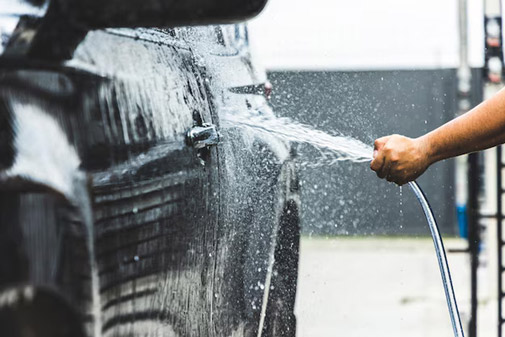
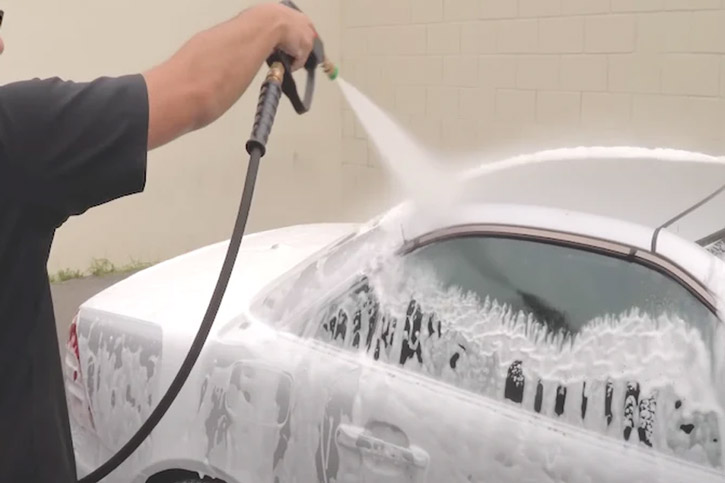
To soften stubborn grime even more, use a foam cannon. Apply a thick layer of pre-wash foam and let it sit and drip for three to five minutes. During this time, the foam wraps around the underlying dirt and sand. Gravity then pulls them down to the ground.
Step 2: The Two-Bucket Wash Method
Prepare two buckets. Fill Bucket A with water and pH-neutral car wash shampoo. Fill Bucket B with clean water only.
Wash Mitt Zonal Cleaning: Wear a good microfiber wash mitt. Dip it into the soapy water in Bucket A. Wipe the car body in straight lines. Go from top to bottom and front to back.
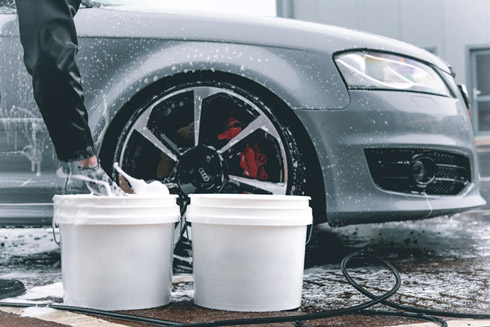
Clean the Mitt Promptly: After you finish each body panel, rinse and scrub the mitt clean in Bucket B. This step traps leftover grit at the bottom of the rinse bucket. You then avoid putting that dirt back onto the paint during your next dip.
Special Reminder: Wheel arches and rims hold heavy mud, sand, and brake dust. Use a separate, dedicated mitt or tool for these areas. Do not use the same mitt you use for the painted surfaces. The results could be dire otherwise.
Step 3: Scientific Rinsing
Rinse all foam off the car body with running water. Follow the top-to-bottom rule once more. Check spots where water likes to hide. These include door seams, side mirror bases, and trunk lid taillight housings. Foam left in these crevices will dry into ugly water spots.
Step 4: Water Absorption and Drying
People often ignore this step, but it matters a great deal. Never let your car air dry on its own! In Southeast Asia or other hot places, the sun beats down hard. The paint temperature soars. Water droplets then act like lenses, burning the paint and leaving mineral spots you cannot easily remove.
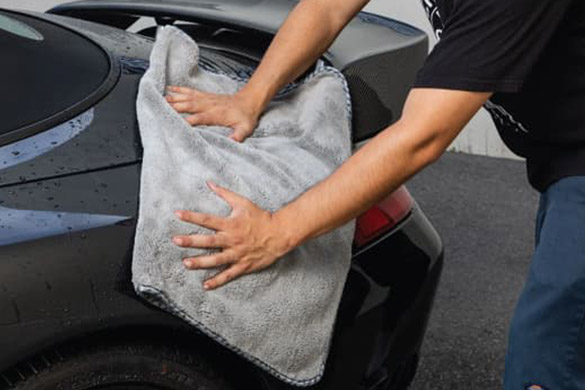
Here is the correct method: Use one or more high-quality microfiber drying towels. These towels should absorb water extremely well. Lay the towel flat on the paint. Gently drag it with your palm to soak up the water. Do not press down hard or rub.
Avoid These Fatal Car Wash Pitfalls
Do Not Use Household Dish Soap or Laundry Detergent: This rule is absolute! Household cleaners tend to be very alkaline or too good at cutting grease. They will strip away that expensive wax or sealant layer you applied. The paint then oxidizes and turns yellow fast. Always pick a dedicated, pH-neutral car wash shampoo.
Do Not Wash in Direct, Scorching Sunlight: When body panels feel hot, water and foam dry and cake up in seconds. Cleaning becomes harder. The dried soap residue also eats into the clear coat. Wash your car in the early morning or evening. Find a shaded spot with a roof.
Beware of Old Tunnel-Style Automatic Car Washes: Not all auto washes cause harm. But machines with old, stiff nylon brushes are true “paint killers.” The brushes hold dirt and sand from earlier cars. They then grind thousands of swirl marks into your vehicle. If you truly lack time for a hand wash, look for a “touchless” automatic wash instead.
Summary
Car washing seems simple, yet it hides many tricky details. Put it in one line: Do not wash by the calendar. Wash based on the environment and what you actually see on your vehicle.
Stick to the four-step safe wash method. Steer clear of the three big mistakes. Then your beloved car will shine brightly on every trip ahead and hold its value for much longer!
Looking for top-quality new or used cars? Trust DG Motors for fast, reliable service—or visit our Phnom Penh showroom today!