Contents
hide
- I. Exterior Design: An Evolution from Elegance to Ruggedness
- II. Powertrain: The Exquisite Harmony of the 2.5T Hybrid
- III. Fuel Economy: A New Efficiency Benchmark for Large SUVs
- IV. Interior Space: A Perfect Fusion of Technology and Practicality
- V. Global Market Positioning and Competitive Landscape
- VI. Considerations to Keep in Mind
- VII. Conclusion: Who Should Buy the Telluride Hybrid?
The large three-row SUV market once faced an insoluble dilemma: we craved spacious passenger accommodations and robust towing capacity, yet were forced to endure high fuel consumption and mediocre acceleration performance. Kia has thoroughly rewritten this scenario with the all-new 2027 Telluride Hybrid. As the first model in Telluride history to be equipped with a hybrid powertrain, it not only delivers a potent output of 329 horsepower but also redefines the efficiency benchmark for this segment with an EPA-estimated combined fuel economy of 35 mpg.
Amid the global wave of automotive electrification, the Southeast Asian market is embracing transformation at an unprecedented pace. Taking Cambodia as an example, in 2025, consumer spending in the country’s passenger vehicle market surged to a record high of $1.1 billion, with new car sales accounting for approximately 55% for the first time, while used car sales fell to 45%. The types of vehicles on sale in Cambodia are rapidly transitioning from traditional Japanese used cars to brand-new SUVs from Chinese and American brands, as well as Chinese electric vehicles. The Kia Telluride Hybrid’s combination of generous space and outstanding fuel efficiency undoubtedly aligns with the core demands of family users in such emerging markets.
In the following sections, this article will present a comprehensive review of the 2027 Kia Telluride Hybrid, covering exterior design, powertrain, fuel economy, interior space, market positioning, and the competitive landscape, to help you fully understand this highly anticipated flagship three-row family SUV.
I. Exterior Design: An Evolution from Elegance to Ruggedness
At first glance of the new Telluride, you will immediately sense its complete transformation compared to the previous generation. Kia’s design team has abandoned the original conservative, elegant styling in favor of a more squared-off and rugged design language. This aesthetic evokes associations with luxury off-roaders like the Land Rover Range Rover, endowing the Telluride with a stronger visual impact and road presence.
The front fascia is highly distinctive. The redesigned “Tiger Nose” grille, paired with thick chrome accents, projects an aura rivaling six-figure luxury vehicles. The headlights feature a vertically stacked dual daytime running light design, distinctly separated from the upper edge of the grille by the hood line, embodying Kia’s signature “Tiger Nose” family design language.
The side profile is equally compelling. A floating roof design with a blacked-out A-pillar, combined with body-color fender cladding, creates a visual effect that is both fluid and powerful. The rear design features a vertical tailgate and upright taillights, while hidden exhaust outlets temper the overall assertiveness.
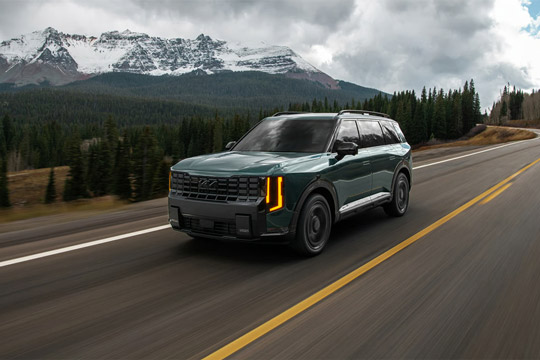
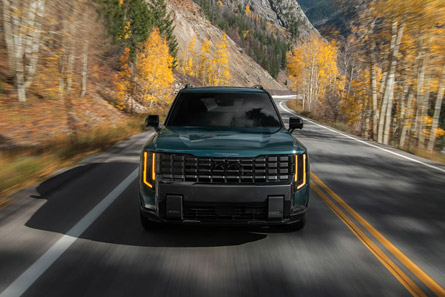
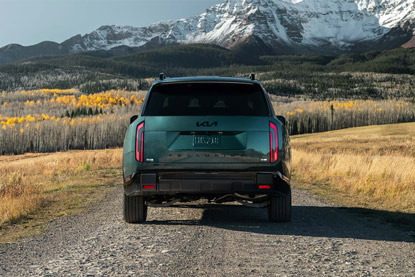
The new Telluride’s body dimensions have grown significantly compared to its predecessor. The wheelbase reaches 2970 mm, an increase of approximately 70 mm over the previous model. This growth yields immediate benefits—more generous headroom in the first and second rows, and easier access to the third row. In the North American market, this size represents the gold standard for large three-row SUVs, capable of seating seven passengers without feeling overly cumbersome during urban commutes.
Furthermore, Kia has introduced X-Line and X-Pro off-road trims, further enhancing all-terrain capability. The X-Pro version is equipped with an off-road tuned suspension, all-terrain tires, and an electronic limited-slip differential, with ground clearance increased to 9.1 inches (approximately 23.1 cm), eliminating worries about underbody scraping during light off-roading. This is undoubtedly an appealing option for users who enjoy weekend outdoor adventures with their families.
II. Powertrain: The Exquisite Harmony of the 2.5T Hybrid
The comprehensive overhaul of the powertrain is the most exciting upgrade for the 2027 Telluride. Kia bids farewell to the previous 3.8-liter V6 naturally aspirated engine and introduces two entirely new powertrain options: a 2.5-liter turbocharged gasoline engine and a 2.5-liter turbocharged hybrid system.
The hybrid version is unequivocally the focal point. This system ingeniously combines a 2.5-liter turbocharged four-cylinder engine with two electric motors, achieving a combined maximum system output of 329 horsepower and a peak torque of 339 lb-ft (approximately 460 N·m). Compared to the previous V6 engine’s 291 horsepower and 262 lb-ft of torque, power increases by 38 horsepower, and torque surges by 77 lb-ft. Even the contemporary 2.5T gasoline-only version (274 horsepower) pales in comparison to the hybrid variant.
This hybrid system utilizes a parallel hybrid architecture, wherein the internal combustion engine employs the Atkinson cycle to optimize fuel efficiency. The operating logic is remarkably intelligent: in slow urban traffic, the system prioritizes pure electric driving, rendering the cabin virtually silent of engine noise and creating a serene ambiance that momentarily tricks occupants into believing they are in an electric vehicle. When sudden acceleration is demanded, the engine and both electric motors engage simultaneously, delivering a surprisingly crisp and responsive thrust from this roughly 2.2-ton large SUV.
Regarding the transmission, the hybrid version is paired with a 6-speed automatic transmission featuring a torque converter, supplied by Hyundai Transys, a subsidiary of Hyundai Motor Group. This transmission has been specially calibrated for smooth and timely shifts. The hybrid model comes standard with an Electric-Vehicle Motion Control (e-VMC) system, which aids the driver in achieving better handling and stability through brake and motor control. The all-wheel-drive system performs reliably on slick surfaces like rain-soaked roads, and when Mud Mode is engaged, wheel slip is minimal on unpaved country paths, providing solid safety assurance for family outings.
The hybrid system incorporates a 1.65 kWh lithium-ion polymer battery, cleverly positioned beneath the second-row seats without compromising the flatness of the rear cargo floor. This battery can also power the audio system, climate control, and other electronic devices for approximately 20 minutes when the vehicle is stationary.
III. Fuel Economy: A New Efficiency Benchmark for Large SUVs
Fuel economy was once the perennial Achilles’ heel of large SUVs. However, the Telluride Hybrid thoroughly shatters this ingrained perception. Thanks to the synergy between the efficient hybrid system and the 1.65 kWh lithium-ion battery pack, this vehicle delivers a satisfying performance in terms of fuel efficiency.
According to EPA (U.S. Environmental Protection Agency) estimates, the front-wheel-drive Telluride Hybrid EX achieves a combined fuel economy of approximately 35 miles per gallon (roughly 6.7 L/100 km), with a maximum combined driving range on a full tank reaching up to 637 miles (approximately 1,025 km). Chinese-language media outlets have also reported a fuel consumption figure of just 6.72 L/100 km for the hybrid version, a substantial decrease from the previous V6’s 10.69 L/100 km, enabling a range of up to 966 km on a single tank.
With a full-tank driving range exceeding 1,000 kilometers, the Telluride Hybrid makes even many battery electric vehicles uneasy—after all, it suffers from neither range anxiety nor the need to queue for charging.
Of course, compared to the Toyota Grand Highlander Hybrid, while the Telluride boasts approximately 84 more horsepower, it makes a slight compromise in ultimate fuel economy. This represents a choice requiring a trade-off between robust power performance and extreme fuel savings.
In terms of standard towing capacity, the Telluride Hybrid is rated to tow up to 4,500 lbs (approximately 2,041 kg) and offers an optional self-leveling rear suspension, effectively maintaining vehicle posture when towing heavy loads.
IV. Interior Space: A Perfect Fusion of Technology and Practicality
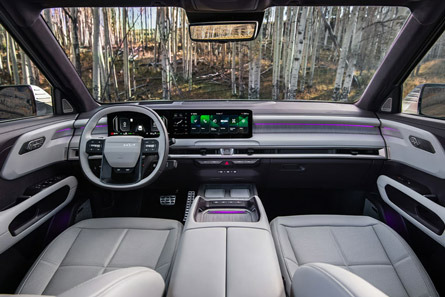
Stepping inside the Telluride’s cabin, one immediately appreciates Kia’s attention to interior design. The new generation model features a dual 12.3-inch curved display setup with a minimalist aesthetic brimming with technological sophistication. The central touchscreen is angled slightly toward the driver, allowing access to all core functions without needing to remove one’s hands from the steering wheel.
Regarding seating, higher trim levels offer Nappa leather upholstery, ensuring sustained lumbar comfort even after long hours behind the wheel. A rear-seat entertainment system is standard equipment, capable of keeping children quietly occupied with cartoons for several hours during lengthy journeys—a veritable “parenting essential.”
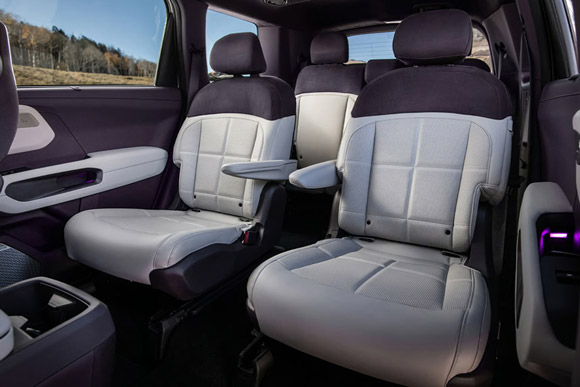
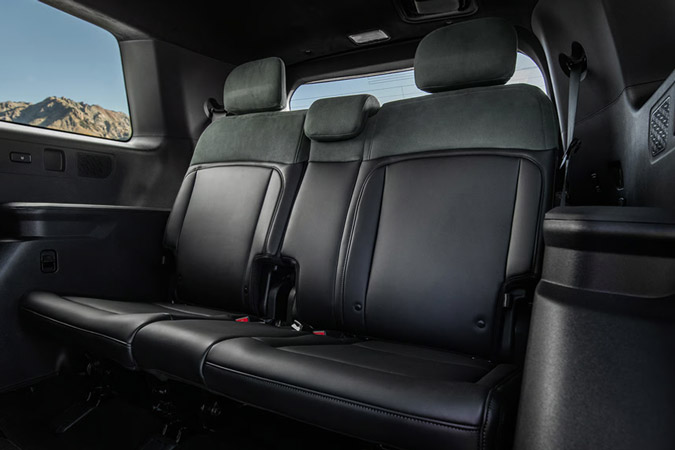
Third-row space is a standout feature of the Telluride, far from being merely symbolic. With the increased wheelbase, access to the third row is easier, and the second-row seats have been optimized to allow easy entry to the back without needing to remove a child safety seat. For families with multiple children, this design detail is exceptionally thoughtful.
In terms of cargo capacity, the base trunk volume has been increased to 631 liters, which expands to an astonishing 2,461 liters when both the second and third rows are folded down. Whether it’s luggage for a family trip or gear for an outdoor camping excursion, the Telluride accommodates it all with ease.
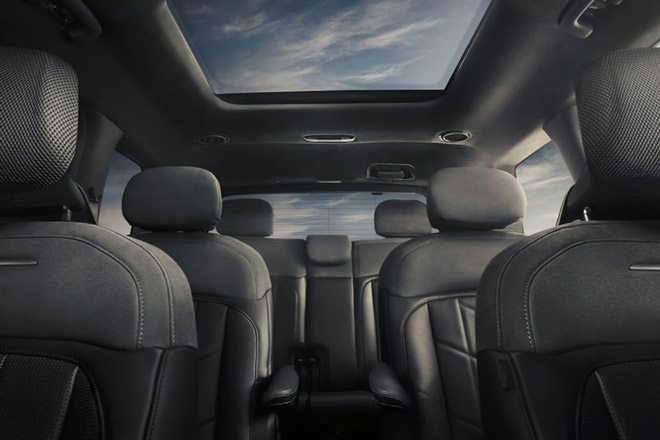
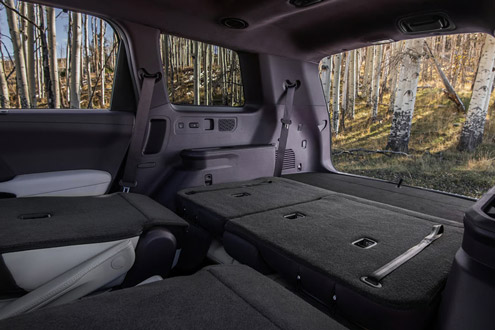
Smart technology features are equally impressive. The infotainment system supports wireless Apple CarPlay and Android Auto, and is equipped with an AI voice assistant. On the safety front, 10 airbags come standard, including a new front center airbag designed to prevent the driver and front passenger from colliding with each other during a side impact. The Level 2 advanced driver-assistance system encompasses a suite of safety features including Highway Driving Assist, Lane Keeping Assist, Forward Collision-Avoidance Assist, and Blind-Spot Monitoring.
V. Global Market Positioning and Competitive Landscape
The 2027 Kia Telluride Hybrid is produced at Kia’s West Point plant in Georgia, USA, and made its market debut in North America during the first quarter of 2026. Pricing announced by Kia America is as follows, excluding a destination charge of $1,545:
| Trim Level | Drivetrain | Manufacturer’s Suggested Retail Price (USD) |
| EX | FWD | $46,490 |
| EX | AWD | $48,490 |
| SX | FWD | $51,490 |
| X-Line SX | AWD | $54,490 |
| SX-Prestige | AWD | $56,590 |
| X-Line SX-Prestige | AWD | $57,590 |
Except for the entry-level EX trim, all other trims offer an all-wheel-drive option, with AWD versions commanding a $2,000 premium over their FWD counterparts with the same configuration. The price range for these six trims spans from approximately $48,035 to $59,135. Securing the top-tier hybrid AWD model for under $60,000 represents exceptional value within the competitive segment.
U.S. News awarded the 2027 Telluride Hybrid an impressive score of 9.3 out of 10, ranking it second in the Hybrid SUV category. The review noted that it “improves on the gas-only original in just about every way,” praising it as “quieter, smoother and stronger than the old V-6 and new gas-only model.”
In the competitive arena, the Telluride Hybrid faces several core rivals:
The Hyundai Palisade Hybrid is the most direct sibling model, sharing the identical 2.5T hybrid powertrain and matching power figures. With a starting price around $44,160, it undercuts the Telluride Hybrid by approximately $2,000, positioning itself as the most compelling challenger in terms of value proposition.
The Toyota Grand Highlander Hybrid starts at $46,505. While it carries a lower starting price, its 2.5L hybrid system produces only 245 horsepower, representing a significant power deficit compared to the Telluride.
The Volkswagen Atlas 380TSI may hold a slight edge in third-row spaciousness, but its interior material quality noticeably lags behind the soft-touch surfaces and refined craftsmanship found in the Telluride.
From a global market trend perspective, hybrid three-row SUVs are experiencing rapid growth. Looking at Southeast Asia as an example, the proportion of electrified vehicles among those on sale in Cambodia is steadily climbing year over year. Between 2021 and 2025, Cambodia cumulatively registered 9,065 electric cars, 3,203 electric motorcycles, and 700 electric three-wheelers. The government aims for a 40% electric vehicle penetration rate and a 70% electric motorcycle penetration rate by 2050. The Kia Telluride Hybrid, with its blend of spaciousness and low fuel consumption, perfectly addresses the core needs of family users in these burgeoning markets.
VI. Considerations to Keep in Mind
No vehicle is without its flaws. To facilitate a comprehensive purchasing decision, it is necessary to candidly point out several noteworthy aspects of the Telluride Hybrid.
First, noise insulation performance warrants further scrutiny. The level of wind noise control at highway speeds and whether it proves quieter than the Toyota Grand Highlander require real-world test drive evaluation. If extended high-speed highway driving constitutes a significant portion of your routine, it is advisable to assess the cabin’s quietness under actual road conditions.
Second, the hybrid version’s front fascia styling has generated considerable debate, described by some commentators as possessing “controversial styling.” Aesthetics are subjective; viewing the vehicle in person is recommended.
The entry price point is undeniably not low. The hybrid version starts at $46,490, roughly $2,000 higher than the Toyota Grand Highlander Hybrid. Analysis by Carscoops suggests that recouping the cost difference between the hybrid and gasoline-only versions through fuel savings could take over six years. Consequently, this model is better suited for users planning long-term ownership who place a higher premium on power and driving experience.
Additionally, the hybrid version offers fewer configuration choices compared to the gasoline-only model. If you have a strong preference for a specific feature combination, it is prudent to verify whether that desired configuration is available on the hybrid variant.
VII. Conclusion: Who Should Buy the Telluride Hybrid?
In summary, the 2027 Kia Telluride Hybrid is a highly competitive three-row family SUV. With its robust 329 horsepower and exceptionally low fuel consumption of 6.7 L/100 km, it successfully dismantles the entrenched stereotype that “large SUVs are inevitably gas guzzlers.” Its spacious third-row accommodations, abundant technology features, and commendable mild off-road capability render it an ideal all-around vehicle for multi-child families.
If you are in the market for a large SUV that can comfortably accommodate the entire family and confidently tackle long-distance journeys, while holding high standards for fuel economy, the Telluride Hybrid undoubtedly deserves a place on your shortlist. However, if your priorities lean toward ultimate resale value and a lower entry price, the Toyota Grand Highlander Hybrid or the Hyundai Palisade Hybrid may represent more suitable alternatives.
As Kia continues to expand its global market footprint, we can anticipate seeing the Telluride Hybrid appear in more regions worldwide. Whether in North America, the Middle East, or emerging markets reflected in Cambodia’s evolving vehicle sales landscape, this large SUV—which masterfully integrates space, power, and efficiency—is poised to garner increasing favor among family users across the globe.
Looking for top-quality new or used cars? Trust DG Motors for fast, reliable service—or visit our Phnom Penh showroom today!