In any corner of the globe, the excitement of buying a car often makes rational budgeting temporarily “disappear.” You meticulously compare car prices, negotiate the monthly payment, and then sign the contract with full confidence. Yet the real financial test has only just begun. According to the latest 2025 data from the American Automobile Association (AAA), the average annual cost of owning a new car has already broken through the $12,000 threshold. Unfortunately, the vast majority of car buyers seriously underestimate this figure. In fact, a survey by the European Consumer Organisation (BEUC) also shows that over 65% of first-time car buyers experience severe budget overruns in their first year. Today, let me take you on a global tour to unearth, one by one, those car expenses that are most easily forgotten. These items will not only complete your financial planning but are also the bedrock of a mature car-buying decision.
1. Depreciation: The Biggest Hidden Cost
Among all hidden costs, depreciation is the largest yet most overlooked item. The moment you drive a new car off the dealer’s lot, it has already lost value. A globally applicable rule of thumb is: the depreciation rate in the first year typically ranges between 20% and 30%. For example, a family car priced at $30,000 may silently lose $6,000 to $9,000 in the very first year. More crucially, most people never include this colossal depreciation in their monthly car expense calculations. In fact, the cost of depreciation often exceeds the combined cost of fuel and insurance. Therefore, whether you are in Los Angeles, Berlin, or Sydney, if you fail to consider the resale residual value after three years when buying a car, you are essentially letting your wealth quietly evaporate.
2. Insurance Premiums: A Recurring Cash Outflow
Car insurance is an unavoidable expense for every car owner, but its volatility is frequently underestimated. Many people assume that the first year’s premium is a permanent, unchanging expense. Unfortunately, this is not the case. A single minor claim, a change of residential address, or even an insurer’s actuarial adjustment to local risk can cause the renewal price to skyrocket. The differences in this cost across global markets are staggering. For example, in the United States, a good credit score can significantly lower premiums; whereas in the United Kingdom, the annual premium for a young driver can even exceed 30% of the vehicle’s own price. As a consumer, you must therefore check the insurance group rating for your target model in advance and set aside at least a 15% budget flexibility buffer for future premium increases.
3. Energy Costs: The Bottomless Pit Beyond Fuel and Electricity Bills
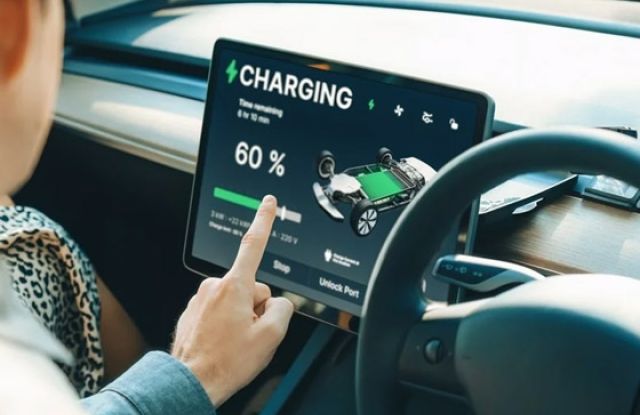
When you estimate energy costs, do you simply multiply the fuel price by the nominal fuel consumption, or the battery capacity by the electricity rate? If so, your budget is very likely to crash. First, real-world fuel consumption under actual road conditions is typically 20% to 30% higher than official figures. Second, in climate zones with extreme cold or scorching heat, a vehicle’s energy consumption increases dramatically. This is extremely evident during Canadian winters or the summers in the United Arab Emirates. Moreover, electric vehicle owners often overlook the service fees and idle-time overstay charges at public charging stations. Compared to the cheap electricity rates of home charging, the per-kilometer cost of using fast chargers during a long-distance trip can sometimes be no less than that of a gasoline car. Globally, energy cost is a continuous cash flow directly tied to the wheels, and you must estimate it based on more pessimistic real-world scenarios.
4. Regular Maintenance and Wear-and-Tear Parts: The “Bill Avalanche” After the Free Warranty
The complimentary maintenance offered with a new car often creates a “zero maintenance cost” illusion for the buyer. Once the free service period ends, reality bares its fangs. Beyond routine oil and filter changes, there are far too many wear-and-tear parts that are easily forgotten. For instance, a set of high-quality all-season tires, under Germany’s statutory replacement requirements, could set you back 600 to 1,000 euros. Maintaining the braking system, replacing spark plugs, and changing transmission fluid are all no small sums, not to mention the natural aging of suspension system components as the vehicle ages. In any part of the world with high labor rates for repairs, such as Australia or North America, ignoring budget planning for these periodic major maintenance services is a financial gamble.
5. Taxes and Registration Fees: The “Invisible Hand” of Local Government
The triumph of negotiating the car price often makes people forget that a series of mandatory taxes and fees are lying in wait. From a global perspective, the disparity in this expenditure can be almost surreal. In Singapore, just a Certificate of Entitlement (COE) can cost tens of thousands of Singapore dollars, almost equivalent to the price of a car. In Nordic countries like Denmark, exorbitant registration taxes can directly double the vehicle’s price. Even in regions with relatively low taxes, you cannot escape annual emissions taxes or property taxes. For example, the Ultra Low Emission Zone (ULEZ) fee imposed in London, UK, could unknowingly cost the owner of a non-compliant vehicle thousands of pounds each year. If you plan to use a car in a different city or a major metropolis, you must clearly understand the local policies on road tax, registration fees, and even congestion charges.
6. Parking, Tolls, and Mobility Expenses
This category of expense is most easily overlooked because of its piecemeal nature. Many people only calculate the fuel cost from home to work but forget the staggering parking fees at the destination. In many global metropolises, such as New York, Tokyo, or Hong Kong, the cost of a monthly parking space in a core district can be even more expensive than a Michelin-starred meal. At the same time, highway tolls during the commute, or city entry fees designed to curb traffic congestion—like those in Oslo or Milan—can all cause your monthly bill to climb silently. It is no exaggeration to say that these seemingly insignificant small daily payments, when added together, often account for more than 10% of the entire vehicle life-cycle cost. You therefore need to estimate every single passage fee along your daily mobility route in the most meticulous way possible.
7. Loan Interest and Finance Charges: The Trap Behind the Monthly Payment Figure
Financial advisors at dealerships are extremely skilled at simplifying complex total costs into an enticingly low monthly payment. Many car buyers naively assume that as long as they can afford a deduction of $300 a month or 2,000 yuan, they can afford the car. In fact, you completely overlook that this monthly payment is built on a mountain of high interest. If you only fixate on the monthly payment and ignore the loan’s annual percentage rate (APR) and the total loan term, you will pay a huge amount of interest. Moreover, well beyond the loan term, the vehicle has already depreciated significantly, yet you are still paying interest on its residual value. The essence of this double erosion is particularly evident in emerging markets with high interest rates, such as Brazil or India. So, make sure to factor the total loan interest into the overall cost of ownership, rather than just staring at that lowest monthly payment.
8. Detailed Accessories and Routine Cleaning
Once you drive your beloved car home, an endless journey of “beautification” and “armoring” begins. To enhance comfort and privacy, you need to apply window film. To keep the interior clean, you need to buy floor mats and a trunk mat. For driving safety, a dashcam and a phone mount become standard equipment. On top of this, there are regular car washes, deep interior cleaning, waxing, and crystal coating expenses. In Japan, many residential areas mandate that owners buy their own snow shovels and snow chains; in Northern Europe, the frequency of winter car washes must be increased to remove the corrosive de-icing salt. These seemingly insignificant accessories and cleaning services can easily, like death by a thousand cuts, slice several hundred or even thousands of dollars out of your budget every year. Never underestimate the compounding effect of these daily maintenance accessories.
9. Unexpected Fines and Emergency Out-of-Pocket Repairs
Life is full of “one in ten thousand” accidents. A single illegal parking violation or an inadvertently run red light can lead to a hefty fine. In New South Wales, Australia, a single fine for using a mobile phone while driving can cost hundreds of Australian dollars. Beyond fines, you also face incidents not covered by insurance. Examples include a windshield cracked by flying gravel, a high matching fee for a lost car key, or choosing to pay out of pocket for a minor scratch repair in order to protect your no-claims discount. These sudden bad debts often push paycheck-to-paycheck car owners into a situation of immediate financial hardship. I strongly recommend that you set up a dedicated “vehicle emergency fund,” maintained at a level of at least $1,000 or its equivalent in local currency, to calmly deal with these uninvited fines and bills.
10. Residual Value and Future Trade-In
The final hidden cost lurks in the distant future: the vehicle’s value retention rate. When buying a car, many people, tempted by a small immediate discount, choose a model with a poor market reputation or one that is about to be discontinued. The result is that three or five years later, when they want to trade it in, they discover the used-car residual value is shockingly low. Only a very small number of cool-headed buyers factor this “future loss” into the current average monthly cost. In the global market, value retention rates vary vastly between different brands. If you completely disregard resale value at the time of purchase, you are essentially shouldering a higher rate of depreciation and the resulting capital erosion in advance. Therefore, a mature global buyer will always incorporate the “estimated resale loss” into the total life-cycle cost model right from the initial purchase.
How to Build an Indestructible Car-Buying Budget
The ten points above may sound a little disheartening, but the method to avoid these traps is actually simple. What you need is a comprehensive and honest spreadsheet, not the beautified quotation handed over by the salesperson. Here, I have distilled for you the “Global Three-Step Quick-Check for Cost of Ownership” to help you perform a rapid self-audit. First, lock down the “fixed holding costs,” which include depreciation, taxes, insurance premiums, and loan interest. Second, calculate the “variable operating costs,” accurately recording the fuel, parking, toll, and congestion charges in your city. Finally, reserve funds for “long-tail risk costs,” which must include a 5% to 10% maintenance overrun contingency and an emergency fund for fines. Only when you add these three together and divide the sum by the estimated number of years of ownership will the resulting monthly figure be a car-buying budget truly worthy of your peace of mind.
Conclusion: Don’t Let Hidden Costs Eat Away Your Quality of Life
In summary, buying a car is never just about purchasing that shiny heap of steel and microchips. What you most need to “buy” is actually a comprehensive sense of control over your future cash flow. From parking fees in New York to Certificates of Entitlement in Singapore, from tire replacement schedules in Germany to the congestion charge zone in London, the global perspective relentlessly reveals the same truth: visible car prices are the most alluring, while invisible expenses are the most fatal. Of course, you absolutely need not be afraid of owning a car because of this. On the contrary, just one second before you sign your name, you only need to ask yourself one more question: Have I truly calculated the total cost of ownership (TCO) for this car over five years?