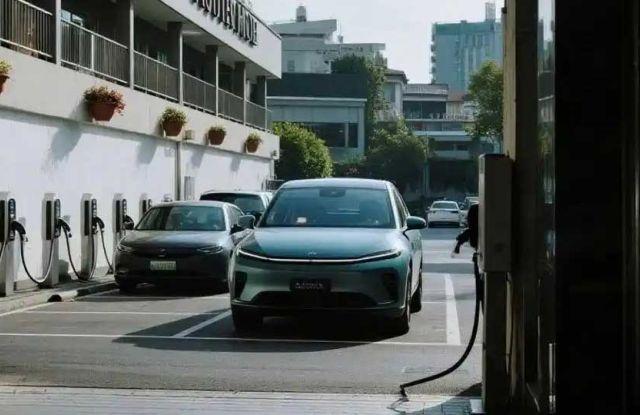
You may have always firmly believed that driving just a few kilometers each day to buy groceries or pick up the kids is the gentlest care you can give your engine. After all, the odometer ticks up slowly, and the mechanical parts seem to rotate less. Yet the truth is exactly the opposite. Over my many years as an auto mechanic, I have seen far too many scrapped engines with shockingly low mileage. In reality, every time you make a short trip, your beloved car is undergoing a kind of “slow suicide.” Short trips are the real catalyst for wear, whereas long journeys actually resemble a deep maintenance treatment for your vehicle. Today, let’s dismantle this counterintuitive truth from the perspectives of lubrication, electrochemistry, thermodynamics and more.
What truly defines a “short trip”?
First, we need a clear definition. A short trip does not simply mean a journey of a few kilometers on your navigation screen. It refers to a trip that ends before the engine ever reaches its normal operating temperature. Typically, this is a distance of less than five kilometers and a duration of no more than ten minutes. In other words, your oil and coolant are forever stuck in the warm-up phase. As a result, an invisible attack on precision components repeats itself every single day.
1. Cold start
What the vast majority of people do not know is that 70% to 80% of engine wear does not happen during high-speed driving. In fact, it is entirely concentrated in those few dozen seconds right after you press the start button. When the vehicle sits overnight, the lubricating oil completely drains back into the oil pan. At this moment, there is almost nothing left between the pistons, camshaft and crankshaft but a residual oil film. Even worse, the oil pump has not yet had time to deliver the cold, viscous oil to every corner of the engine. Consequently, during those first few seconds, metal contacts metal in a state of dry friction or boundary lubrication. This is the very root of engine wear.
Then, short trips magnify this nightmare. Because the journey is too brief, the oil barely begins to warm up and its fluidity only slightly improves before you shut off the engine. Over time, the engine is never able to enter its optimal lubrication state. In contrast, during a long trip, the oil rapidly heats up to around 100°C, forming a robust hydrodynamic lubrication film that completely separates the metal parts. Thus, wear drops to almost zero. A short trip, however, keeps the engine cycling within its maximum wear range. To put it another way, you may only drive three kilometers a day, but your engine accumulates countless cold-start wear cycles.
2. Oil emulsification and fuel dilution
Beyond physical wear, short trips also trigger deadly chemical reactions. This starts with blow-by gases. Inside the combustion chamber, there is always a portion of unburned gasoline and water vapor that slips past the piston ring gaps and enters the crankcase. Under normal conditions, when the oil temperature is high enough, this moisture and fuel evaporate and are drawn out by the Positive Crankcase Ventilation (PCV) system and burned. However, during short-distance driving, the oil temperature never reaches the boiling point required for evaporation.
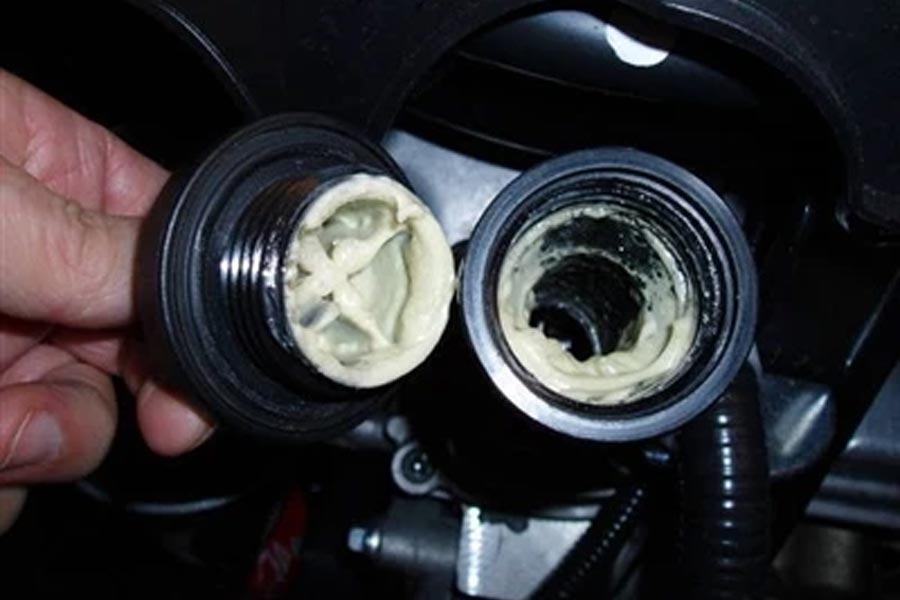
As a result, water vapor mixes with the oil, forming a milky-yellow, latte-like emulsion. Even more worrying is fuel dilution – gasoline continuously mixes into the oil, thinning its viscosity and making it weaker and runnier. Eventually, the oil loses its ability to support a protective film and flows off metal surfaces like water. When you pull out the dipstick, you may smell a strong odor of gasoline. This is the classic “medical record” of a car used only for short trips. By comparison, a fully warmed-up long drive acts like a heated distiller, completely boiling away the impurities and moisture in the oil and restoring the lubricant to its original condition.
3. The chronic decline of the battery
When starting the engine, the starter motor momentarily consumes hundreds of amperes of current. This creates a huge energy deficit in the battery. Afterwards, the alternator needs a sustained period of operation to replenish that charge. Yet short trips simply do not provide this charging time. For instance, the charge consumed during starting may require the alternator to run continuously for 15 to 20 minutes to be fully restored. But your trip often ends after just five minutes.
As a result, the battery is kept in a chronically undercharged, “starving” state. Worse still, being undercharged leads to plate sulfation, an irreversible chemical reaction. Over time, the battery’s internal resistance increases, and its capacity plummets in an avalanche-like manner. This also explains why the battery life of many family cars used only for city errands is actually shorter than that of cars frequently driven on the highway. In reality, a satisfying long trip allows the alternator to fully charge the battery, effectively delaying battery aging. Therefore, a long drive not only does no harm to the battery, but is in fact a rejuvenating journey for it.
4. Exhaust system corrosion and accelerated carbon buildup
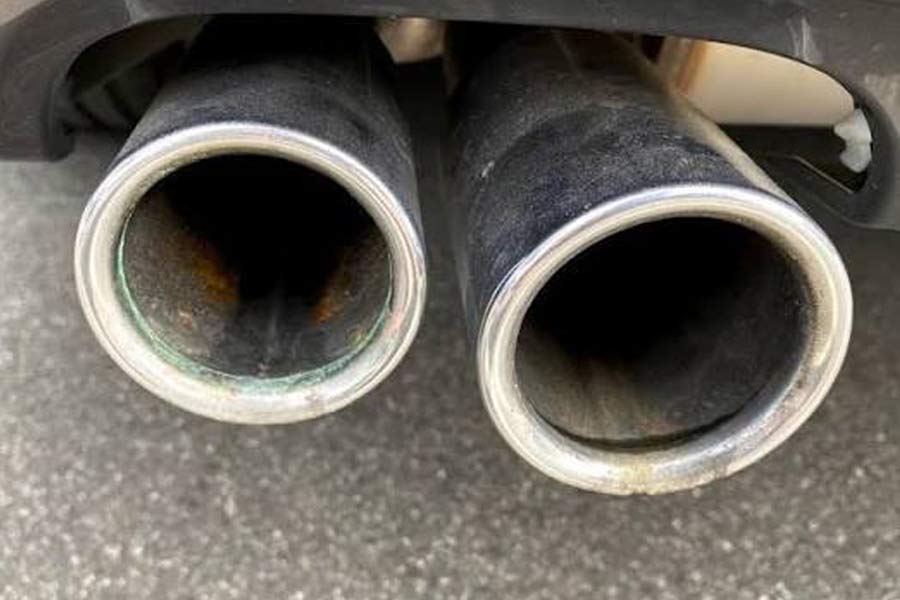
The damage caused by short trips even extends to the exhaust pipe. Burning fuel produces a large amount of water vapor. When the car is fully warmed up, this water vapor is expelled along with the high-temperature exhaust gases, keeping the inside of the exhaust pipe dry. However, during short trips, the exhaust pipe walls remain extremely cool, so the water vapor condenses into liquid water and accumulates inside the muffler with nowhere to drain. Over time, the muffler rusts through from the inside out, producing a sputtering noise. Many exhaust systems are not burned out, but rotted away by the standing water left from short trips.
Meanwhile, carbon deposits also proliferate frantically. During a cold start, the engine control unit enriches the fuel mixture, making the air-fuel ratio extremely rich. Coupled with low coolant temperatures and low engine speeds, combustion becomes highly incomplete. These unburned, gummy residues rapidly adhere to the intake valves, fuel injectors and throttle body. In contrast, during sustained long-distance highway driving, the continuous high airflow and high temperature act like an invisible broom, scouring and burning away some of the loose carbon deposits. Consequently, using your car only for short trips often leads to reduced power and surging fuel consumption, and the diagnosis almost always points to severe carbon buildup.
5. Why do long journeys feel more like “nurturing” your car?
You might wonder how high-rpm running over long distances could be better for your car than short trips. Interestingly, this is exactly how automotive engineering was designed to work. A car is a machine born for thermal efficiency. All its sophisticated designs – lubrication, cooling, electrical balance, emission control – require a full “thermally stable state” to cooperate flawlessly.
During a long journey, the engine stabilizes continuously within its ideal temperature range. Oil flows like silk, providing rock-solid protection. The alternator has ample time to replenish the battery. The radiator and cooling fans dissipate heat in an orderly manner. More importantly, there are no repeated cold-hot shocks and no frequent stop-and-go wear. It can be said that a single 300-kilometer long trip may inflict less wear on the vehicle than ten separate 3-kilometer short trips. Astoundingly, many taxis that run two to three hundred thousand kilometers without a major overhaul benefit precisely from the fact that they remain in a thermally stable cruising state almost all day long.
Fortunately, even if your driving scenario makes short trips unavoidable, we have well-established solutions. Based on experience, you only need to adjust a few habits to offset the damage of short trips to the greatest extent possible.
First, arrange at least one continuous drive of 30 minutes or more every week. This allows the oil to thoroughly reach its operating temperature, evaporate the moisture and gasoline, and fully charge the battery. You don’t need to deliberately hit the expressway; simply keeping the engine rpm in the mid-range for a sustained period will suffice.
Second, shorten your oil change interval. Do not blindly trust that fully synthetic oil can last 10,000 kilometers. For vehicles subjected to chronic short trips, my advice is “every six months or 5,000 kilometers,” whichever comes first. That is because by that point, the oil has long been contaminated by moisture and fuel, drastically reducing its effectiveness.
Additionally, check the battery voltage regularly. You can use a maintainer with a charging function, especially during winter. If you notice the engine struggling to crank, recharge the battery immediately – that can save its lifespan.
Furthermore, try your best to avoid prolonged stationary warm-ups. After a cold start, fasten your seatbelt and immediately drive gently at low speeds. This way, not only the engine warms up, but also the transmission and wheel bearings. Warming the car by driving slowly is far more efficient than idling and can reduce the formation of carbon deposits.
Finally, fill up with high-quality fuel from reputable gas stations. Clean gasoline reduces incomplete combustion during cold engine conditions, thereby slowing the formation of carbon deposits.
In conclusion, please do not be fooled by the nominal mileage savings of short trips. The true wear and tear of a car hides in every twist of the key to start it, in the oil that never gets hot, and in the perpetually hungry battery. From today onward, shift your car-use mindset and occasionally take it out for a satisfying, free-spirited run. After all, the best way to heal a car is not to baby it every day on short errands, but to take it to distant places, letting it fully stretch out and breathe deeply. That is the way to truly understand and love your car.
Looking for top-quality new or used cars? Trust DG Motors for fast, reliable service—or visit our Phnom Penh showroom today!