Contents
hide
- 1. Driving aggressively immediately after a cold start
- 2. Going over speed bumps with one wheel or without slowing down
- 3. Frequently refueling only when the tank is almost empty
- 4. Not straightening the steering wheel after parking
- 5. Making frequent ultra-short trips
- 6. Staying in D and holding the brake while waiting at red lights
- It is habits, not mileage, that define your car’s age
You may have always held a misconception: a car’s aging speed is mainly determined by the number on the odometer.
That is not the case.
Many auto mechanics have seen plenty of examples. A nearly new car with only 30,000 km on the clock can have an engine that runs like it has covered 100,000 km. Conversely, some high-mileage older cars still feel mechanically tight.
The gap between them is often not created by mileage.
The real culprits are those little unconscious actions you make every time you drive. The damage they accumulate is far more insidious and deadly than simply driving a few thousand extra kilometers.
The following six small driving habits are quietly accelerating your beloved car’s aging. Please be patient and read through to the end.
1. Driving aggressively immediately after a cold start
This is the most common mistake.
After the engine has been off for a few hours, most of the oil drains back into the oil pan. When you restart it, the oil pump needs a moment to deliver oil back to all the component surfaces.
Yet many car owners are in a hurry. They fire up the engine and floor the accelerator straight away.
At this moment, critical parts like the camshafts, piston rings and crankshaft journals are in a state of insufficient lubrication. Metal rubs directly against metal, and wear intensifies instantly. This damage is irreversible. Over time, the internal clearances inside the engine will be ground larger and larger.
Even worse, turbocharged models are especially sensitive to this kind of operation. The turbo spins at an extremely high speed; if lubrication cannot keep up, it only takes a few seconds to cause serious wear to the rotor shaft and floating bearings.
The correct practice is simple: after starting, wait for the tachometer needle to drop from fast idle to normal idle speed, then pull away smoothly. Keep your acceleration gentle until the temperature gauge needle starts to move. This small bit of patience can let the engine stay with you for many more years.
2. Going over speed bumps with one wheel or without slowing down
I have seen many clever car owners. They are used to letting one wheel ride over the gap at the edge of a speed bump, or crossing it diagonally. They think this reduces the impact and protects the car.
In fact, it does the exact opposite.
The suspension system is designed to absorb impacts together. When both front wheels go over a speed bump simultaneously, the impact force is shared equally by the left and right suspension. But if you let only one wheel go over, all the impact force is instantly concentrated on the single-side lower control arm, shock absorber and tie rod end ball joint.
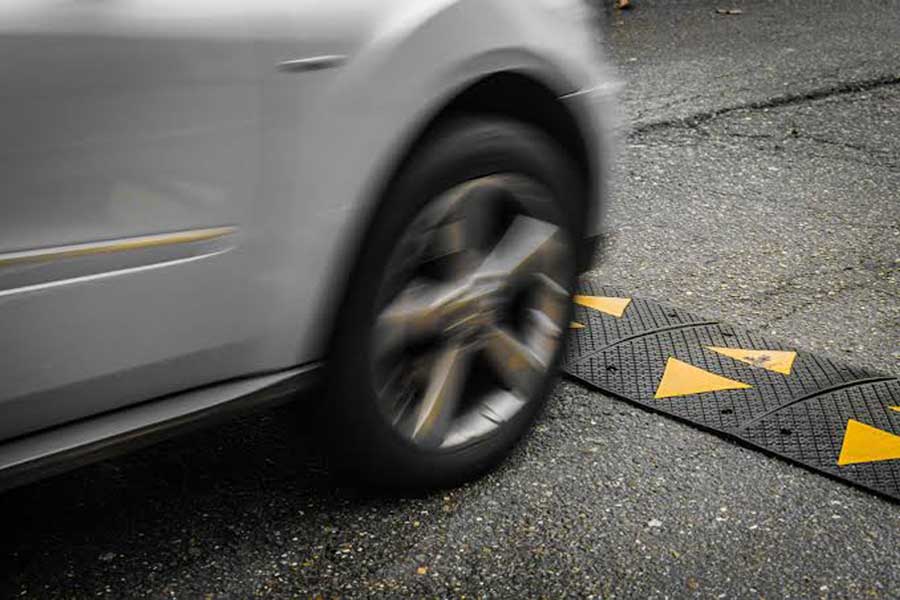
What is even more deadly is that this twisting force also tears at the rubber bushings that connect to the vehicle body. Inside these bushings is a vulcanized structure of rubber and metal. Enduring uneven shear forces over a long period accelerates the formation of tiny cracks. Once the bushings age and crack, the chassis becomes loose, and rattles will follow.
Likewise, charging over a speed bump at high speed without slowing down will cause the shock absorber to bottom out instantly. The oil seal inside the shock absorber is very likely to suffer irreversible impact damage and will start leaking oil not long after.
So the next time you encounter a speed bump, slow down in advance and let both front wheels roll over it straight on at the same time. That is the true way to care for your suspension.
3. Frequently refueling only when the tank is almost empty
You may not know that the fuel in your tank is not just food for the engine.
It is also the coolant for your fuel pump.
The fuel pump is usually mounted inside the fuel tank. It generates heat when working, and must rely on the surrounding gasoline to absorb and carry away that heat. If you habitually run the fuel until the warning light comes on, or even until the range shows zero, before refueling, the fuel pump motor will often be exposed above the fuel level and cannot dissipate heat adequately.
High temperatures cause the enameled wire inside the motor coil to age faster, and also make the fuel pump’s plastic bracket and sealing rings more brittle. At the same time, the concentration of sediment and water at the bottom of the tank is higher, and they are more easily sucked into the pump, clogging the fuel filter.
As a result, the workload on the fuel pump gets heavier and heavier. Eventually, one day it will stop turning without any warning, leaving you stranded on the road. This is absolutely not caused by high mileage, but by your long-term habit of driving with an almost-empty tank, forcing it to quit early.
It is recommended that you go and fill up the tank when the fuel gauge still shows a quarter tank left. Give the fuel pump an environment where it can stay continuously cooled and work steadily.
4. Not straightening the steering wheel after parking
This is a detail that is extremely easy to overlook.
Many car owners park, turn off the engine and leave while the steering wheel is still turned. It looks like no big deal, but at this moment the entire steering and suspension system is enduring continuous stress.
When you park with the steering wheel turned to full lock, the steering tie rod is constantly being pushed tight. At the same time, the tires are pressing against the ground at an awkward angle, creating a twisting force that tries to push the vehicle body back. With nowhere to release, this force can only be rigidly borne by every rubber bushing on the suspension.
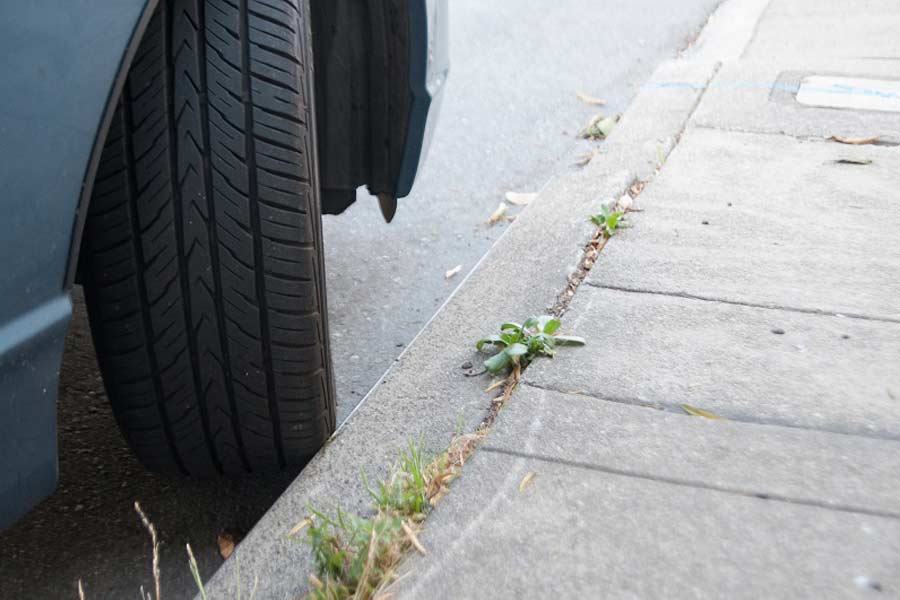
What rubber components fear most is not reciprocating motion, but sustained torsional stress in a static state. This stress accelerates the breaking of the rubber molecular chains. Over time, the bushings lose their elasticity and may even develop cracks.
The final result is that even though your car has little mileage, the steering wheel begins to develop a slight free play, and hollow knocking sounds start coming from the chassis. The steering feel becomes more and more vague.
Therefore, build a habit: before you finish parking, glance at the steering wheel and make sure it returns to the dead center position. Spending that extra second can save you the expensive cost of later replacing control arms and bushings.
5. Making frequent ultra-short trips
This one is very counter-intuitive. Many people think that if they only drive three or five kilometers a day, the wear on the car must be minimal. In fact, this harms the car much more than a smooth long-distance drive.
The healthy operating temperature for an engine is around 90°C. During ultra-short trips, the engine often has not yet reached this temperature by the time you turn it off and lock the car. This is what is called “low-temperature, high-frequency driving.”
In a low-temperature state, the engine control unit injects a richer fuel mixture. Unburned gasoline seeps down the cylinder walls into the oil pan, diluting the engine oil. Meanwhile, the water vapor produced by combustion cannot be evaporated and expelled by high temperature; it condenses inside the engine, causing oil emulsification. Emulsified oil turns into a murky, milkshake-like consistency, and its lubricating ability drops drastically.
Not only that, the amount of charge generated during a short trip is far from enough to compensate for the electricity consumed during engine startup. The battery remains in an undercharged state for a long time, and the plates will soon sulfate, drastically shortening its lifespan.
I have dealt with a car that only ran 18,000 km in three years. Its engine sludge and degree of wear were worse than a vehicle that frequently ran on highways with over 60,000 km on the clock. That is the destructive power of low-temperature short trips.
If you cannot avoid short trips, you must strictly shorten the maintenance intervals, and take the car out for a trip of at least half an hour every once in a while to let the engine oil and battery recover their condition.
6. Staying in D and holding the brake while waiting at red lights
Where is your right foot when you are waiting at a traffic light?
Many people are accustomed to keeping the gear in D and pressing the brake pedal firmly. This action appears quiet on the surface, but behind the scenes it is letting the transmission silently accumulate heat.

For an automatic transmission, when you hold the brake in D, a huge speed difference occurs between the pump and turbine of the torque converter. This slip generates a large amount of heat, causing the transmission fluid temperature to rise rapidly. High temperature is the number-one killer of transmission fluid aging. Once the fluid’s anti-oxidation ability and lubricity decline, the clutch plates and valve body inside the entire transmission will begin to experience abnormal wear.
In comparison, the slip of the torque converter in N (Neutral) is much smaller, and the heat generated is far less.
Of course, prolonged stop-and-go traffic also poses challenges to transmission cooling. But during predictable red-light stops, developing the habit of shifting from D to N and engaging the handbrake is the most practical protection for the transmission. This can keep your automatic transmission fluid in a clean state for much longer.
It is habits, not mileage, that define your car’s age
You see, the number on the odometer, most of the time, just represents how many times the wheels have turned. The bad habits above, however, attack the physical lifespan of core components. When you least expect it, they will push a low-mileage car into its old age ahead of its time.
Think about it the other way, and this is actually good news. Because habits are completely changeable. Once you start paying attention to these details, you are slowing down your car’s aging at the lowest possible cost.
My advice is, starting today, re-examine your own driving actions. At the same time, do not just obsess over the mileage number for routine maintenance. If you have any of the above situations, like frequent short trips or prolonged idling, even if the mileage hasn’t been reached, change the engine oil and transmission fluid and check the chassis rubber parts based on time. Fluids oxidize over time, and rubber ages over time — this has nothing to do with how many miles you have driven.
Take care of your car by changing these six small habits. More than mere mileage, they truly determine how long your car can stay with you, and in what condition. Your car will thank you.
Looking for top-quality new or used cars? Trust DG Motors for fast, reliable service—or visit our Phnom Penh showroom today!