Contents
hide
- How Do Speed Bumps Affect the Suspension System?
- Will Frequently Driving Over Speed Bumps Definitely Damage the Suspension?
- Which Behaviors Damage the Suspension System the Most?
- Which Suspension Components Are Most Easily Damaged?
- Common Signs of Suspension Damage
- How to Cross Speed Bumps Correctly
- What If You Pass Many Speed Bumps Every Day?
- Frequently Asked Questions (FAQ)
- Conclusion
Many car owners have to pass several speed bumps every day on their commute, especially at residential communities, schools, shopping malls, and underground garage entrances. Over time, it is only natural to worry: Will frequently driving over speed bumps damage a car’s suspension system?
First, the conclusion: Passing over speed bumps at normal low speed generally will not immediately damage the suspension, but frequent impacts will accelerate the aging of suspension components. If you drive fast, cross on one side, or hit them at an angle, the risk of damage increases significantly.
In other words, speed bumps do not necessarily “hurt the car.” What really hurts the car is crossing them incorrectly.
How Do Speed Bumps Affect the Suspension System?
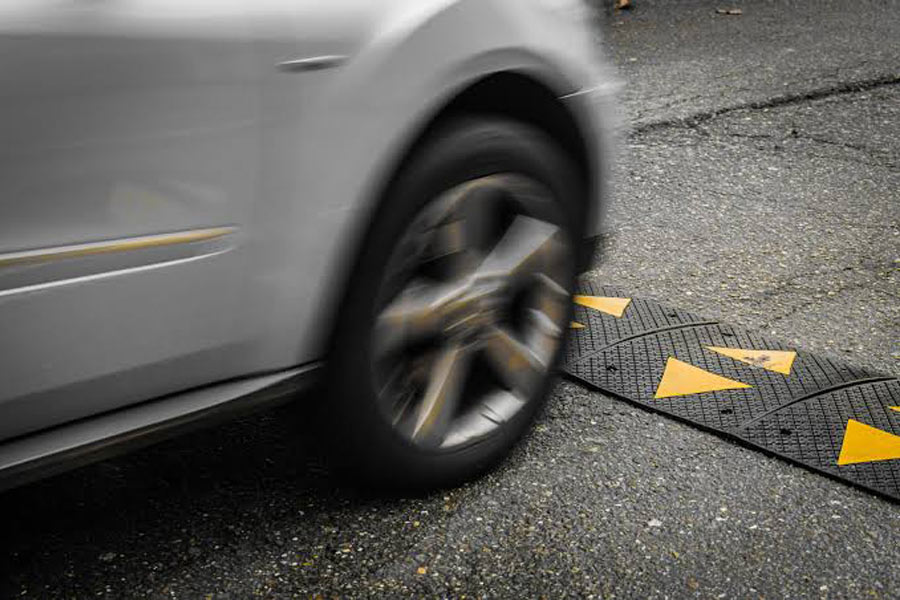
When a wheel rolls over a speed bump, the tire and wheel receive a vertical impact first, and the impact force is transmitted to the entire suspension system. The main job of the suspension system is to absorb and dissipate these impacts and keep the vehicle body stable.
It mainly includes:
- Springs: support the vehicle body and absorb road impacts;
- Shock absorbers: suppress repeated spring bouncing;
- Top mounts and strut bearings: connect the shock absorbers to the vehicle body;
- Bump stops: prevent the suspension from being compressed to its limit;
- Control arm bushings and stabilizer bar bushings: reduce vibration and noise;
- Ball joints and tie rods: affect steering and chassis stability;
- Tires and wheels: directly contact the speed bump and bear the first impact.
The suspension can easily withstand an occasional speed bump. But if you pass over them frequently every day, suspension components will repeatedly compress and rebound, and over time they are prone to fatigue, aging, looseness, and even damage.
Will Frequently Driving Over Speed Bumps Definitely Damage the Suspension?
Not necessarily. When a car’s suspension is designed, common road conditions such as speed bumps and potholes have already been taken into account. The key lies in the following factors:
- Speed of passage;
- Height and shape of the speed bump;
- Vehicle load;
- Tire pressure;
- Vehicle age and suspension condition;
- How you cross it, such as with both wheels straight over or one side at an angle.
If you cross at low speed with both wheels squarely over the bump every time, the suspension generally will not be easily damaged; it will mostly just experience normal wear. But if you often speed over speed bumps, or one side’s wheels quickly run over them, it may cause obvious damage in a single instance.
Which Behaviors Damage the Suspension System the Most?
1. Speeding Over Speed Bumps
The faster the speed, the greater the impact energy. When crossing a speed bump at high speed, the shock absorbers may be compressed to their limit instantly, causing oil leaks, top mount damage, and even tire bulging and wheel deformation.
2. Crossing With One Side of the Wheels or at an Angle
To reduce jolts, some drivers let the wheels on one side go over the speed bump while the other side stays on flat ground. This twists the vehicle body, puts more stress on the suspension and bushings on one side, and over time makes looseness and abnormal noises more likely.
3. Hard Braking While Crossing a Speed Bump
Sudden braking makes the front end dip noticeably and compresses the front suspension. If you happen to hit the speed bump at that moment, the impacts add up, putting greater stress on the front shock absorbers and top mounts. The correct approach is to slow down in advance and avoid hard braking at the moment of crossing.
4. An Aging Vehicle or Frequent Overloading
On older vehicles, shock absorbers, bushings, and ball joints are already aged. If such a vehicle often crosses speed bumps fully loaded or even overloaded, the probability of suspension damage is higher.
5. Modified Stiff Shocks or Low-Profile Tires
After installing lowering springs, stiff shocks, or low-profile tires, the ability to absorb vibration often becomes worse, and impacts are more easily transmitted to the body and wheels. Such cars need to go even slower over speed bumps.
Which Suspension Components Are Most Easily Damaged?
After frequently crossing speed bumps, the following components are most prone to problems:
- Shock absorbers: oil leaks, reduced damping, poor rebound;
- Springs: fatigue, reduced ride height;
- Top mounts/strut bearings: abnormal noises, steering binding;
- Bump stops: cracking, falling off;
- Control arm bushings, stabilizer bar bushings: aging, looseness, chassis noises;
- Ball joints and tie rods: increased play, pulling to one side;
- Tires and wheels: bulging, deformation, uneven wear.
Common Signs of Suspension Damage
If you frequently cross speed bumps, watch for the following symptoms:
- A clunking noise when crossing speed bumps;
- Oil stains on the surface of shock absorbers;
- Obvious body bouncing, like riding in a boat;
- Severe brake dive;
- The vehicle pulls to one side or the steering wheel is not straight;
- Uneven tire wear;
- The chassis feels loose and no longer tight.
If these occur, it is recommended to have the chassis inspected as soon as possible to prevent a small problem from becoming a major repair.
How to Cross Speed Bumps Correctly
To reduce damage to the suspension, remember these points:
- Slow down in advance: It is recommended to reduce speed to 10–20 km/h or lower, depending on the height of the speed bump.
- Cross with both wheels squarely over the bump: Let the left and right suspension bear the load at the same time and avoid body twist.
- Avoid hard braking at the moment of crossing: Complete braking in advance, and release or lightly apply the brakes while crossing.
- Do not go around on one side: One-side crossing may seem smoother, but it actually damages the suspension more.
- Maintain proper tire pressure: Excessive tire pressure reduces shock absorption.
- Inspect the suspension regularly: Check shock absorbers, bushings, ball joints, and tires at every service.
What If You Pass Many Speed Bumps Every Day?
If speed bumps cannot be avoided, make chassis inspection part of routine maintenance. Generally, every 10,000–20,000 km, or at every service, focus on checking:
- Whether shock absorbers are leaking;
- Whether top mounts and bump stops are cracked;
- Whether control arm bushings and stabilizer bar bushings are aged;
- Whether ball joints have play;
- Whether tires are bulging or wearing unevenly.
The suspension system contains wear parts, not permanent parts. Replacing aged components in time can actually protect other, more expensive chassis parts.
Frequently Asked Questions (FAQ)
Does crossing speed bumps at low speed damage the suspension?
Normal low-speed passage generally will not noticeably damage the suspension, but frequent passage will still cause normal wear. The key is to keep speed low and cross with both wheels squarely over the bump.
When crossing a speed bump, should you brake or release the brake?
Slow down in advance and complete braking before reaching the speed bump. Avoid hard braking at the moment of crossing; otherwise, the front end dipping will increase the impact on the front suspension.
If a shock absorber is leaking, must it be replaced?
Slight seepage can be monitored, but if there is obvious leakage, reduced damping, or severe abnormal noise, replacement is recommended. Usually, the left and right shock absorbers are best replaced in pairs to maintain balance.
Is suspension damage expensive to repair?
It depends on the vehicle model and the damaged components. Bump stops and bushings are relatively inexpensive; shock absorbers, control arms, ball joints, wheels, and other parts cost more. Timely inspection can prevent related damage.
Conclusion
Frequently crossing speed bumps will not necessarily immediately damage a car’s suspension system, but it will accelerate wear on suspension components. Normal low-speed passage with both wheels squarely over the bump is generally within what the vehicle can withstand; speeding over, crossing on one side, crossing at an angle, and hard braking while crossing are the behaviors that truly damage the suspension.
If you have to pass many speed bumps every day, the best approach is not to avoid them completely, but to slow down in advance, cross correctly, and inspect regularly. This will protect the suspension and keep the chassis in a longer-lasting, more stable condition.
Looking for top-quality new or used cars? Trust DG Motors for fast, reliable service—or visit our Phnom Penh showroom today!