Contents
hide
When buying a car in Cambodia, almost everyone with experience will tell you the same thing: “Buy an SUV.” But is that really true? Before spending real money, it is worth thinking carefully.
What Are Cambodia’s Roads Actually Like?
To answer this question, we first need to look at what Cambodia’s roads are actually like.
Cambodia’s national road network totals about 78,400 km, of which 92% consists of local and rural roads. True highways and trunk roads account for only 2%. Of the roughly 50,000 km of rural roads, only about 17% are paved and able to withstand weather impacts.
This means that a journey of just over 300 km from Phnom Penh to Siem Reap often takes 7 hours. Potholes are continuous along the way, and whenever a vehicle passes, red dust fills the air. Classified roads account for less than 30%, and rural road networks are mostly dirt roads, with passage severely hindered during the rainy season.
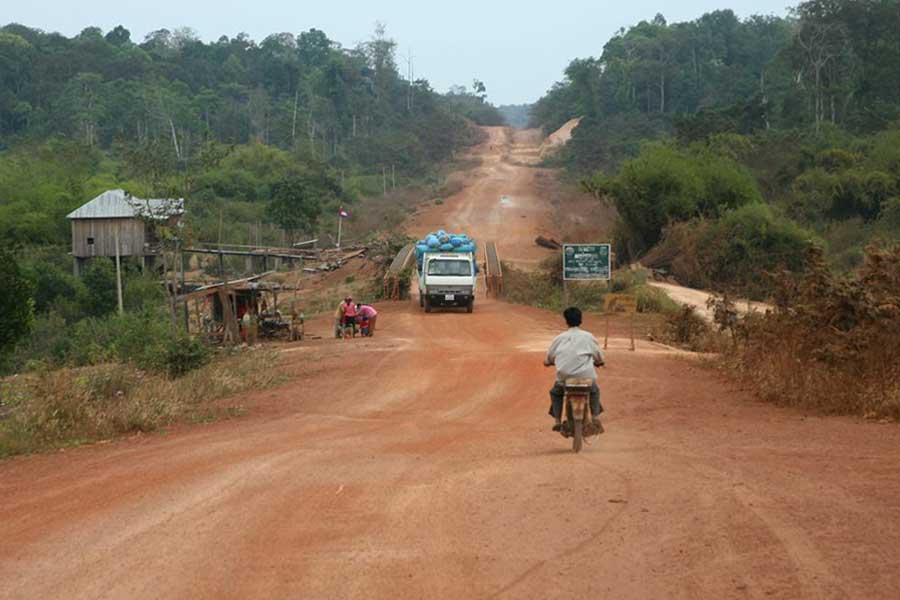
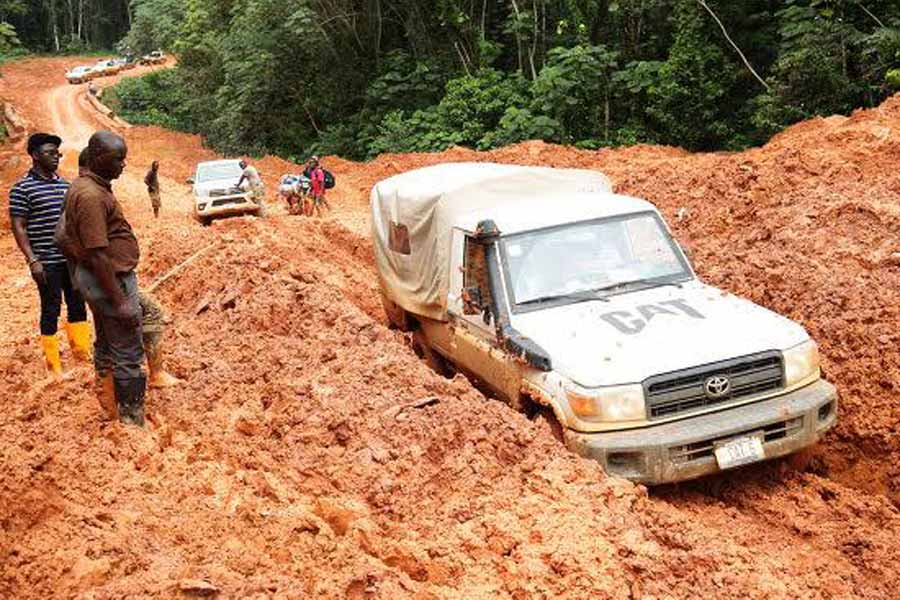
In the rainy season, conditions deteriorate sharply. During the 2025 rainy season, floods in Pursat Province damaged nearly 85 km of roads and several wooden bridges, forcing authorities to suspend heavy vehicle traffic. In Phnom Penh, heavy rainfall caused severe waterlogging in many places, and traffic on parts of National Highway 4 was once paralyzed. In Pouk District, Siem Reap Province, torrential rain flooded two asphalt roads and cut off 30 rural roads, totaling more than 15.8 km.
This is the reality of Cambodia’s road conditions: urban main roads are still acceptable, but once you leave the main roads, a completely different world awaits you.
Why Are SUVs Indeed More Practical in Cambodia?
Faced with such road conditions, the advantages of SUVs are very real.
First, high ground clearance determines passability.
This is the most core difference. The frequent potholes in Cambodian cities, the gravel on unpaved roads, and the need to park at the roadside all place demands on ground clearance. An observer who has lived in Cambodia for a long time bluntly says that in a developing country like Cambodia, owning an SUV or pickup is a “reasonable choice,” because “crazy random rainfall, potholed roads, and the need to park on the shoulder or sidewalk” all call for higher ground clearance. On the route from Phnom Penh to Sen Monorom, once the last stretch of asphalt disappears, the extra ground clearance and cargo space offered by an SUV or station wagon become crucial.
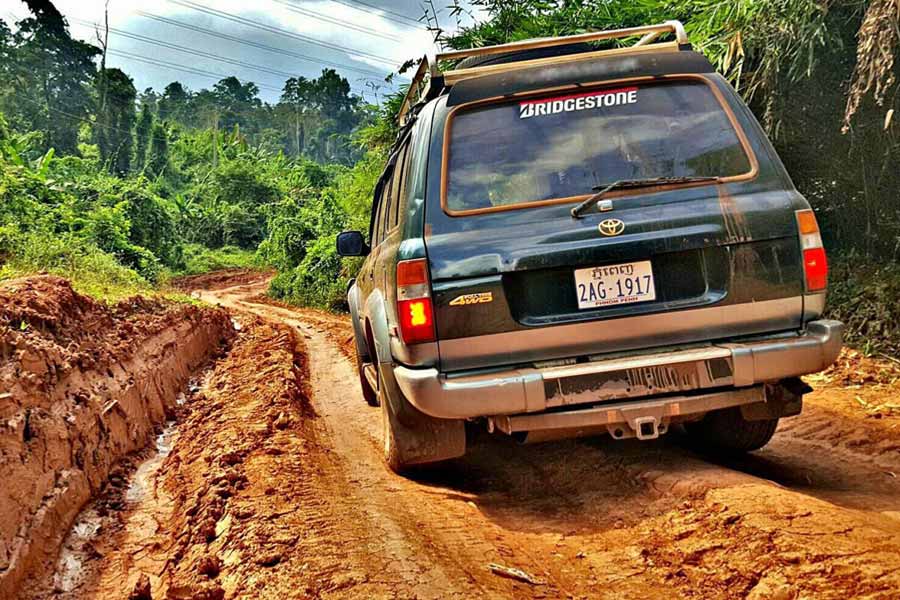
Second, the ability to get unstuck during the rainy season.
The rainy season is the real test for driving in Cambodia. Urban flooding and muddy rural roads are common scenarios. However, a key point must be distinguished here: the gap between two-wheel-drive and four-wheel-drive SUVs is very obvious in this respect. Two-wheel-drive vehicles tend to slip and get stuck on muddy surfaces, while a four-wheel-drive system can significantly increase the chance of getting out. But if you drive in cities and on main roads the vast majority of the time, the ground clearance of a two-wheel-drive SUV is already enough to handle everyday standing water.
Third, psychological safety and right-of-way advantages.
Cambodia’s traffic environment has its own peculiarities. In driving practice, large vehicles have priority right-of-way, and trucks and SUVs dominate the road. Driving an SUV gives you more “presence” when traveling alongside large vehicles and provides a greater sense of safety. In addition, a higher seating position gives a better forward view, which is very practical in Cambodia’s mixed traffic flow, where cars, motorcycles, and tuk-tuks are all mixed together.
But SUVs Are Not Omnipotent; These Issues Must Be Considered
Purchase and use costs are higher. SUV prices, fuel consumption, and maintenance costs are generally higher than those of sedans in the same class. In Cambodia, vehicle imports are subject to three taxes: customs duty, special tax, and value-added tax. The combined tax burden on a large-displacement SUV can be as high as 123% of the car’s price. Although US-origin cars have enjoyed zero tariffs since August 2025, and the import tariff on pure electric vehicles will also drop from 35% to zero from April 2026, the overall cost of vehicle ownership remains high.
City driving is less agile. In crowded cities such as Phnom Penh, the larger body of an SUV is indeed less convenient than a compact sedan or crossover when weaving through narrow streets and looking for parking spaces. Phnom Penh’s traffic congestion problem is becoming increasingly prominent. A total of 108 roads have been illegally occupied for commercial activities, further intensifying traffic pressure.
Four-wheel drive is not needed by everyone. If you drive in the city and on major highways the vast majority of the time, a two-wheel-drive SUV is completely sufficient. A four-wheel-drive system only proves its value when you frequently go deep into the countryside or off-road; otherwise, it merely adds to the purchase cost and fuel consumption. Experienced car owners point out that two-wheel-drive vehicles can handle more than 85% of everyday scenarios in Cambodia, but the premise is that the chassis must be high enough.
Cambodia’s SUV Market: The Data Tells You the Trend
Market data also confirms the popularity of SUVs. In 2025, Cambodia’s passenger car consumer spending soared to US$1.1 billion, a record high, as the middle class accelerates its shift from grey-market used cars to brand-new American SUVs and Chinese electric vehicles.
In terms of specific models, the Honda CR-V, as the top choice for family SUVs, sold more than 980 units; the Toyota Fortuner, as a representative high-end SUV, sold 720 units; and the Tesla Model Y, a high-end electric SUV, sold 420 units. Ford has an assembly plant in Pursat Province with an annual capacity of 10,000 units, and its Ranger pickup has replaced the grey-market Toyota Tacoma as the new “default work vehicle.” Hyundai also mainly promotes SUV models such as the Tucson, Santa Fe, and Creta in Cambodia.
From the brand landscape, Toyota and Lexus remain the brands most worth prioritizing in Cambodia due to reliability, ease of repair, and high resale value. In the used-car market, a 2025 Toyota RAV4 sells for about US$19,000, which is quite outstanding value for money.
Pickups: Another Option Worth Considering
In Cambodia, pickups are also extremely popular choices. They combine the high passability of SUVs with stronger cargo capacity. The Toyota Hilux is priced at about US$40,900 to US$50,600 in Cambodia. For users who frequently need to transport goods or equipment in rural areas, a pickup may be more practical than an SUV.
Conclusion: There Is No “Best,” Only “Most Suitable”
Back to the original question: Are SUVs really better suited to Cambodia’s road conditions?
The answer depends on your driving scenario.
- If your activities are mainly in major cities such as Phnom Penh and Siem Reap and on major highways, a compact crossover SUV or sedan with higher ground clearance is completely sufficient, and may be more economical and more agile in the city.
- If you need to frequently go deep into rural areas and face complex road conditions during the rainy season, a true SUV—preferably a four-wheel-drive version—will be a more reliable partner.
- If you have cargo needs, a pickup is another pragmatic choice besides an SUV.
Cambodia’s road conditions are improving. The World Bank-supported Rural Roads Resilience Project has upgraded more than 275 km of roads in multiple provinces. But for the foreseeable future, high-clearance vehicles will remain the optimal solution for dealing with Cambodia’s road reality. The key to choosing a car is not blindly following the trend and buying an SUV, but making a judgment based on your real driving scenarios.
Looking for top-quality new or used cars? Trust DG Motors for fast, reliable service—or visit our Phnom Penh showroom today!