Contents
hide
- I. Safety Always Comes First
- II. Accurately Assess the Vehicle’s Actual Condition
- III. Method 1: Jump-Starting with a Friend (The Classic Solution)
- IV. Method 2: Using a Portable Jump Starter (The Most Convenient Self-Help Option)
- V. Method 3: Push Starting (Manual Transmission Vehicles Only)
- VI. Method 4: Contacting Professional Roadside Assistance (The Most Hassle-Free Choice)
- VII. Routine Battery Maintenance and Preventive Measures
- VIII. Final Thoughts
I. Safety Always Comes First
You are just about to head out to run an errand, you turn the key, and the car gives absolutely no response. In that moment, you realize the battery might be dead. Do not panic at this time; staying calm is crucial. First, you need to turn on your hazard warning lights. Doing so alerts vehicles behind you and helps avoid rear-end collisions.
If your car is stuck in the middle of the road or in a high-traffic area, please push it to a safe spot on the side of the road as quickly as possible. You can ask passersby for help pushing the car. When encountering this situation in a remote area, safety considerations become even more important. If you experience a battery failure on a suburban road in Cambodia, do not be hasty about flagging down unfamiliar vehicles. First, observe your surroundings and choose a spot with good lighting and an open view to wait for assistance.
II. Accurately Assess the Vehicle’s Actual Condition
Next, you need to determine whether the problem is indeed with the battery. If you hear a “clicking” sound when turning the key, or if the headlights are very dim, it is basically a dead battery. Additionally, you should check the battery terminals for signs of corrosion. White oxide buildup can impede current flow, and sometimes simply cleaning it off can solve the problem.
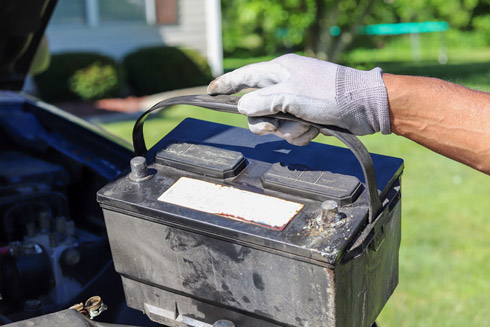
At the same time, carefully inspect the battery casing for bulging or leaking fluid. If these conditions are present, do not, under any circumstances, attempt to jump-start the car. A bulging battery poses a risk of explosion, and forced jump-starting is extremely dangerous. In this case, you need to contact a professional technician directly.
III. Method 1: Jump-Starting with a Friend (The Classic Solution)
Jump-starting is currently the most common and reliable emergency solution. You will need the cooperation of another vehicle with a healthy battery, as well as a pair of good-quality jumper cables.
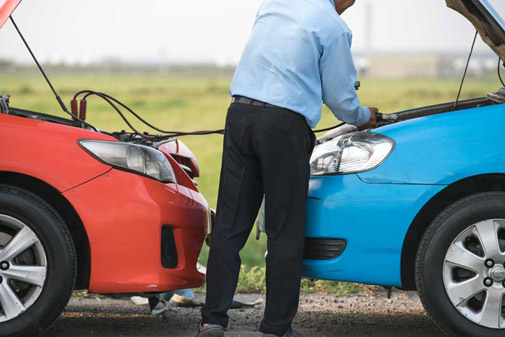
The specific steps are as follows:
Step One: Preparation and Positioning. Bring the fronts of the two cars close to each other, but the vehicle bodies must absolutely not touch. Turn off all electrical accessories in both cars, including lights, air conditioning, and audio systems.
Step Two: Connecting the Jumper Cables (Remember the “Positive First, Negative Last” Rule). First, clamp one end of the red jumper cable to the positive (+) terminal of the dead battery. Then, clamp the other end of the red jumper cable to the positive (+) terminal of the booster vehicle’s battery. Next, clamp one end of the black jumper cable to the negative (-) terminal of the booster vehicle’s battery. Finally, clamp the other end of the black jumper cable to an unpainted metal surface in the engine compartment of the dead car, such as an engine bracket or bolt. Avoid clamping directly to the negative terminal of the dead battery, as this effectively reduces the risk of sparks.
Step Three: Starting and Charging. Start the engine of the booster vehicle and let it idle for about 3 to 5 minutes. This pre-charges the dead battery somewhat, improving the success rate of the subsequent start attempt. Then, try to start the car with the dead battery. If the first attempt fails, wait 30 seconds before trying again to avoid damaging the battery and starter motor through frequent, consecutive attempts.
Step Four: Removing the Cables (Remember the “Negative First, Positive Last” Rule). After successfully starting the car, remove the jumper cables in the exact reverse order of connection. First remove the black negative clamp from the previously dead car, then remove the black negative clamp from the booster car. Next, remove the red positive clamp from the booster car, and finally remove the red positive clamp from the previously dead car.
Step Five: Driving to Recharge. Do not turn off the engine immediately after a successful start. You need to drive continuously for at least 20 to 30 minutes to allow the alternator to fully recharge the battery. If you just let it idle, the charging efficiency is extremely low and wastes fuel.
IV. Method 2: Using a Portable Jump Starter (The Most Convenient Self-Help Option)
If you are driving alone and cannot find another car to help, a portable jump starter is the best lifesaver. These devices are compact, usually about the size of a power bank, but they can deliver a powerful starting current instantaneously.
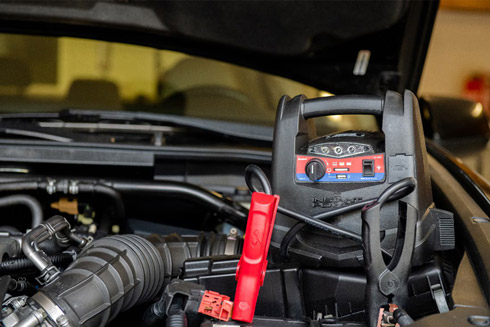
Operating steps:
First, firmly clamp the red clip of the jump starter to the positive (+) terminal of the battery. You should hear a “click” sound indicating it is secure. Then, clamp the black clip to the battery’s negative (-) terminal or a metal bolt in the engine compartment. Once you have confirmed the connection is solid, turn on the jump starter’s power switch. Next, get into the car and attempt to start the engine. After a successful start, remove the jump starter clips within 30 seconds. The order for removing the clips is the same: remove the negative clip first, then the positive clip.
This type of device is particularly suitable for drivers who often travel alone. It requires no help from others and can be easily operated by one person. However, remember to recharge the portable jump starter regularly; otherwise, it will also become a useless “decoration” when you actually need it.
V. Method 3: Push Starting (Manual Transmission Vehicles Only)
If you drive a manual transmission vehicle and the battery still has a tiny residual charge, push starting is also a viable emergency method.
Specific operation:
First, turn the key to the ignition position to power up the vehicle’s electronics. Then, press the clutch pedal all the way down and shift the gear lever into second gear. Next, ask 1 or 2 friends to push the car from behind. Once the car is pushed to a speed of about 5 to 10 kilometers per hour, quickly release the clutch pedal while gently pressing the accelerator. At this point, the engine should start due to the vehicle’s inertia.
Important Warning: This method is strictly forbidden for automatic transmission vehicles. The structure of an automatic transmission is completely different from a manual one, and push starting can cause severe damage to the transmission.
VI. Method 4: Contacting Professional Roadside Assistance (The Most Hassle-Free Choice)
If the above methods are not feasible, or if you feel there are risks involved in doing it yourself, calling for professional help is the safest choice.
In many countries and regions, roadside assistance services are very mature. You simply need to call your insurance company’s emergency hotline or use a local rescue app, and a professional technician will rush to the scene. For example, in Cambodia, you can download the KAC (Khmer Automobile Club) App. This is the country’s first professional emergency roadside assistance platform. The platform offers six services including jump-starting, tire changes, fuel delivery, vehicle unlocking, and more. An annual membership costs only $25 USD, granting you unlimited rescues throughout the year.
Regardless of which country you are in, it is a good habit to save the local roadside assistance number in your phone in advance. Many insurance companies also include free jump-start services as part of their auto insurance packages; it is worth understanding the benefits of your policy.
VII. Routine Battery Maintenance and Preventive Measures
Rather than dealing with the problem after it happens, it is better to prevent it beforehand. Here are some simple but very practical battery maintenance tips:
Drive at least one long trip of 30 minutes or more per week. Frequent short trips will keep the battery in a constantly undercharged state. Driving on the highway or taking a longer trip once a week allows the alternator to fully recharge the battery.
Be sure to turn off all electrical accessories before shutting off the engine. Devices such as lights, air conditioning, audio systems, and dash cams can drain the battery overnight if they continue to draw power after the engine is off. It is crucial to develop the habit of turning them off one by one before turning off the ignition.
Regularly check the battery condition. The average lifespan of a standard lead-acid battery is about 2 to 3 years, while maintenance-free batteries can last 3 to 5 years. It is recommended to have a technician test the battery voltage every six months or during each service visit. If the battery is over 3 years old, it is advisable to replace it with a new one proactively, rather than waiting for it to fail completely.
For vehicles left unused for extended periods, disconnect the negative battery terminal. If you need to go on a business trip or vacation and the vehicle will be parked for more than two weeks, it is recommended to disconnect the negative battery cable. This simple action prevents the battery from self-discharging and becoming completely dead.
Clean the oxide buildup on the battery terminals promptly. If you notice white or green corrosion on the terminals, rinse them with hot water or wipe them clean with a damp cloth, then apply a little petroleum jelly to prevent further oxidation.
Additionally, please note: If you are browsing used car listings, for instance vehicles labeled “car for sale in Cambodia” on websites, it is advisable to ask the seller for the battery’s replacement and maintenance records. The health condition of a used car’s battery directly reflects the previous owner’s driving and maintenance habits. A used car with a well-maintained battery is often more reliable in terms of overall vehicle condition.
VIII. Final Thoughts
Having a dead car battery is certainly frustrating, but it is by no means an apocalyptic problem. As long as you stay calm and follow the correct steps, you can resolve the issue on your own in most cases.
To handle unexpected situations more calmly in the future, I strongly recommend that you keep the following three tools in your trunk: a pair of durable jumper cables, a fully charged portable jump starter, and a pair of work gloves. Although the investment is small, they can save you significant time and rescue costs at a critical moment.
Looking for top-quality new or used cars? Trust DG Motors for fast, reliable service—or visit our Phnom Penh showroom today!