When driving in summer, some drivers choose to open the windows, while others opt for the air conditioning. This stems from differing opinions on whether opening the windows or using the AC consumes more fuel. However, scientific research and numerous real-world tests worldwide have shown that vehicle speed is the key variable. At low speeds, opening the windows is indeed more fuel-efficient. But on the highway, rolling down the windows could increase your fuel consumption by over 20%. This article reveals the scientific truth behind this everyday driving puzzle.
Why Does Opening the Windows Affect Fuel Consumption?
To understand this, you must first grasp the basics of aerodynamics. When a car travels at high speed, it must overcome significant air resistance. Engineers carefully design car body shapes precisely to minimize the drag coefficient.
The Relationship Between Air Resistance and Speed
Air resistance is proportional to the square of the speed. Simply put, if you double the speed, air resistance increases roughly fourfold. Once the speed exceeds 80 km/h, air resistance becomes the biggest enemy of fuel economy. At this point, fully open windows allow airflow to rush into the cabin, significantly increasing the vehicle’s frontal area.
Findings from Wind Tunnel Tests
Wind tunnel tests and computer simulations have repeatedly confirmed that the drag coefficient with windows fully open is significantly higher than with windows closed. Studies show that opening the front windows can increase air resistance by up to 2%, while opening the rear windows increases it by up to 4%. On the highway, driving with windows open can cause air resistance to surge by around 25%. This means the engine must produce more power to maintain the same speed. Where does this extra power come from? Fuel.
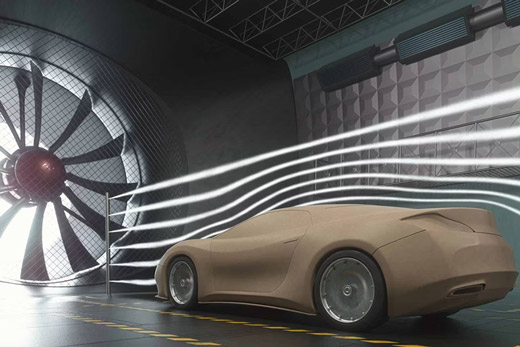
Furthermore, the impact varies significantly among different vehicle types. Research by the Society of Automotive Engineers (SAE) found that opening the windows reduces fuel efficiency by 20% for sedans, but only 8% for SUVs. This is because SUVs already have a relatively high drag coefficient, so the additional impact of opening windows is smaller. Does this mean large SUV owners can open windows more casually? Not really — it’s just that the relative degree of impact differs.
How Much Fuel Does Car Air Conditioning Actually Consume?
Now let’s turn to the other side of the issue — the air conditioning system. A car’s AC operates the compressor via the engine. This extra load does increase fuel consumption, but the exact increase varies depending on conditions.

Fuel Consumption Increase from AC
According to several studies, using the air conditioning increases fuel consumption by an average of 10% to 20%. In stop-and-go city traffic, AC use can increase fuel consumption by as much as 20%. The latest test data from 2025 shows that for ordinary family cars, turning on the AC increases fuel consumption by an average of 10% to 20%. The U.S. Department of Energy notes that in extremely hot weather, with the AC running at full capacity, fuel economy can drop by up to 25%.
AC Fuel Consumption at Different Speeds
However, the fuel consumption increase from AC is not constant. At low speeds in the city, the engine RPM is low, and the compressor takes up a relatively larger share of engine power, making the increase in fuel consumption more noticeable. During highway cruising, the engine operates more efficiently, and the AC’s extra load represents a smaller proportion, so the fuel consumption increase is relatively limited. Specifically, using AC during city commuting consumes about an extra 0.5 to 1 liter of fuel per 100 kilometers, while on the highway it only adds 0.3 to 0.6 liters.
Where Is the Tipping Point?
Windows down or AC on: which saves fuel? The answer depends on your speed. Numerous studies worldwide consistently show there is a break-even point.
Speed Determines Everything
The famous American science show “MythBusters” once conducted a classic test on this issue. Their experimental results showed that at speeds below about 80 km/h, opening the windows for ventilation is more fuel-efficient; at speeds above 80 km/h, using the air conditioning is actually more economical.
The latest 2024 real-world test data from the China Automotive Engineering Research Institute is even more telling: for a 1.5L family sedan at 60 km/h, fuel consumption with windows open was 7.2 L/100km, while with AC on (set at 26°C, fan speed 2) it was only 6.8 L/100km. When the speed increased to 100 km/h, the gap became even more pronounced — fuel consumption with windows open reached 9.5 L/100km, while with AC on it was just 8.2 L/100km.
Several other real-world tests have confirmed this pattern: a Volkswagen Sagitar cruising at 110–120 km/h consumed 6.5 L/100km with windows closed and AC on, while it consumed 5.6 L/100km with AC off. A car owner conducted a comparative test on a Volkswagen Lavida, and found that on the highway, with windows closed and AC on, fuel consumption was 4.6 L, but with windows open and AC off, it reached 5.2 L. These figures clearly demonstrate that at high speeds, the drag penalty from open windows indeed exceeds the energy consumption of the air conditioning.
Differences Among Vehicle Types
The dividing point is not a fixed figure but varies by vehicle type. For vehicles with inherently high drag, such as large SUVs, the break-even speed may be lower; for streamlined sedans, it is relatively higher. Overall, for most vehicles, opening the windows is more fuel-efficient than using AC at speeds below 60 km/h, using AC is more fuel-efficient than opening windows at speeds above 90 km/h, and between 60 and 90 km/h, the difference between the two is negligible. In other words, choose open windows when driving at low speeds in the city, and remember to close the windows and use AC once you get on the highway.
A Global Perspective
This topic has sparked widespread discussion around the world, and studies from different countries have reached highly consistent conclusions.
In the United States, the “MythBusters” test has become a classic reference in popular culture. The U.S. Department of Energy has also published official research confirming the significant negative impact of driving with windows open at high speeds on fuel economy.
In the UK, automotive services like LeaseLoco recommend that for short trips under 40 mph (about 64 km/h), rolling down the windows is the best choice. Experts from The Daily Telegraph also point out that the general consensus is windows down at low speeds, AC on at high speeds.
In South Africa, research by automotive expert Louw shows that at speeds around 100 km/h, the fuel consumption penalty from open windows is roughly equivalent to that of using AC; whereas at low speeds, especially in urban traffic, windows open with AC off is clearly more fuel-efficient.
In Japan, media tested the lightweight car DAIHATSU Mira and found that with AC on, the average fuel economy was 21.6 km/L, while with AC off, it was 23.1 km/L, a difference of about 7% in fuel consumption performance. This gap is particularly pronounced on Japan’s small-displacement models.
In Australia, Motorama’s tests reached similar conclusions: at low speeds, open windows are more fuel-efficient; at high speeds, close the windows and use the AC.
Practical Advice
Based on global research findings, here are some practical suggestions for you:
- City driving at low speeds (below 60 km/h): Open the windows for ventilation and turn off the AC — this saves more fuel.
- Highway driving (above 90 km/h): Close the windows tightly and use the air conditioning. At this point, the increased drag from open windows consumes more fuel than running the AC.
- After the car has been baking in the sun: First, open all windows, set the AC to fresh air mode with maximum fan speed, drive for 2 to 3 minutes to expel the hot air, then close the windows and switch to recirculation mode.
- Window-opening tips: If you must open the windows, try opening just one window, or use the diagonal opening method (e.g., front left and rear right), which provides good ventilation with relatively less impact on drag.
- AC temperature setting: Set the air conditioning between 22°C and 24°C to maintain comfort without excessively consuming fuel.
Conclusion
At low speeds, opening the windows is more fuel-efficient; at high speeds, opening the windows is actually less fuel-efficient. The core lies in the trade-off between air resistance and air conditioning energy consumption. When the vehicle speed is low, the impact of drag is negligible, and turning off the AC yields noticeable fuel savings; but once the speed crosses the tipping point, the drag penalty from open windows is enough to offset or even exceed the energy consumption of the air conditioning.
Looking for top-quality new or used cars? Trust DG Motors for fast, reliable service—or visit our Phnom Penh showroom today!