Contents
hide
- First, tread depth is by no means the only measure of safety
- Rubber Aging: The Invisible Chronic Disease of “Oxidation”
- It’s Not Just Surface Hardening — The Internal Structure Is Quietly Falling Apart
- Therefore, Tires Really Do Have an Expiration Date — The Six-Year Rule You Must Know
- How to Spot an Old Tire Disguised in “New Clothes”?
- Special Reminder: When Buying a Used Car, Factor Tires into Your Budget
- Conclusion: Safety Begins with Redefining “New” and “Old”
If you’ve ever browsed used car listings in Cambodia, or are about to buy a vehicle with a lot of years on it, you must have first looked at whether the tire tread is “deep enough.” In many car owners’ minds, as long as the grooves haven’t worn smooth and the tires still look “new,” they can keep running safely for tens of thousands of kilometers. But is it really that simple? Even with good tread, are old tires truly without danger?
The answer is alarming: even if the tread looks like new, a tire that has been stored too long or used for too many years can still become the most hidden killer on the road. Let’s delve into why looking at tread alone is far from enough.
First, tread depth is by no means the only measure of safety
There is no doubt that the main job of tread is to channel water and provide grip. When the tread depth falls below the 1.6 mm wear indicator, braking distances increase significantly — this is common knowledge. But more importantly, the tire is the only part of the car that contacts the road. It is composed of multiple layers of rubber, steel belts, and fabric cord plies. Tread represents “how much rubber is left,” but it cannot reflect “how much performance remains in the rubber itself.”
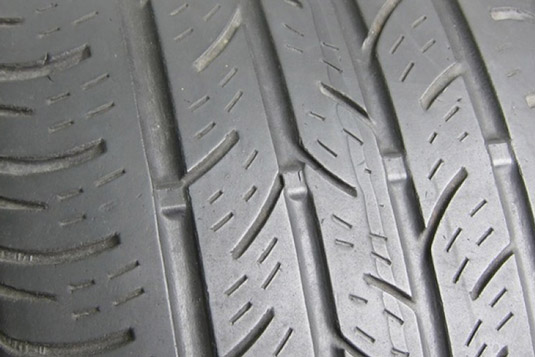
In other words, an old tire’s rubber compound may have hardened and deteriorated long ago. Even if the grooves are still deep, its grip can be worse than a new tire that is half worn. This is because during use and storage, rubber inevitably undergoes irreversible chemical changes.
Rubber Aging: The Invisible Chronic Disease of “Oxidation”
Secondly, we need to understand the nature of rubber aging. Tire rubber contains antioxidants and softeners, but over time, exposure to oxygen, ozone, and ultraviolet light causes these components to gradually break down and volatilize. This process is called oxidative aging.
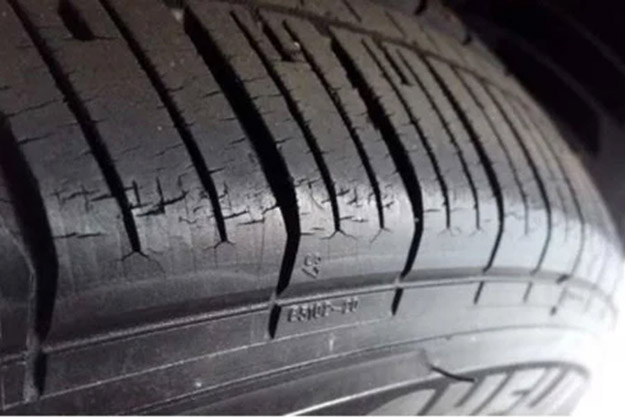
Even a never-mounted, stockpiled old tire, after five or six years of storage, will lose its original elasticity and flexibility, becoming like hard plastic. Such a tire cannot conform to the tiny undulations of the road surface during emergency lane changes or on rainy days, causing a sharp drop in grip — and that’s where the danger arises.
It’s Not Just Surface Hardening — The Internal Structure Is Quietly Falling Apart
Moreover, the danger lurks inside where the eye cannot see. The strength of modern radial tires relies on steel belt layers and polyester cord plies. Under long-term flexing and heat cycles, the bonding rubber between these layers can fatigue. Once adhesion weakens, internal delamination or inner liner cracks can develop.
With this kind of internal damage, the tread may still look perfect on the outside, but the internal structure is like a ticking time bomb. At highway speeds, internal delamination can gradually expand, producing abnormal vibrations and heat buildup, and may eventually lead to tread separation or even a blowout. Statistics show that a significant portion of high-speed tire blowouts are caused not by tread wear, but by internal age-related damage or manufacturing defects exposed by aging.
Therefore, Tires Really Do Have an Expiration Date — The Six-Year Rule You Must Know
Major tire manufacturers and automotive safety organizations worldwide, such as Michelin and Continental, have clearly recommended: once a tire has been in service for more than six years, even if the appearance and tread are good, it must be thoroughly inspected by a professional, and replacement is strongly recommended. In general, a tire’s service life (counted from its production date) should not exceed ten years — that is the absolute limit for retirement.
On the sidewall of every tire, there is a code beginning with “DOT,” and the last four digits indicate the week and year of production. For example, “3021” means the tire was manufactured in the 30th week of 2021. When you see a car for sale in Cambodia, or any vehicle over five years old, the first thing to do is crouch down and check those four digits — far more important than feeling how deep the tread is. In a hot, humid tropical climate like Cambodia’s, rubber aging accelerates exponentially, and tires around five years old may already be seriously deteriorated.
How to Spot an Old Tire Disguised in “New Clothes”?
So, as an ordinary driver, how can you avoid these risks? Besides checking the production date, you need to watch for the following key signs:
- Sidewall Cracking: Carefully inspect the sidewall and the base of the tread grooves. If there are dense, fine cracks, that is direct evidence of rubber molecular chain breakage. This means the tire has severely hardened and must be retired immediately.
- Abnormal Vibration and Noise: If you feel a rhythmic humming sound or body vibration on a flat road, even if the wheel balance is normal, it could be a sign of internal structural damage in the tire.
- Repeated Air Loss: If one tire’s pressure is always lower than the others and no puncture is found, it is very likely that the seal between the tire bead and rim has deteriorated due to rubber hardening, or the inner liner has cracks.
Special Reminder: When Buying a Used Car, Factor Tires into Your Budget
Especially when shopping for a used car, people’s attention is often drawn to the engine, transmission, and odometer. But remember, even if the previous owner put on a set of used tires with excellent tread, or the original factory-equipped tires are far from worn out, age itself is a hard indicator.
If you are browsing various car sale ads in Cambodia, or plan to buy a vehicle locally that has endured the scorching sun of Southeast Asia, be sure to regard the tires as a component that needs investment right away. Do not be fooled by the appearance of “still deep tread.” A set of brand-new tires with fresh manufacturing dates is the first step to reviving an older car, and it is the baseline for taking responsibility for your own life and the lives of your family.
Conclusion: Safety Begins with Redefining “New” and “Old”
In summary, relying solely on tread depth to judge tire safety is a common but potentially fatal mistake. The safe service life of a tire is determined by both mileage and age; as soon as either one reaches its limit, the tire must be replaced. An old tire, even with good tread, can suffer from internal aging and hardening that causes it to lose grip at a critical moment, or even fall apart.
Looking for top-quality new or used cars? Trust DG Motors for fast, reliable service—or visit our Phnom Penh showroom today!