Contents
hide
- 1. Air Conditioning Condensation
- 2. Water Dripping from the Exhaust Pipe
- 3. These “Waters” Are Dangerous! First, Check for Coolant Leaks
- 4. Next, Pay Attention to Washer Fluid Leaks
- 5. Also, Be Aware of Sunroof and Body Drainage: Easily Overlooked Channels
- Quick Self-Check Guide: Understand Underbody Fluids with One Chart
- In Conclusion
You have just parked your beloved car in its parking spot. After getting out, you suddenly notice a puddle of water on the ground underneath. In that moment, your heart might instantly tense up. Is my car leaking oil? Or has something broken down? Please don’t rush to call a tow truck just yet. In fact, the vast majority of water dripping from under cars are completely normal situations. However, you need to learn how to distinguish between safe water and dangerous fluid leaks. Today, we will use the simplest method to help you thoroughly understand the secret of water dripping from under your car. You will learn to identify four common fluids and master a self-diagnosis process.
1. Air Conditioning Condensation
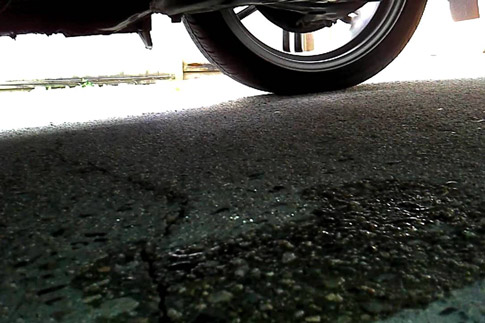
On hot summer days or after you turn on the A/C cooling, water will almost certainly drip from the area in front of the front passenger seat under the car. You can be completely at ease. When the car’s air conditioning system is working, the evaporator becomes extremely cold. Water vapor in the air condenses into water droplets on this cold surface. These droplets are drained directly out of the vehicle through a dedicated drainage tube. Therefore, you will see a puddle of crystal-clear, transparent water. It has no smell whatsoever. To the touch, it feels just like ordinary water. This kind of dripping is not only normal, but it actually proves that your A/C system’s drainage is working smoothly. You should only worry if one day it stops dripping, because that might mean the drain tube is blocked and water will backflow into the cabin, soaking the carpets.
2. Water Dripping from the Exhaust Pipe
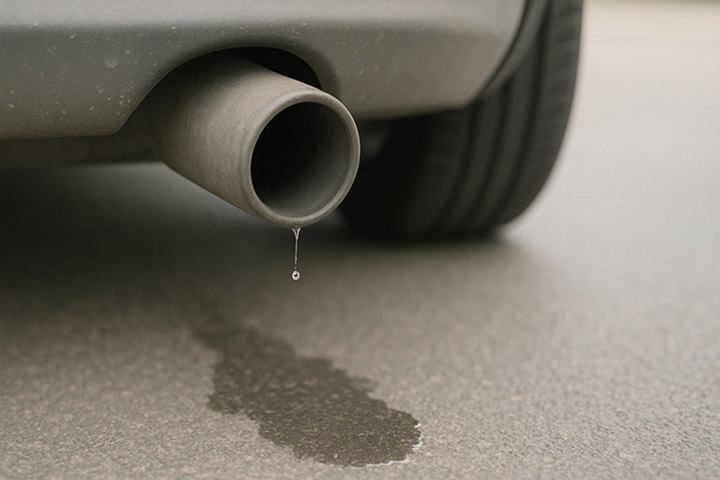
Besides A/C water, you may also find water dripping near the exhaust pipe. Or water might drip directly from the exhaust pipe opening or the drain hole under the muffler. This is also a completely normal phenomenon. After gasoline is fully burned inside the engine, it produces carbon dioxide and water vapor. When the high-temperature exhaust gas gradually cools as it passes through the exhaust pipe, the water vapor condenses into liquid water. This phenomenon is particularly noticeable in winter, during a cold start, or after short-distance trips. It precisely indicates that your engine has high combustion efficiency and that the three-way catalytic converter is in good working condition. Some exhaust pipes are specially designed with small holes just to drain this accumulated water and prevent internal rusting. Therefore, when you see water dripping here, you should feel happy about it. However, be vigilant: if you see a continuous, large amount of white smoke coming from the exhaust accompanied by heavy dripping, this may not be a good sign. This often means coolant has leaked into the cylinder, which is a serious fault requiring immediate repair.
3. These “Waters” Are Dangerous! First, Check for Coolant Leaks
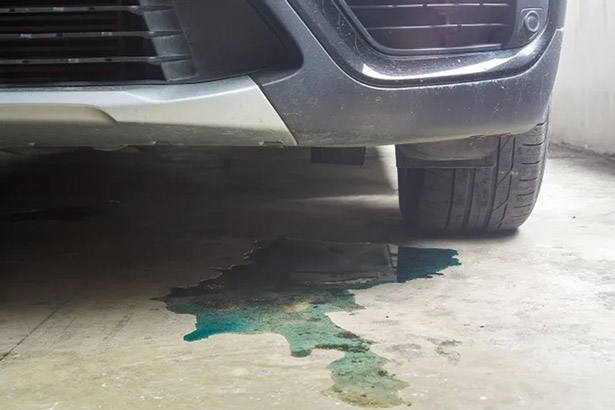
Now, we move into the parts that require you to raise your vigilance. Some fluids under the car look like water but are actually critical industrial fluids. First, you need to specifically check for coolant, also known as antifreeze. Coolant usually has very vivid, bright colors, such as fluorescent green, pink, orange, or blue. It feels a bit slippery and greasy to the touch, and smells distinctively sweet or has a pungent chemical odor. If you find this kind of colored liquid under your car, predominantly concentrated directly under the engine, around the radiator, or at hose connections, please pay immediate attention. This indicates that your cooling system has developed a leak. Cracked hoses, an aging radiator, or a damaged water pump can all cause leakage. You need to check the coolant expansion tank level right away. If the level is too low, absolutely do not continue to start or run the engine. Lack of coolant will cause the engine to overheat, leading to cylinder scoring or even complete engine failure. At this point, you should contact a repair shop for an inspection.
4. Next, Pay Attention to Washer Fluid Leaks
Next, let’s talk about another fluid that is often mistaken for A/C condensation—windshield washer fluid. Although a washer fluid leak won’t immediately damage the engine, it is still a fault that needs to be addressed. Washer fluid is generally light blue or green in color and carries a distinct alcohol smell or cleaning agent fragrance. It is not as viscous as coolant; it flows very freely, much like water. The leak point is often at the front of the vehicle, near the front bumper, headlight cleaning devices, or below the windshield. Common causes include a flying stone cracking the washer fluid reservoir, or the connected plastic hoses coming loose or being chewed through by rodents. You can open the hood and check if there is still fluid in the reservoir. If it leaks out quickly right after you just refilled it, you need to go get it repaired.
5. Also, Be Aware of Sunroof and Body Drainage: Easily Overlooked Channels
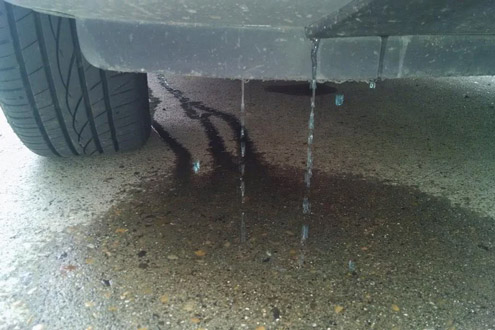
Your car is actually designed with many drainage channels. The four corners of the sunroof, the cowl panel below the front windshield, and the bottom edges of the doors all have drain holes. After rain or a car wash, water will flow along these channels and exit from specific locations under the car. Usually, these water outflow points are near the wheel mudguards or below the door sills. This is also completely normal. You do not need to worry. However, if leaves and sediment clog these drain holes, the water cannot drain out smoothly. The consequence is water entering the car interior, soaking the headliner or carpets. At this point, you might still see water dripping under the car, but the inside of the car has already suffered damage. Therefore, you need to regularly clean the sunroof tracks and the drain outlets at the bottom of the doors to ensure they remain unobstructed.
Quick Self-Check Guide: Understand Underbody Fluids with One Chart
To make it easier for you to remember, we have prepared a simple identification process. When you see a pool of liquid under the car, proactively perform the following actions:
- Step 1: Observe the color. Is it clear and colorless? Or is it colored?
- Step 2: Dip your finger in a little and rub it to feel the texture. Does it feel like clean water, or is it slick and oily?
- Step 3: Bring your nose close and smell it. No smell? Sweet? Alcohol-like? Or a pungent gasoline smell?
- Step 4: Confirm the location. Under the front passenger side? At the exhaust pipe? Or directly under the engine?
You can cross-check using the list below:
- Clear, odorless, watery feel, under the front passenger side → A/C condensation water. Completely normal.
- Clear, odorless, watery feel, at the exhaust pipe → Water produced by combustion. Completely normal.
- Vivid color, sweet smell, slippery feel, under the engine → Coolant leak. Seek immediate repair!
- Blue/green, alcohol smell, watery feel, front part of the car → Washer fluid leak. Schedule a repair.
- Black or brown, oily feel, pungent smell → Engine oil or other oil leak. Do not drive, call for roadside assistance immediately!
In Conclusion
Overall, water dripping from under the car after parking is most likely normal functioning of the air conditioning or exhaust system. You do not need to be overly anxious. But you must always be vigilant about mysterious fluids that have color and odor. As long as you follow the method we provided and spend 30 seconds doing a quick check, you can accurately judge your beloved car’s health condition. Proactively inspecting and discovering hidden problems in time can not only save you expensive repair costs but also ensure your driving safety.
Looking for top-quality new or used cars? Trust DG Motors for fast, reliable service—or visit our Phnom Penh showroom today!