Contents
hide
- A Global Perspective — Why Is the EX2 Selling So Well?
- In-Depth Product Breakdown — How Good Is the EX2 Really?
- Price Gap Comparison — How Much Does the EX2 Cost in Global Markets?
- Competitors — Who Are the EX2’s Rivals?
- Does It Truly Deserve the Title of Best Entry-Level EV?
- Buying Guide — Is the EX2 Worth Waiting For?
A Chinese electric minicar priced under $10,000 is reshaping the global entry-level EV market at an astonishing pace. That’s right — we’re talking about the 2026 Geely EX2.
Known as the “Geely Xingyuan” in the Chinese market, it sold 465,775 units in the full year of 2025, instantly claiming the title of best-selling model across all categories in China. As of April 2026, cumulative global deliveries of the EX2 have surpassed 600,000 units, placing it among the top three best-selling EVs worldwide, behind only the Tesla Model Y and Model 3.
More crucially, it is accelerating its global expansion at full speed. From Southeast Asia to Latin America, and from the United Kingdom to Australia, this entry-level electric vehicle has already arrived, or is about to land, in dozens of markets.
So, the question is: Does it truly deserve the title of “best entry-level electric vehicle”? This guide will break it down for you across four dimensions: specifications and configurations, driving experience, global pricing, and competitors.
A Global Perspective — Why Is the EX2 Selling So Well?
Sales as testimony: a “phenomenal” product
The EX2 has precisely pinpointed the real pain points of entry-level EV users and pushed its product capabilities to the extreme.
- In Indonesia, the EX2 opened for pre-sale in November 2025, relying on mass production at the local Pukawarta factory with a localization rate of 46.5%, securing over 1,500 orders upon launch.
- In Thailand, the EX2 was launched in January 2026, priced at approximately 81,600 to 88,000 RMB.
- In Mexico, pre-sale orders have already exceeded 4,100.
- In the United Kingdom, monthly registrations have surpassed 1,000 units.
Stacked together, these numbers point to one clear fact: consumers around the world are voting for this car with their wallets.
Geely’s global strategy: 2026 overseas sales target of 640,000 units
The global expansion of the EX2 is by no means an isolated event — behind it lies the globalization ambition of the entire Geely Group. In 2026, Geely Auto’s overseas export target is locked at 640,000 units, representing a year-on-year increase of more than 50%. The company’s management has clearly stated that “in 2026, the group will prioritize channeling all its resources into its international business.”
To support this target, Geely plans to build multiple “100,000-unit-level” regional markets globally, and the EX2 is the “spearhead” model in this campaign.
In-Depth Product Breakdown — How Good Is the EX2 Really?
Dimensions and space: small body, big surprise
The EX2 measures 4,135 mm (length) × 1,805 mm (width) × 1,580 mm (height), with a wheelbase of 2,650 mm. This size falls between a Volkswagen Polo and a Volkswagen Golf, making it effortlessly maneuverable through crowded city streets.

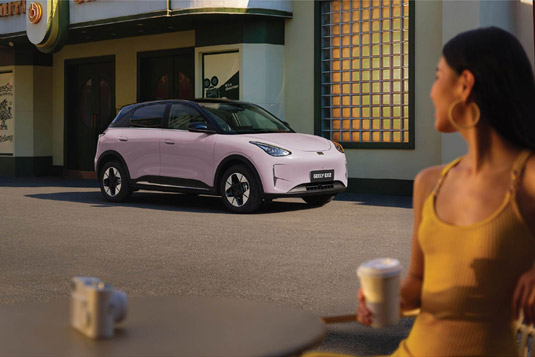
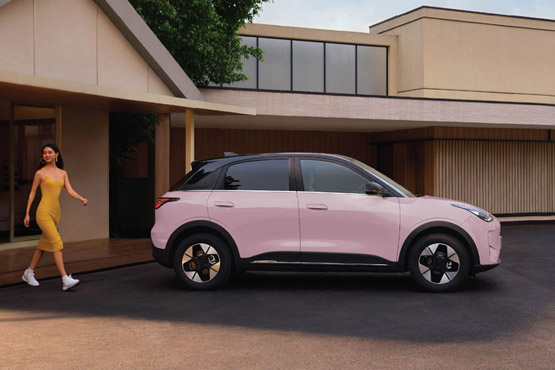
What is truly astonishing, however, is the interior space. Despite its compact exterior, the EX2 delivers surprisingly impressive rear passenger room. A person standing 183 cm tall can sit in the rear seat with clear knee clearance ahead and no oppressive feeling overhead. The cabin space utilization rate reaches as high as 85%.

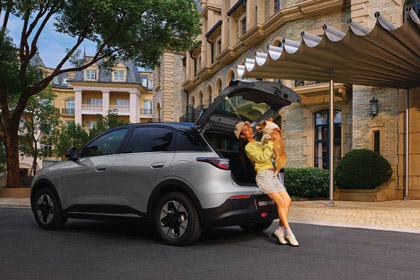
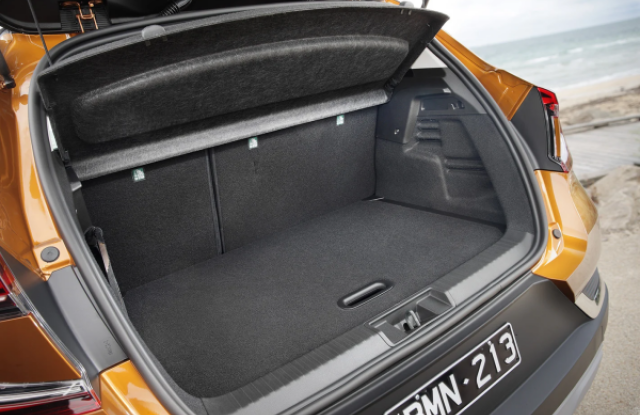
In terms of storage, the EX2 is virtually a “space storage master”: it offers a 70-liter front trunk (frunk), 375–1,320 liters of expandable rear cargo space, and 36 storage compartments throughout the cabin. Whether it’s weekend shopping, picking up the kids, or even a short trip, these spaces are more than adequate.
Range and charging: adequate and worry-free
The EX2 offers two battery options across different global markets: 30.12 kWh and 40.16 kWh, both utilizing lithium iron phosphate (LFP) battery technology.
Under the CLTC test cycle, the 30.12 kWh version delivers a range of approximately 310 km, and the 40.16 kWh version about 410 km. Under the stricter NEDC standard, the 40.8 kWh version achieves a range of roughly 395 km. Translated into real-world conditions, you can likely expect around 300 km of range.
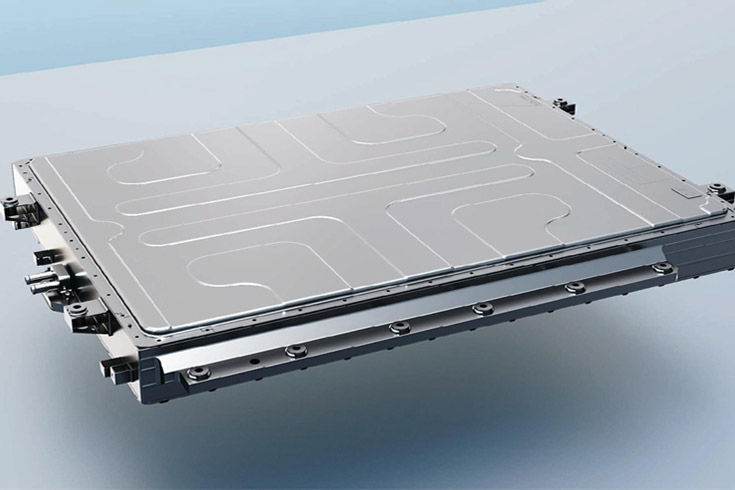
This figure is more than sufficient for urban commuting scenarios. For a user with a daily round-trip commute of about 20 km, charging only once or twice a week is needed. In terms of charging, the EX2 supports DC fast charging, going from 30% to 80% in just 21 minutes, while the maximum AC slow-charging power is 6.6 kW, ideal for overnight home charging.
There is an important technical highlight worth emphasizing: the EX2’s battery is equipped with an independent liquid-cooled thermal management system, unlike the BYD Atto 1, which relies on cold air from the air conditioning to cool the battery. This means the EX2 delivers more stable battery performance in hot or cold weather, and its long-term battery life is also more trustworthy.
Driving experience: the handling surprise of a city sprite
The EX2 is powered by a rear-mounted single electric motor offered in two output versions: 58 kW / 130 Nm and 85 kW / 150 Nm. The maximum power version accelerates from 0 to 100 km/h in approximately 11.5 seconds.
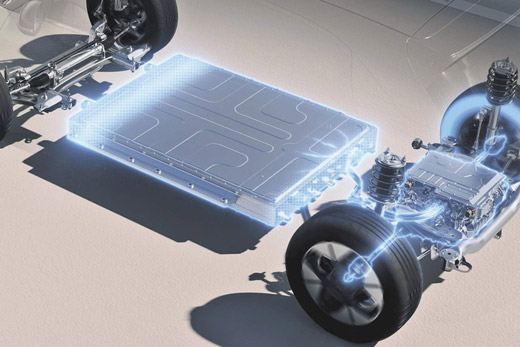
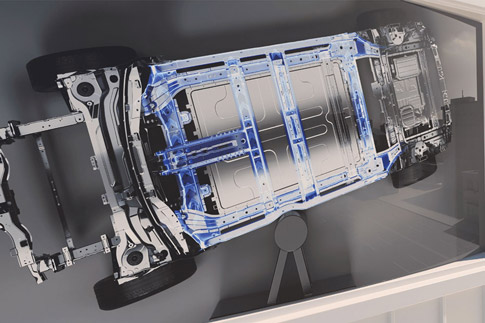
The initial take-off is not particularly fast — but the handling is excellent. The first press of the accelerator pedal does not give you a strong shove in the back; the start is soft and tuned more towards “stable.” However, as soon as you enter a corner, the EX2 delivers performance that exceeds its class: an independent multi-link rear suspension, a rear-wheel-drive layout, and responsive steering give you a “hot hatch”-style driving pleasure on city roads.
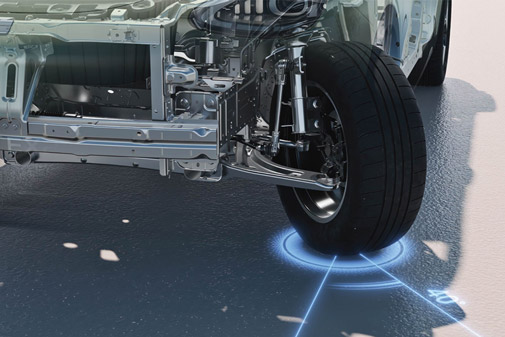
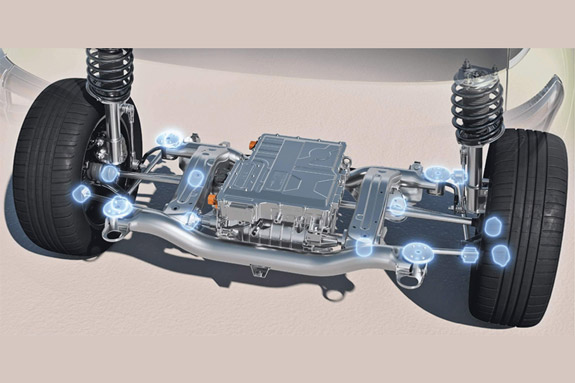
In the entry-level EV market, rear-wheel drive is a rare selling point. Most competitors in the same class adopt a front-wheel-drive layout. But the EX2’s combination of RWD and independent rear suspension gives it a driving quality beyond its price tag.
Interior and technology: well-equipped, not “stripped-out”
Sitting in the cockpit, you will first notice a 14.6-inch landscape-oriented floating central touchscreen and an 8.8-inch digital instrument cluster. The system runs the Flyme Auto intelligent cockpit, integrating navigation, entertainment, vehicle controls, and other functions.
In terms of interior quality, considering its price positioning, the EX2 is clearly superior to most sub-$30,000 small cars. Accents in silver and gloss black trim give the cabin a considerably more refined feel. The seats are upholstered in a leather-like material with a pleasant touch.
Safety equipment is not skimped on either: the overseas version comes standard with a 540-degree panoramic camera system, an ADAS driver assistance system, 4 to 6 airbags, paired with a cage-type body structure. The EX2 has also received a Euro NCAP five-star safety rating. There was a real-world accident in Thailand where an EX2 was rear-ended by a heavy truck; the passenger compartment structure remained intact, and the occupants sustained only minor injuries.
One point to note, however: there are relatively few physical buttons inside the car. Functions such as air conditioning controls are all integrated into the large central touchscreen, which may require an adaptation period for some users.
Price Gap Comparison — How Much Does the EX2 Cost in Global Markets?
The EX2’s biggest competitive advantage — and the biggest headache for traditional automakers — is its price.
- In the Chinese market, the EX2 (Xingyuan) starts at approximately 60,000 to 80,000 RMB.
- In Thailand, it is roughly 81,600 to 88,000 RMB.
- In Indonesia, the Pro version is priced at approximately 229 million Indonesian rupiah (around 100,000 RMB).
- In the Philippines, it starts from 950,000 pesos (about 120,000 RMB).
- In the United Kingdom, the expected starting price is around £19,000 to £22,000 (approximately 175,000 to 200,000 RMB).
- In Australia, the expected starting price is around 30,000 Australian dollars (approximately 142,000 RMB).
- In Mexico, pricing is around US$17,000 to US$20,000.
As can be seen, the exact same car has vastly different prices across different markets. This is the cumulative result of multiple factors such as tariffs, transportation costs, and local certification. But even measured by “export prices,” the EX2 remains extremely competitive in overseas markets.
Comparing these figures to the U.S. market makes the impact feel even more visceral: the average selling price of a new car in the U.S. is approximately US$51,456, while the EX2, even at the highest export specification price, is around US$20,000. This kind of price gap was almost unimaginable in the era of traditional internal combustion vehicles.
Competitors — Who Are the EX2’s Rivals?
In the entry-level EV arena, the EX2 faces a fair number of rivals. Here, we select the three most direct ones for comparison.
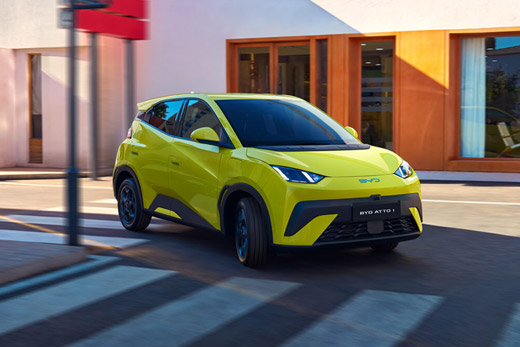
BYD Atto 1 (Seagull)
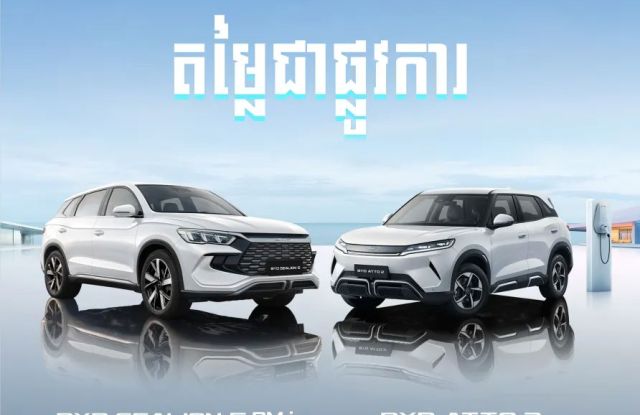
The BYD Atto 1 starts at 23,990 Australian dollars in Australia, making it currently the cheapest new electric car there. It has a smaller body, adopts a front-wheel-drive layout with a torsion beam rear suspension, and relies on cold air conducted from the air conditioning for battery cooling. By comparison, the EX2 is larger, more spacious, offers more agile handling, and has a more advanced battery thermal management system. However, on price, the Atto 1 still maintains an advantage — at least in the Australian market, the EX2 is highly likely to be priced slightly higher than it.
Renault 5 E-Tech
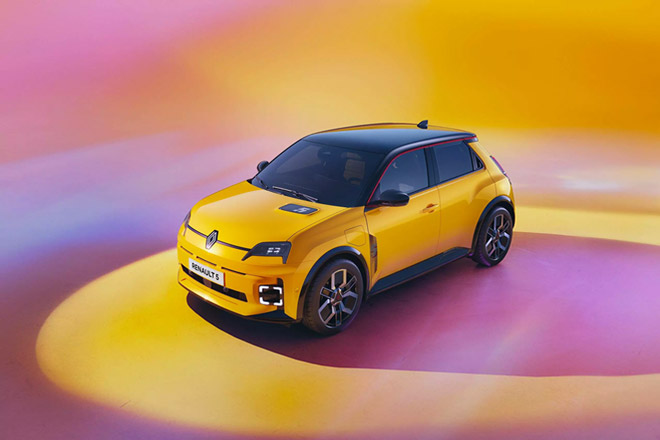
The Renault 5 holds a clear edge in design flair and brand appeal, drawing on the profound heritage of the veteran French automaker. However, it is primarily targeted at the European market, with a price expected to be above £20,000. The EX2’s advantages lie in larger space and a lower price.
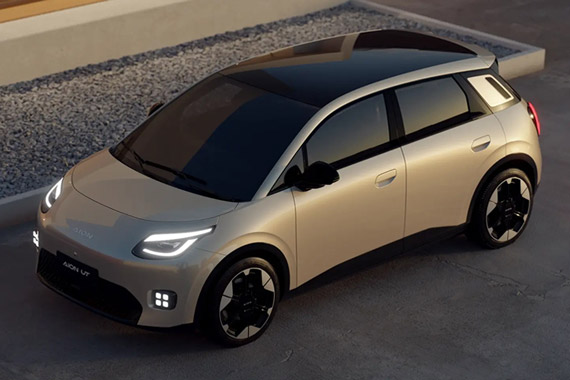
GAC Aion UT
The GAC Aion UT is also a compact electric vehicle exported by a Chinese brand, with dimensions and positioning close to those of the EX2. In the Australian market, the Aion UT starts at around 31,990 Australian dollars. By contrast, the EX2 is expected to have a lower starting price and is also more convincing in terms of space utilization.
Does It Truly Deserve the Title of Best Entry-Level EV?
Based on the analysis above, the answer to this question is: it depends on where you are buying it and what you value most.
If you value price above all, then the BYD Atto 1 is indeed cheaper. If you prioritize design, then the Renault 5 is more charming.
But if you want an entry-level electric vehicle with no obvious shortcomings across space, configurations, handling, safety, and technology, then the EX2 is currently the contender with the highest overall score. It balances various product attributes to a high degree — without clear hard flaws, yet with standout highlights: rear-wheel drive, independent rear suspension, a liquid-cooled battery, a five-star safety rating, and class-leading interior space.
In quick reviews by global media, the EX2 has garnered a significant amount of positive commentary: “It feels more upscale than most sub-$30,000 small cars”; “Within the limited experience time, it feels more solid and more fun than its competitors.” Of course, there is also criticism: the initial acceleration is soft, there are too few physical buttons, and the final pricing in some markets has yet to be clarified. But on the whole, it delivers product capabilities that exceed expectations at a price less than two-thirds that of its competitors.
Buying Guide — Is the EX2 Worth Waiting For?
When will it be available to buy?
Global deliveries of the EX2 have already begun.
- In Southeast Asia, Thailand and Indonesia have already launched it first, with sales starting from late 2025 to early 2026.
- In Latin America, Brazil and Mexico have already seen its launch.
- In the United Kingdom, it is expected to go on sale in autumn 2026.
- In Australia, a market launch in the third quarter of 2026 has been confirmed.
What should you pay attention to when choosing one?
- Choose the right battery version. If you only need it for city commuting, the 30 kWh version is sufficient; if you occasionally take longer trips, the 40 kWh version offers greater peace of mind.
- Pay attention to local subsidy policies. Many countries offer purchase subsidies, tax reductions, or free charging benefits for electric vehicles — be sure to check local policies in advance.
- Take a test drive before placing an order. The EX2’s starting acceleration is on the soft side, so if you have high expectations for acceleration, it is advisable to test drive it first to feel whether it meets your preferences.
- Compare charging infrastructure. Ensure that there is coverage from charging stations, especially fast chargers, near your residence and along your commuting routes.
Looking for top-quality new or used cars? Trust DG Motors for fast, reliable service—or visit our Phnom Penh showroom today!