Contents
hide
- Powertrain and Driving Experience: Jinba Ittai vs. Efficient All-Rounder
- Interior Design and Comfort: Above-Class Luxury vs. Rugged Practicality
- Technology and Infotainment: Minimalist Elegance vs. Intuitive Intelligence
- Safety Features: Fully Equipped, Neck and Neck
- Space and Practicality: The RAV4 Shows a Clear Advantage
- Fuel Economy and Ownership Costs
- Final Verdict: Which Compact SUV Is Right for You?
The battle between the Mazda CX-5 and the Toyota RAV4 has never stopped. As we enter the 2026 model year, both vehicles bring noteworthy updates that further cement their benchmark status in the compact SUV segment. For this very reason, whether you are a young family chasing driving enjoyment or a pragmatic buyer who values practicality and reliability, facing these two will likely leave you caught in a dilemma.
So, which one comes out on top — the 2026 Mazda CX-5 or the 2026 Toyota RAV4? This article will give you a comprehensive comparison across multiple dimensions, including powertrain, interior, technology, space, and ownership costs.
Powertrain and Driving Experience: Jinba Ittai vs. Efficient All-Rounder
First, let’s look at the most essential aspect — the driving feel. This has always been the key differentiator between these two vehicles.
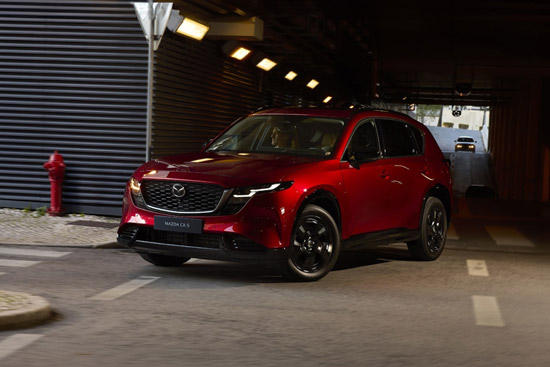
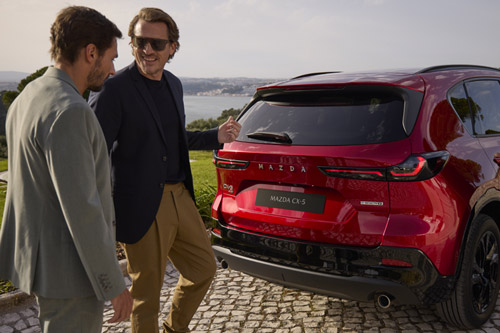
The 2026 Mazda CX-5 continues to adhere to the “Jinba Ittai” (horse and rider as one) vehicle-development philosophy. Its chassis tuning clearly leans toward a European style, with precise steering, rich feedback, and exceptionally well-controlled body posture through corners. On the powertrain front, in addition to the traditional Skyactiv-G naturally aspirated engine, more importantly, the 2026 model further expands the availability of the hybrid system co-developed with Toyota across multiple global markets. This system not only significantly reduces fuel consumption but also optimizes refinement and throttle response in urban driving conditions. Yet, even with the hybrid added, the CX-5’s transmission calibration and suspension setup still retain a sense of communication, making it more fun to drive than most SUVs in its class.
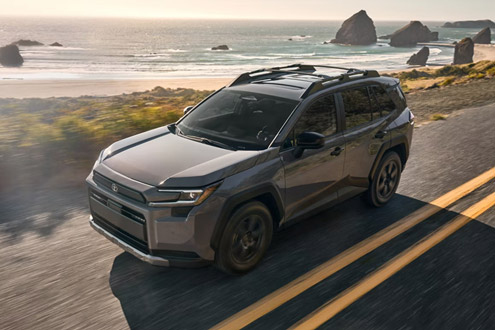
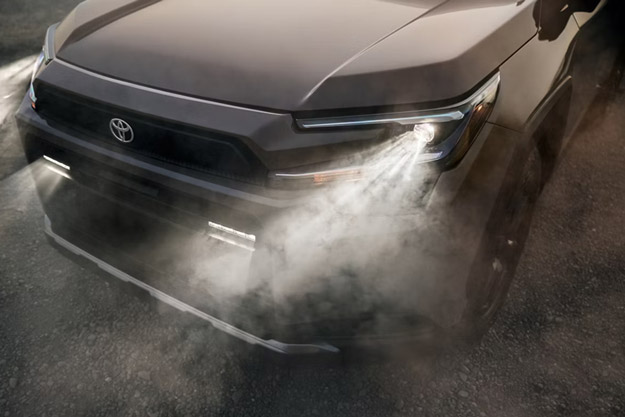
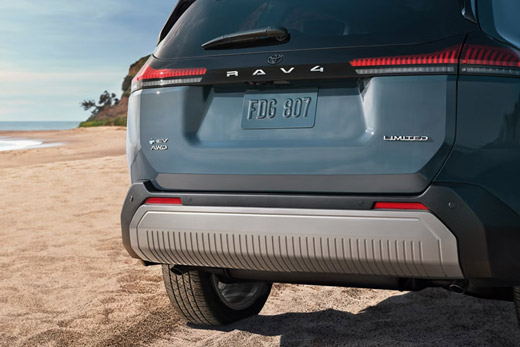
By contrast, the 2026 Toyota RAV4 takes relaxation and effortlessness as its driving keynote. Built on the TNGA-K platform, the RAV4 delivers exemplary comfort, with a suspension that effortlessly absorbs road imperfections. In terms of power, Toyota’s Hybrid system remains its ace, delivering outstanding fuel economy that holds a huge advantage especially in congested city traffic. Furthermore, the RAV4 Prime (plug-in hybrid version) provides rapid acceleration far beyond the class norm and covers daily commuting needs with its electric range. In short, the RAV4 is the kind of vehicle that lets you complete the journey from point A to point B seamlessly — worry-free, smooth, but without chasing too much driving excitement.
Therefore, if you love driving, the CX-5 will be your kindred spirit; if you care more about smoothness and ultimate fuel efficiency, the RAV4 clearly has the upper hand.
Interior Design and Comfort: Above-Class Luxury vs. Rugged Practicality
Stepping inside, the design philosophies of the two vehicles reveal entirely different orientations.
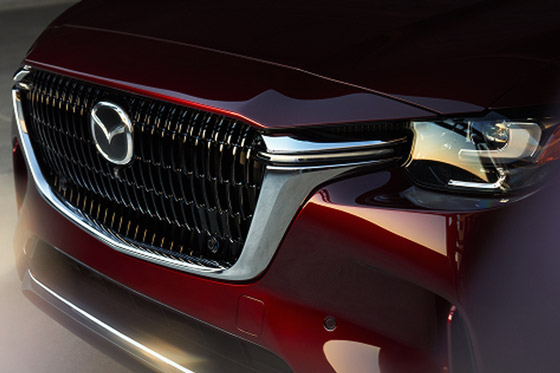
The interior of the 2026 Mazda CX-5 feels more like that of an entry-level luxury car. The first things that catch your eye are the extensive soft-touch materials, Nappa leather seats, and exquisite stitching — the tactile and visual quality both far exceed the standards of an ordinary mainstream brand. Its center console design is extremely clean and driver-focused, with thoughtfully laid-out physical buttons that are intuitive to operate. On top of that, Mazda has made targeted improvements to sound insulation for the 2026 model, and with thicker glass and more sound-deadening materials, cabin quietness at highway speeds is noticeably enhanced.
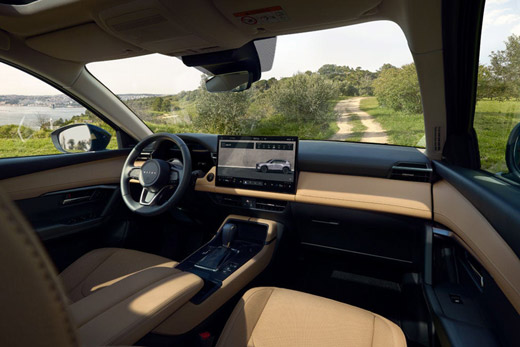
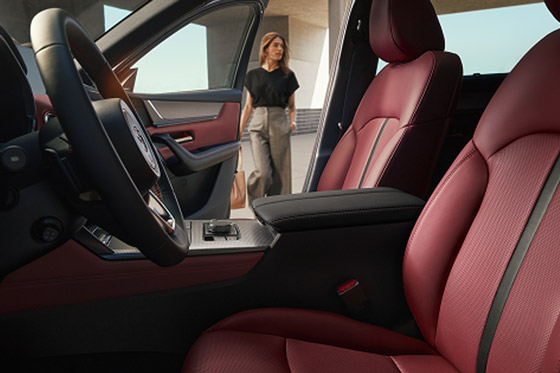
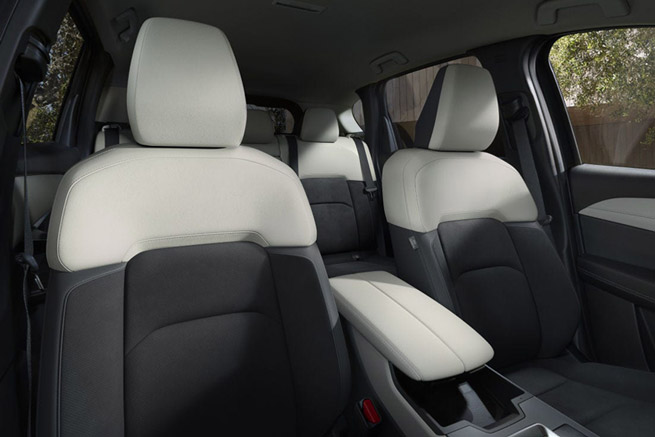
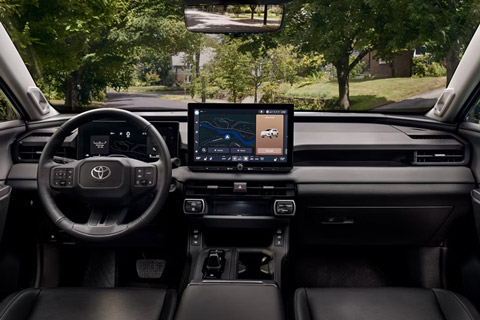
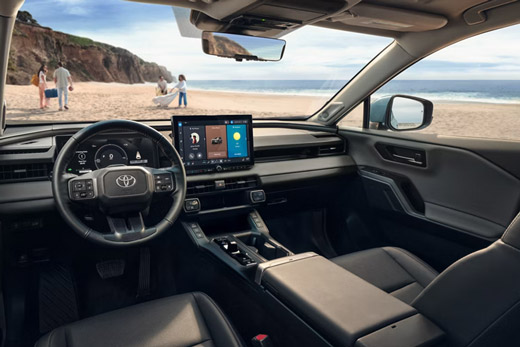

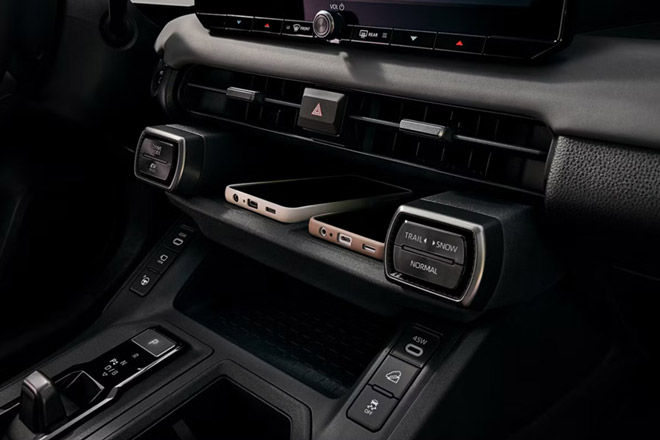
In contrast, the interior of the 2026 Toyota RAV4 serves function and durability above all. The dashboard lines are tough and rugged, and storage spaces are extremely abundant — for example, the full-width shelf can easily hold a phone and wallet, and the open storage compartment in front of the passenger is also highly practical. Although hard plastics dominate the material choice, Toyota minimizes the sense of cheapness through excellent texturing. At the same time, the new 2026 model is expected to feature a larger center screen while retaining a large number of physical knobs and buttons that can be easily operated even while wearing gloves. All in all, what the RAV4 emphasizes is ruggedness, ease of cleaning, and user-friendly convenience when the vehicle is fully loaded.
Technology and Infotainment: Minimalist Elegance vs. Intuitive Intelligence
In terms of technology, both have made progress that cannot be underestimated.
On the 2026 CX-5, Mazda continues to upgrade its infotainment system. The screen size is further enlarged and repositioned forward, making it more suitable for the driver’s line of sight. More importantly, while retaining the central control knob, it for the first time offers full touchscreen operation compatibility, which, together with wireless Apple CarPlay and Android Auto, greatly enhances convenience. Mazda believes minimizing screen touch while driving is fundamental to safety, and therefore its head-up display projects very rich information, keeping the driver’s eyes on the road.
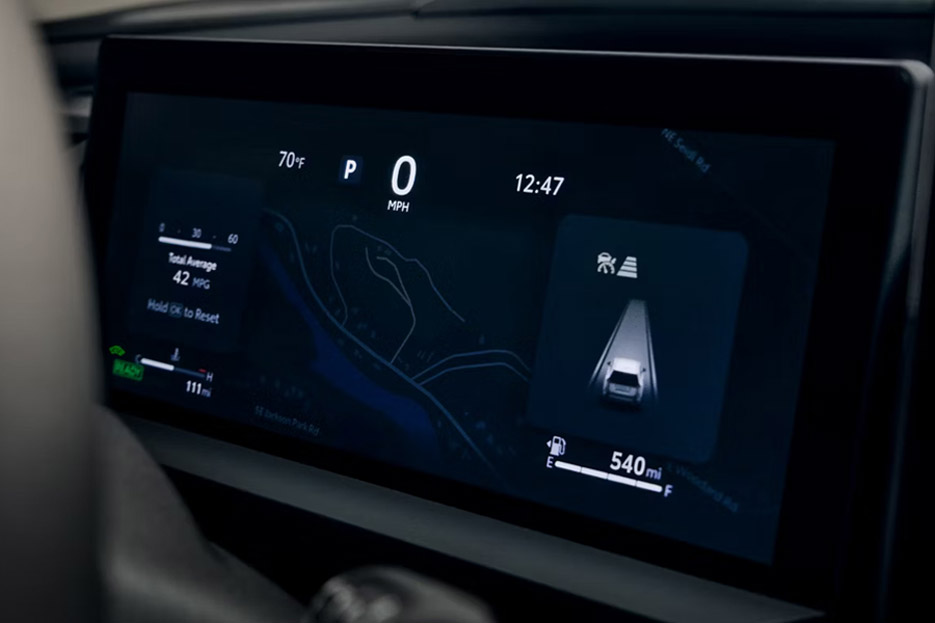
The 2026 RAV4 will be equipped with Toyota’s latest multimedia system, which responds extremely quickly and features a deeply optimized voice control function that can naturally recognize semantic commands like “I’m cold.” Its interface adopts a card-style design with clear logic and a very shallow learning curve. At the same time, the RAV4’s fully digital instrument cluster offers multiple display modes, and the clarity of the surround-view monitor has made a qualitative leap. By comparison, the RAV4’s technology leans more toward connected intelligence and a seamless experience, while the CX-5 focuses more on serving the act of driving.
Safety Features: Fully Equipped, Neck and Neck
In terms of active safety, both 2026 models come standard with core functions such as full-speed-range adaptive cruise control, lane-keeping assist, and autonomous emergency braking, and both have earned top safety ratings in major global crash tests.
To be specific, Mazda’s i-Activsense system is more refined in calibration; for example, the corrective action of the lane-centering assist is very gentle and does not create an awkward pendulum-like swaying sensation. Toyota’s Toyota Safety Sense system, on the other hand, offers broader coverage and has a slight edge in detection capability at intersections. It is worth noting that both vehicles support over-the-air (OTA) updates, meaning the safety systems can continue to evolve. In this round, you don’t need to make it a deciding factor, because both are exceptionally good.
Space and Practicality: The RAV4 Shows a Clear Advantage
If you have a hard requirement for rear passenger space and cargo capacity, the balance tips heavily.
It has to be acknowledged that the Toyota RAV4’s boxy body provides more generous headroom and legroom, and even three adult men sitting in the back will not feel too cramped. The cargo opening is very low and the floor is flat, making it extremely easy to load large items.
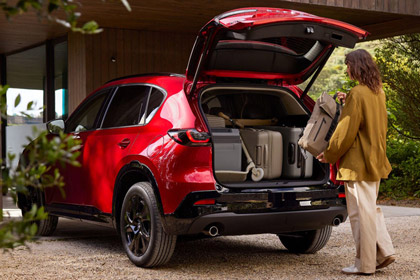
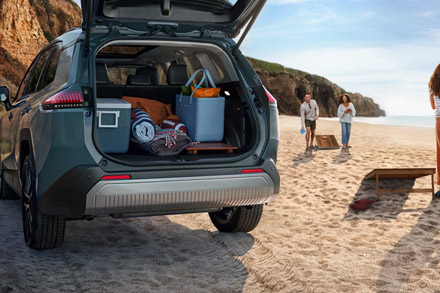
By contrast, the Mazda CX-5 is limited by its sporty, sloping roofline, resulting in relatively tighter cargo space and rear headroom. Although its seats are supremely comfortable, for taller family members, the airy feeling inside the RAV4 is much stronger. As can be seen, as a pure family tool, the RAV4 holds an absolute advantage in the hard metrics of space and practicality.
Fuel Economy and Ownership Costs
Whether in China, North America, or Europe, ownership costs are crucial.
The hybrid version of the Toyota RAV4 easily delivers a combined fuel consumption of around 5 L/100 km in real-world tests, and the plug-in hybrid version can drastically reduce daily commuting expenses. In addition, Toyota’s exceptionally low failure rate and relatively affordable maintenance make it a model student of frugality.
After adopting Toyota’s hybrid technology, the Mazda CX-5 has greatly narrowed the fuel economy gap with the RAV4. However, due to Mazda’s tuning bias toward a refined mechanical feel, some of its parts and maintenance requirements may be slightly higher than those of Toyota. Moreover, in global used-car markets, Toyota’s legendary resale value remains rock solid. Therefore, if you place an extremely high priority on long-term cost-effectiveness, the RAV4 is still the choice you cannot go wrong with.
Final Verdict: Which Compact SUV Is Right for You?
After this comprehensive analysis, the answer is very clear. There is no absolute “better,” only which one resonates more with your inner needs.
You should choose the 2026 Mazda CX-5 if:
- You regard driving pleasure as a part of life and reject a dull means of transportation.
- You are drawn to interior quality and sophisticated design that come close to luxury brands.
- Your demand for space is not exceptionally extreme, and you care more about the front-seat experience.
You should choose the 2026 Toyota RAV4 if:
- Practicality, ample space, and low fuel consumption are your top priorities.
- You need an extremely reliable family vehicle with very low ownership costs.
- You pursue the most cutting-edge connected-car experience and are enamored with a strong hybrid powertrain.
In the final analysis, the 2026 Mazda CX-5 is an SUV that ignites your passion for driving, turning a dull commute into an enjoyment; whereas the 2026 Toyota RAV4 is an all-round perfect companion that quietly and meticulously keeps everything in perfect order. No matter which one you end up owning, both represent the pinnacle of the compact SUV segment.
Looking for top-quality new or used cars? Trust DG Motors for fast, reliable service—or visit our Phnom Penh showroom today!