Contents
hide
- Exterior Design: Rugged Styling vs. Elegant Curves
- Powertrain: Diverse Choices
- Fuel Economy: Which Is More Frugal?
- Interior and Technology: A Contest of Digital Experience
- Space and Practicality
- Safety Performance: Both Are Trustworthy
- Price and Value: Where Does Your Money Go?
- Towing Capacity and Off-Road Capability
- Final Verdict
In the compact SUV segment, two names consistently dominate consumers’ shopping lists: the Toyota RAV4, the global sales champion; and the Mazda CX-50, a later entrant yet one that makes no effort to hide its sharp edge. If you find yourself wavering between the 2026 CX-50 and the 2026 RAV4, this article will help you make an informed decision.
We will conduct a comprehensive comparison across six dimensions: powertrain performance, fuel economy, interior technology, space practicality, safety features, and value for money. Ready to find the SUV that suits you best? Let us begin.
Exterior Design: Rugged Styling vs. Elegant Curves
The Toyota RAV4 and the CX-50 represent two distinctly different design philosophies. Which style appeals more to you?
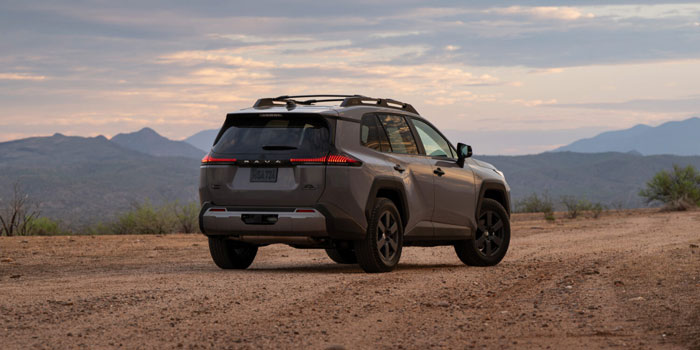
The 2026 Toyota RAV4 ushers in its sixth-generation major overhaul, with exterior changes that are quite pronounced. The overall lines are more rugged, with the front fascia adopting a large honeycomb grille paired with newly designed C-shaped headlights, creating a strong sense of power. The rear profile has become taller and wider, complemented by vertical taillight design, further elevating the visual center of gravity. This design language clearly borrows the rugged genes of the Land Cruiser, skillfully blending an outdoor adventure vibe into an urban fashion sensibility.
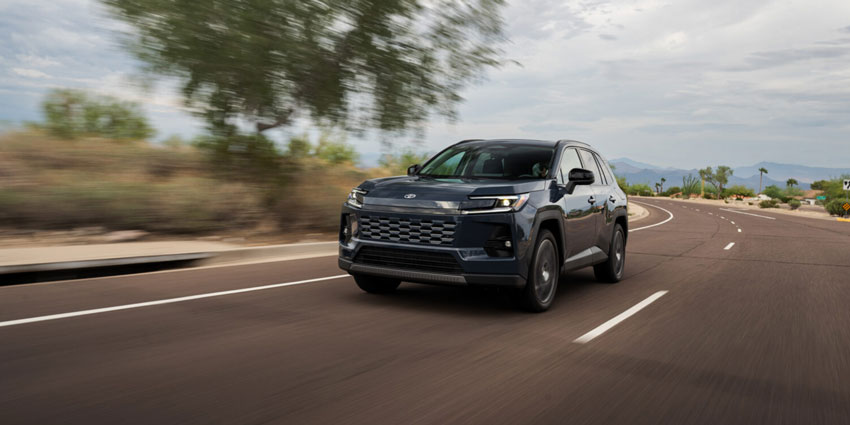
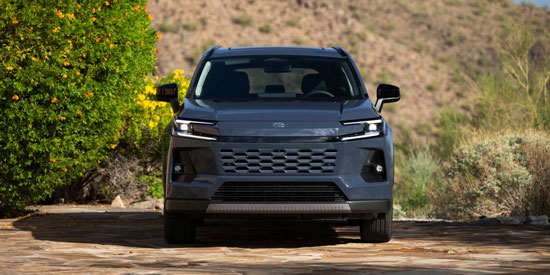
The Mazda CX-50, by contrast, has chosen a different path. It continues the brand’s signature “Kodo” design language, with lines that are fluid yet muscular. A shield-shaped grille with a black honeycomb mesh, along with slim matrix LED headlights that seamlessly merge with the grille, creates a sense of strength that is both wild and elegant. With body dimensions measuring 4785×1920×1638mm, it achieves a low-slung wide-body proportion uncommon among compact SUVs.
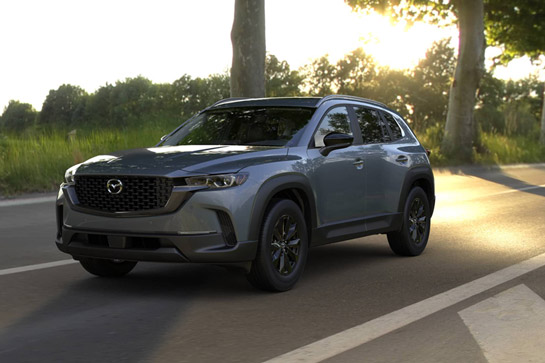
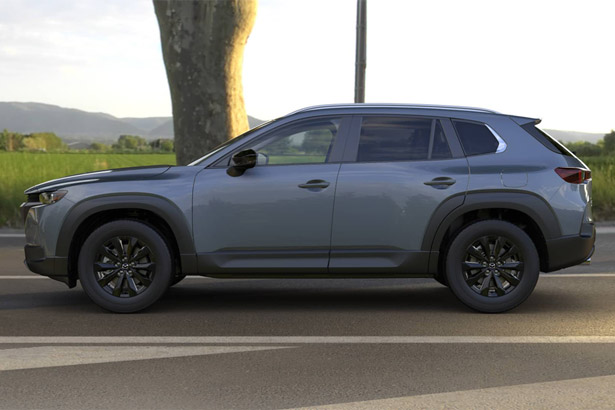
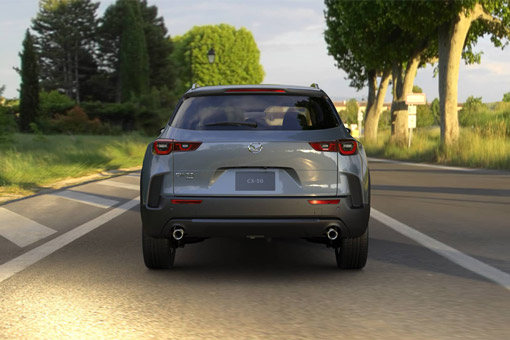
In simple terms: the RAV4 follows a rugged, boxy route, while the CX-50 leans toward fluid elegance. The choice ultimately depends on your aesthetic preference. That said, the CX-50’s lower stance and wider body do offer more visual impact in a parking lot.
Powertrain: Diverse Choices
Powertrain configuration is one of the areas where these two vehicles differ most significantly. Whether you prioritize fuel economy or driving excitement, both models offer different options.
The 2026 Toyota RAV4 has made a bold decision: the entire lineup bids farewell to pure internal combustion powertrains and fully embraces electrification. This means every 2026 RAV4 is a hybrid model. The standard hybrid version pairs a 2.5-liter four-cylinder engine with electric motors, delivering a combined 226 horsepower in front-wheel-drive guise and 236 horsepower for all-wheel-drive variants. Even more impressive is the plug-in hybrid (PHEV) version, which can produce up to 324 horsepower—truly a performance monster among compact SUVs.
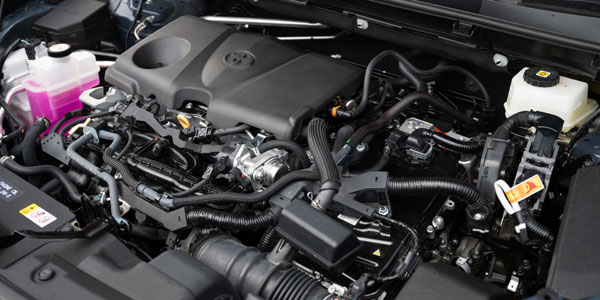
The 2026 Mazda CX-50 offers a more varied powertrain portfolio. The base model features a 2.5-liter naturally aspirated four-cylinder engine producing 187 horsepower. For those seeking stronger performance, a 2.5-liter turbocharged version unleashes 256 horsepower, enabling a 0–60 mph sprint of just 6.4 seconds. The hybrid variant is equally noteworthy; it utilizes a hybrid system sourced from Toyota, delivering a combined 219 horsepower and an EPA-estimated combined fuel economy of approximately 38 miles per gallon (mpg).
Notably, while the CX-50 Hybrid employs a Toyota “heart,” Mazda’s careful tuning yields a distinctly different driving experience. As one media review put it, it possesses “a Toyota heart but a Mazda soul.” Throttle response is more linear and smooth, and the delicate sensation in low-speed EV mode feels more nuanced and warmer than in the RAV4.
Thus, if ultimate fuel economy is your goal, the RAV4 Hybrid performs better (up to 44 mpg). If you value driving enjoyment and responsive power delivery, the CX-50 turbocharged version is undoubtedly the superior choice. The CX-50 Hybrid, meanwhile, occupies an appealing middle ground: respectable fuel economy paired with Mazda’s characteristic driving dynamics.
Fuel Economy: Which Is More Frugal?
For SUV buyers, fuel costs constitute a significant portion of long-term ownership expenses. So, which of these two is more fuel-efficient?
The Toyota RAV4 holds a slight edge in fuel economy. The 2026 RAV4 Hybrid achieves an EPA-estimated combined fuel economy rating of up to 44 mpg, a highly competitive figure in the current compact SUV market. The plug-in hybrid version can even operate on electric power alone for short daily commutes, further reducing running costs.
The Mazda CX-50 Hybrid delivers a combined fuel economy of approximately 38 mpg. While it falls short of the RAV4’s figure, it remains an impressive result. The turbocharged version’s fuel consumption is comparatively higher, though a reasonable trade-off given its 256-horsepower output. The base 2.5-liter naturally aspirated version earns an EPA combined estimate of about 26 mpg.
It is worth noting that the CX-50 Hybrid features a larger fuel tank capacity, yielding a combined driving range of roughly 551 miles, compared to approximately 445 miles for the standard RAV4 Hybrid. This means that on long journeys, the CX-50 can make fewer stops at the gas station, adding convenience to the trip.
If fuel economy is your top priority, the RAV4 Hybrid is the clear winner. However, if you place greater value on balancing driving range with driving character, the CX-50 Hybrid stands as an equally wise choice.
Interior and Technology: A Contest of Digital Experience
Step inside, and the two vehicles reveal distinctly different philosophies regarding interior design and technological features.
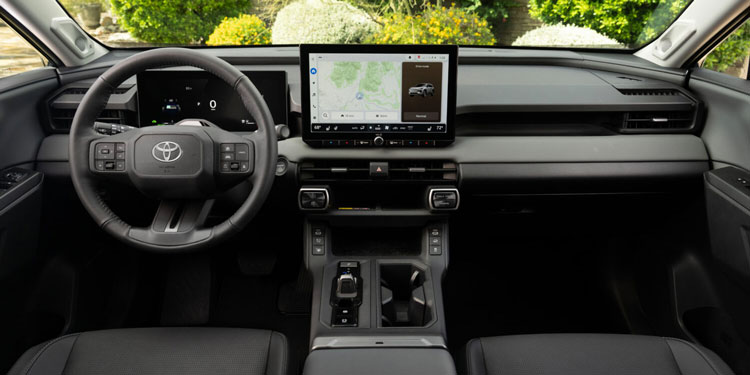
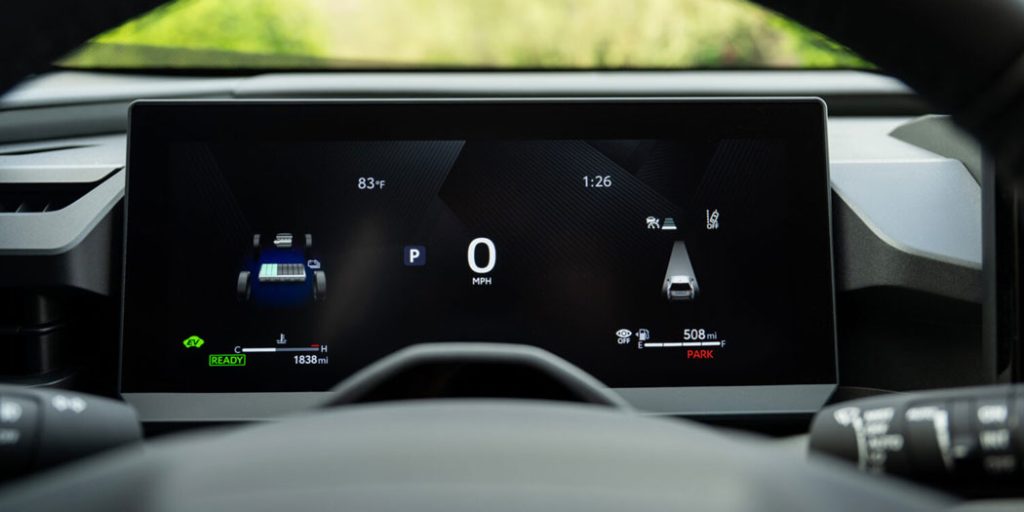
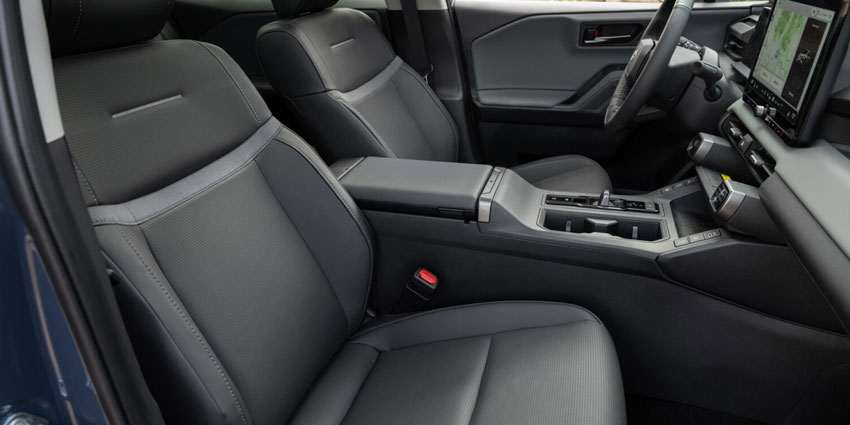
The interior of the 2026 Toyota RAV4 has undergone a comprehensive overhaul. It comes standard with a 12.3-inch full-color digital instrument cluster, while the flagship grade and above upgrade to a 12.9-inch multimedia display. The infotainment system is powered by a Snapdragon 8155P chip, dramatically improving operational fluidity and eliminating the lag issues of the previous system. Higher trims also feature a Head-Up Display (HUD), ventilated seats, and remote-controlled air conditioning. The overall design aesthetic is more masculine and robust, with a square steering wheel that offers a solid grip and a lowered instrument panel that improves forward visibility for front occupants.
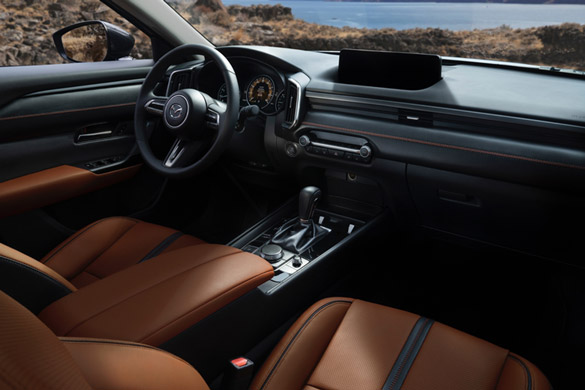
The Mazda CX-50 adheres to a driver-centric design philosophy. The center console features a 10.25-inch floating display paired with traditional physical buttons and knobs, allowing for highly accurate blind operation. For 2026, a new red-and-black two-tone interior option is available, with the red sections crafted from microfiber suede that improves breathability by 35% compared to leather, effectively mitigating seat stickiness during summer. The infotainment system’s computing power has been boosted by 40%, supporting continuous voice dialogue and multi-scenario command interaction. However, the CX-50 has not pursued large screens as aggressively as the RAV4, which may be a plus for users accustomed to physical controls.
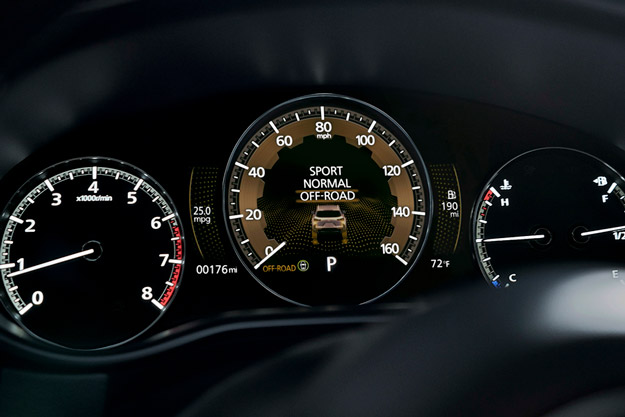
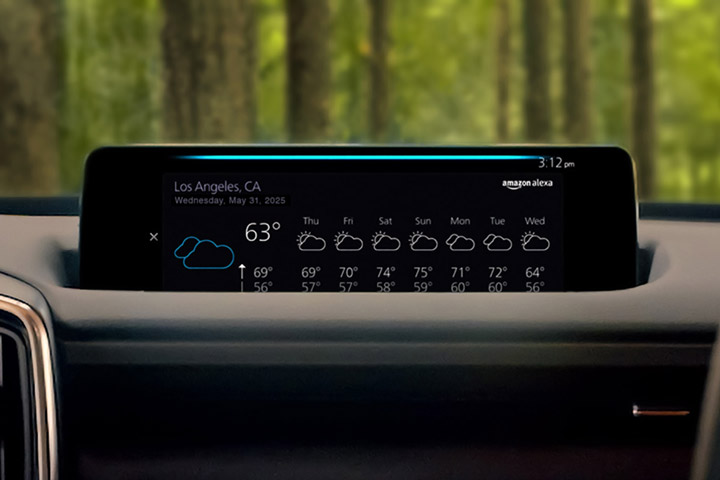
Regarding technology: the RAV4 clearly leads in screen size and digital experience, with that 15.6-inch central display (note: earlier text mentions 12.9-inch; this reflects the original article’s wording) standing out in its class. The CX-50 excels in exquisite material quality and ergonomic design, with a clear button layout and a minimal learning curve. Do you prefer a tech-forward experience dominated by large screens, or a clean, practical traditional layout?
Space and Practicality
For compact SUV buyers, spatial performance is paramount. The dimensional differences between the two vehicles directly affect passenger comfort and cargo-carrying capacity.
The Toyota RAV4 has a wheelbase of 2690mm. Rear legroom is adequate, and while there is a hump in the center floor, it is not excessively high. The cargo area is notably square and regular, and a spare tire is retained beneath the floor. For 2026, a 220V exterior power outlet has been added—a practical feature for outdoor camping. With the rear seats folded, the hybrid version offers approximately 37.5 cubic feet of cargo space, more than sufficient for daily use.
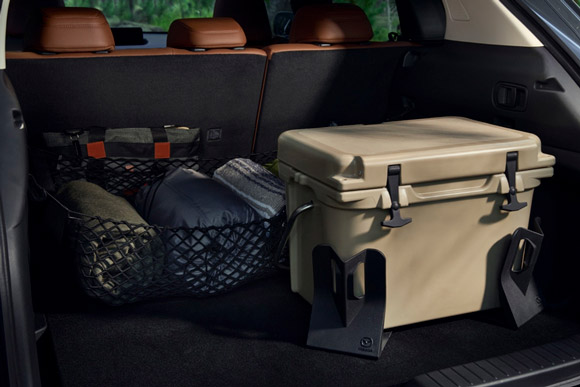
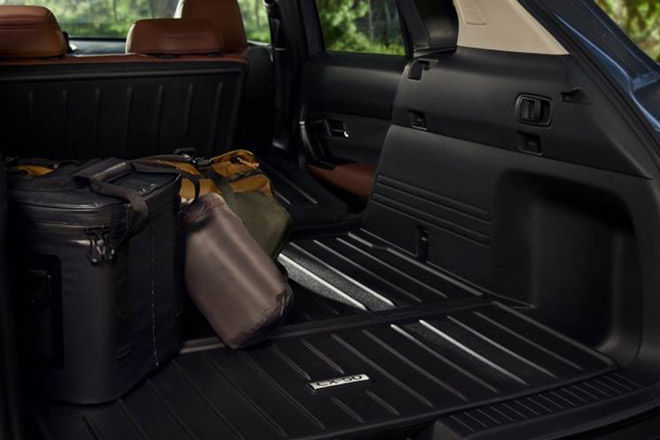
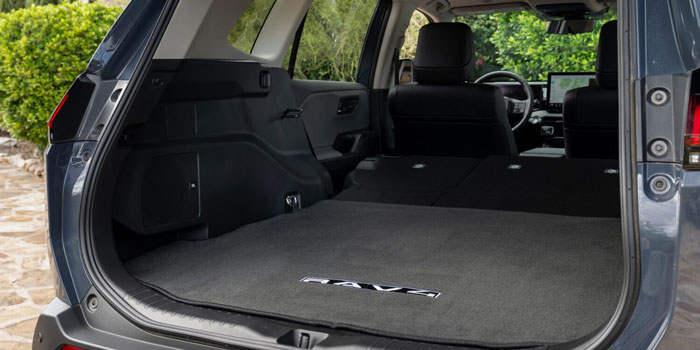
The Mazda CX-50 holds an advantage in terms of space. It boasts an extended wheelbase of 2815mm, a lengthening treatment specifically applied for the Chinese market. Rear legroom ranges from 730–1000mm, an increase of 55mm over the global version; even a passenger standing 1.8 meters tall (approx. 5’11”) will have roughly two fists’ width of knee clearance. The body width of 1920mm is class-leading. However, due to its low-slung profile, rear headroom is relatively tight, and passengers over 185cm (approx. 6’1″) may feel slightly cramped.
In terms of cargo volume, the CX-50 Hybrid offers approximately 31.4 cubic feet of space with the seats folded, slightly less than the RAV4. If you frequently haul bulky items, the RAV4 may be the better fit. But if rear passenger legroom is the higher priority, the CX-50 is the superior choice.
Safety Performance: Both Are Trustworthy
In the realm of safety, both vehicles deliver commendable results.
The Mazda CX-50 earned the IIHS Top Safety Pick+ highest accolade. In an 80 km/h offset crash test, peak roof crush strength exceeded 10 metric tons, and both A-pillars received a “Good” rating for their crash performance. High-strength steel comprises 58.59% of the body structure, providing robust safety assurance. Additionally, the CX-50 comes standard with i-ACTIVSENSE driver-assistance technology, including full-speed adaptive cruise control, lane centering, and autonomous emergency braking.
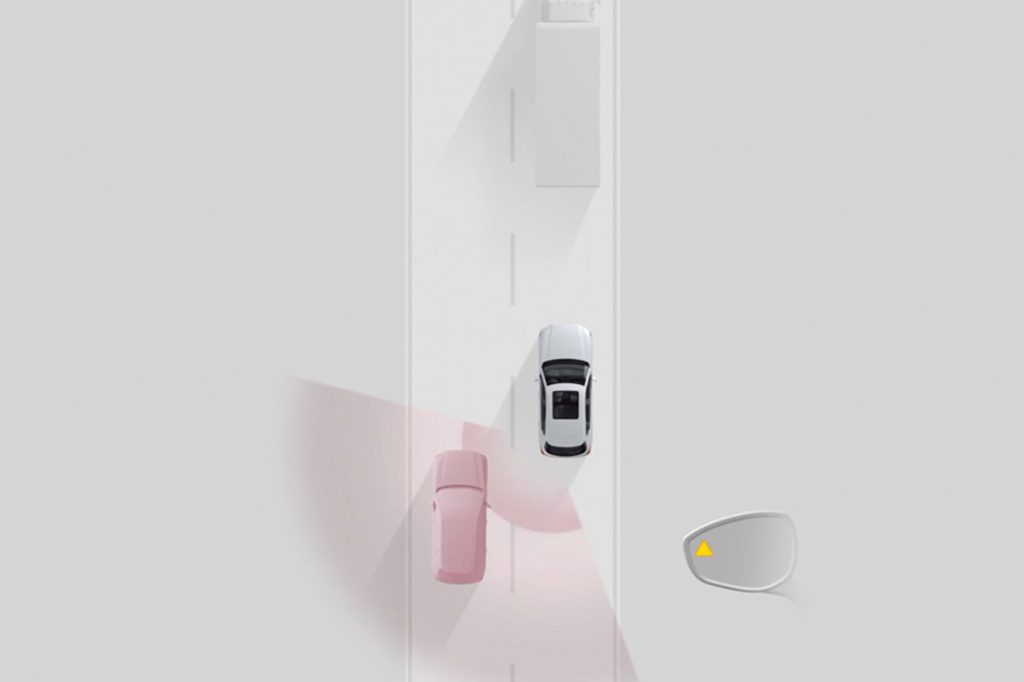
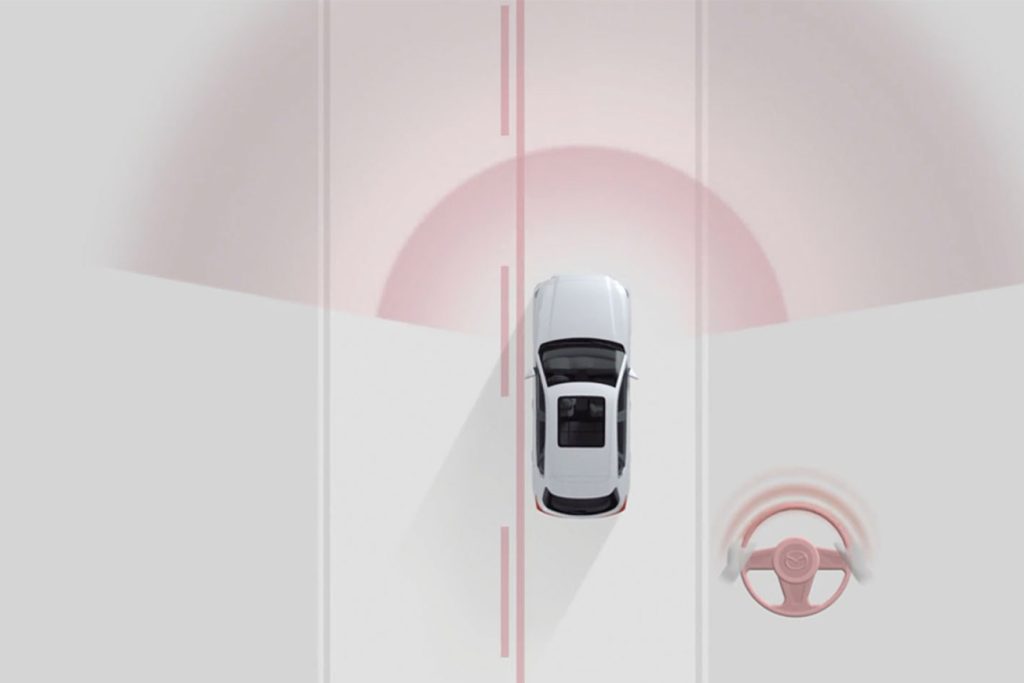
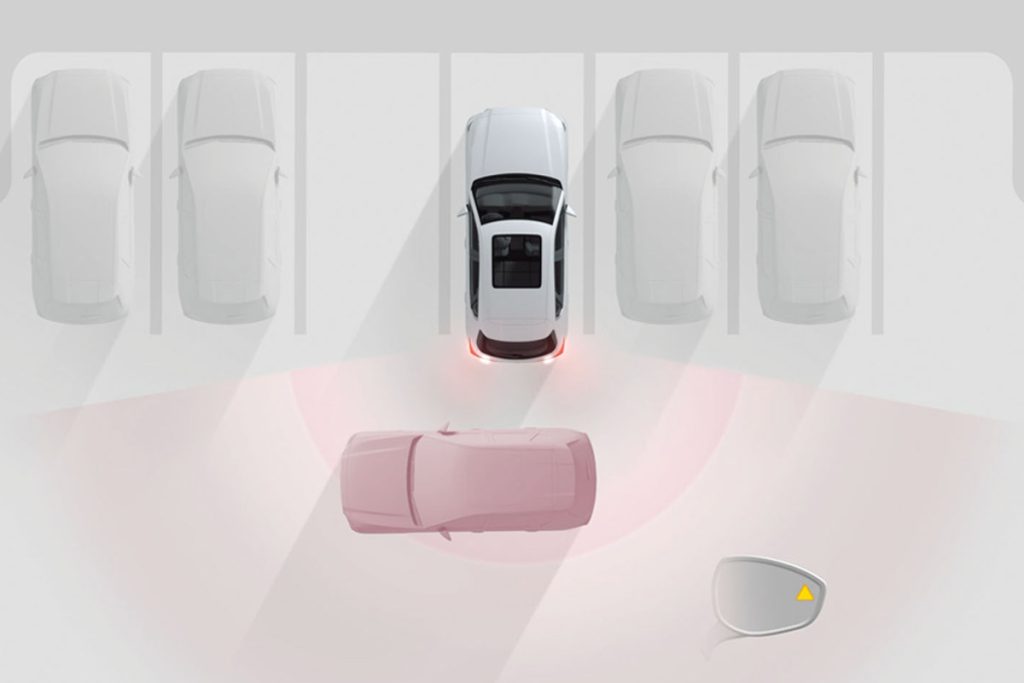
The Toyota RAV4 also performs admirably. It achieved a 5-star rating in C-NCAP crash tests and earned “Good” ratings across the board in C-IASI assessments for occupant protection, pedestrian protection, and vehicle safety assist. The sixth-generation RAV4 introduces 46 new active and passive safety features, including Front Cross Traffic Alert (FCTA), and comes standard with the latest generation Toyota Safety Sense 4.0 system.
Suffice it to say, in terms of safety, both models are at the top of their class. Whichever you choose, you can entrust your family to it with confidence.
Price and Value: Where Does Your Money Go?
Price is a critical factor in purchasing decisions. Let us examine the pricing landscape for the 2026 models.
In the U.S. market, the 2026 Toyota RAV4 Hybrid starts at approximately $31,900 (LE Hybrid FWD), with the XLE Premium at around $36,100 and the top-tier Limited near $43,300. The plug-in hybrid version commands a higher price, and performance-oriented trims like the GR Sport approach $45,000. Bolstered by strong brand equity and high resale value, the RAV4 continues to sell briskly despite its not-insignificant price tag. Global sales data from January–September 2025 shows cumulative RAV4 deliveries reaching 896,000 units, a year-over-year increase of 5.2%.
In the U.S. market, the 2026 Mazda CX-50 Hybrid starts at approximately $34,750 for the Preferred trim, with the Premium at around $38,150 and the Premium Plus near $40,450. The pricing is slightly higher than the entry-level RAV4, but the equipment level is more generous. In the Chinese market, the pricing strategy for the 2026 CX-50 “Xingye” is notably aggressive, with a guide price ranging from 139,800 to 159,800 RMB—the base model sees a price cut of 20,000 RMB compared to its predecessor. This pricing bracket affords it a distinct value advantage when competing with the RAV4 Rongfang.
If your budget is tight but you desire abundant features, the CX-50 (especially in the Chinese market) offers greater value for money. If you prioritize brand recognition and long-term resale value, the RAV4 is the more prudent consideration. As one automotive reviewer aptly put it: Those who choose the RAV4 are more afraid of “buying the wrong thing,” while those who opt for the CX-50 are more intent on “buying the right thing.”
Towing Capacity and Off-Road Capability
If you need to tow a small trailer or frequently venture off the beaten path, towing capacity and off-road prowess are also worth noting.
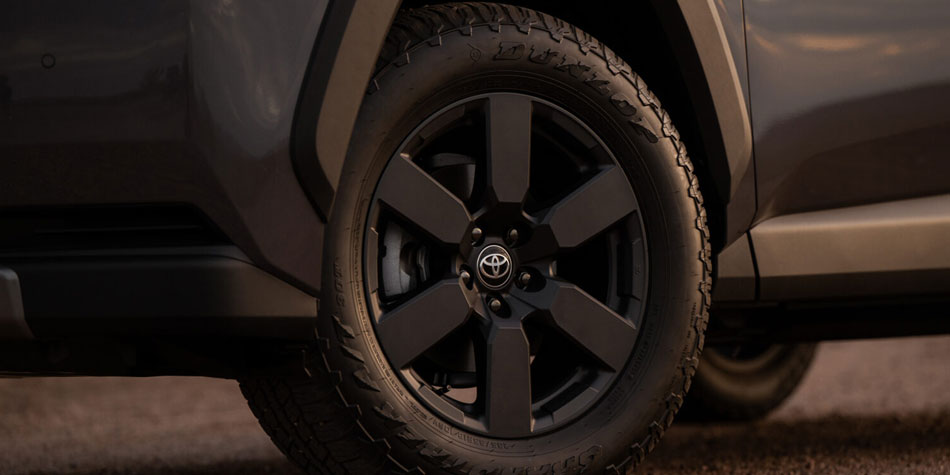
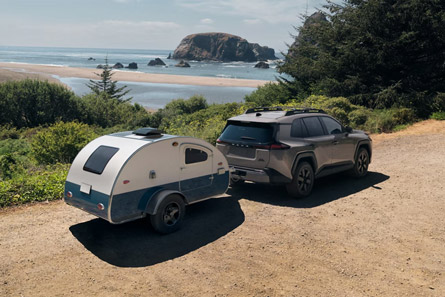
When properly equipped, the Toyota RAV4 can achieve a maximum towing capacity of 3,500 pounds, sufficient for a small boat or camping trailer. The Woodland Edition is purpose-built for outdoor scenarios, featuring a raised suspension and all-terrain tires that perform admirably on rough trails and muddy paths.
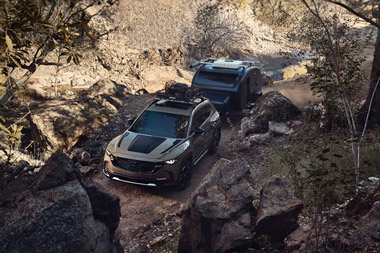
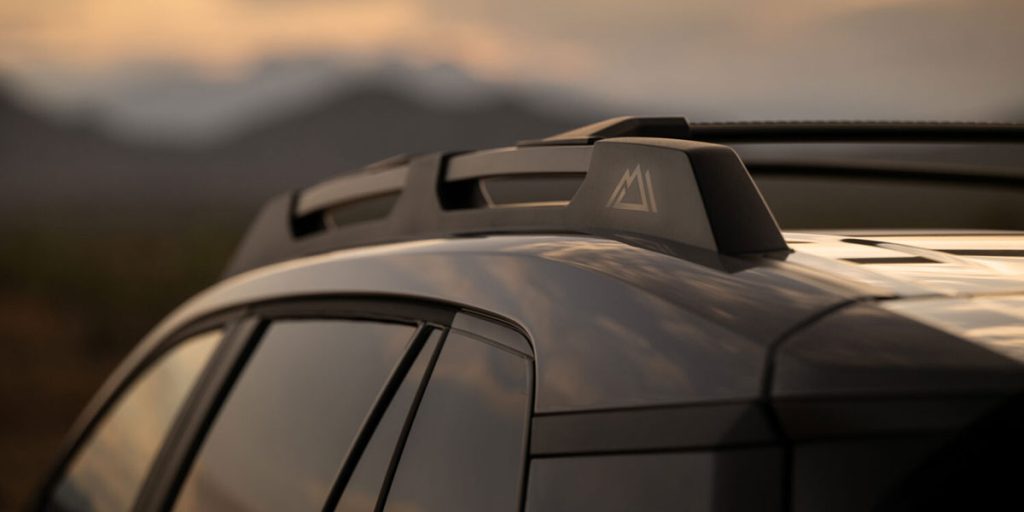
The Mazda CX-50 in its turbocharged configuration also boasts a maximum towing capacity of 3,500 pounds. The Meridian Edition sports a more off-road-oriented appearance, with all-terrain tires and a black roof rack, along with generous ground clearance suitable for light off-road adventures. The Mi-Drive system offers Normal, Sport, and Off-Road modes, enhancing its all-terrain adaptability.
Overall, the two vehicles are evenly matched in towing capacity. In terms of off-road performance, both the RAV4 Woodland Edition and the CX-50 Meridian Edition can satisfy light to moderate outdoor needs.
Final Verdict
In summary, the Toyota RAV4 is a safe, reliable, fuel-efficient all-rounder—choosing it is almost never a mistake. The Mazda CX-50, on the other hand, is an SUV with more personality and driving allure, suited for consumers willing to pay a premium for design and dynamic quality.
Looking for top-quality new or used cars? Trust DG Motors for fast, reliable service—or visit our Phnom Penh showroom today!