Contents
hide
- 1. Powertrain and Driving Experience: Classic V6 vs. Efficient Turbo
- 2. Fuel Economy and Towing Capability: The Game of Efficiency and Strength
- 3. Interior and Technology Configuration: A Stark Contrast in Tech Atmosphere
- 4. Safety Performance: All-Round Protection
- 5. Trim Level Configuration and Price Comparison: Which Offers More Bang for the Buck?
- Conclusion: How Exactly Should You Choose?
In the realm of family transportation, the three-row SUV is unquestionably the dominant force on today’s market. These vehicles must not only provide spacious and comfortable seating but also offer strong cargo capacity, advanced safety technology, and efficient powertrains. In this fiercely competitive segment, two heavyweight contenders — the 2026 Nissan Pathfinder and the 2026 Toyota Highlander — once again go head-to-head.
Frankly speaking, deciding which one is better doesn’t come with a simple answer. The Nissan Pathfinder has undergone significant upgrades for the 2026 model year, emphasizing the smooth power of its V6 engine and its award-winning reliability. On the other hand, the Toyota Highlander continues to attract a large loyal following by leveraging its turbocharged engine, its signature hybrid powertrain, and an excellent reputation.
Therefore, to help you make the most informed buying decision, we will conduct a comprehensive, in-depth analysis of these two top-tier Japanese SUVs from multiple dimensions, including power performance, fuel economy, interior configuration, space practicality, and safety technology. Please fasten your seatbelt; our comparison journey is about to begin.
1. Powertrain and Driving Experience: Classic V6 vs. Efficient Turbo
First, let’s direct our gaze beneath the hood, which is where the personalities of these two vehicles diverge the most.
Nissan Pathfinder: The Faith of Smooth and Reliable V6
The 2026 Nissan Pathfinder is equipped with a 3.5-liter direct-injection V6 engine. It is worth noting that this engine has been named the most awarded V6 over the past 30 years by Ward’s Auto magazine, which is undoubtedly a tremendous affirmation of its engineering design and durability.
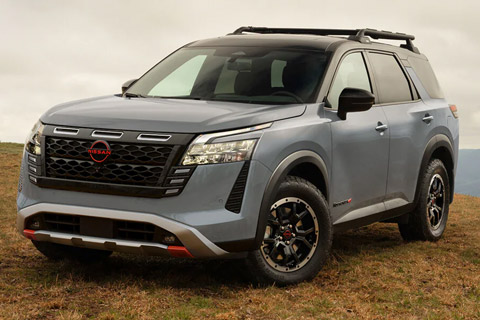
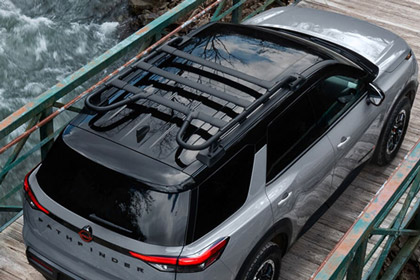
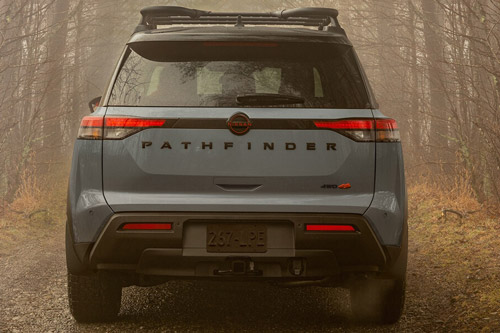
In terms of specific power figures, the standard Pathfinder produces 284 horsepower and 259 lb-ft of torque. More importantly, Nissan has paired it with an all-new 9-speed automatic transmission. Compared to the previous generation, this transmission’s shift logic is much sharper, ensuring smooth starts at low speeds and delivering better fuel economy at highway cruising speeds.
If you are someone who is passionate about outdoor adventures, the Pathfinder Rock Creek edition will further stimulate your adrenaline. Through specialized tuning, its maximum output is increased to 295 horsepower, and torque rises to 270 lb-ft. In addition, it comes equipped with an off-road tuned suspension, all-terrain tires, and higher ground clearance, allowing you to traverse unpaved surfaces as if they were level ground.
Toyota Highlander: The Dual Choice of Turbocharged and Hybrid Power
In contrast, the Toyota Highlander has chosen an entirely different technical route. The 2026 Highlander gasoline model is powered by a 2.4-liter four-cylinder turbocharged engine, delivering a maximum output of 265 horsepower and a peak torque reaching an impressive 310 lb-ft. Although its horsepower is slightly lower than the Pathfinder’s V6, its low-end torque performance is much stronger, providing a more pronounced push-back-into-your-seat feeling during city starts and overtaking.
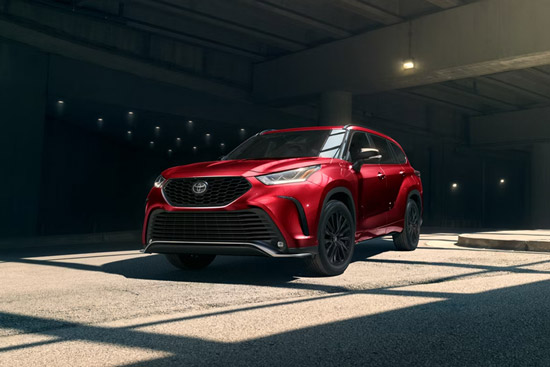
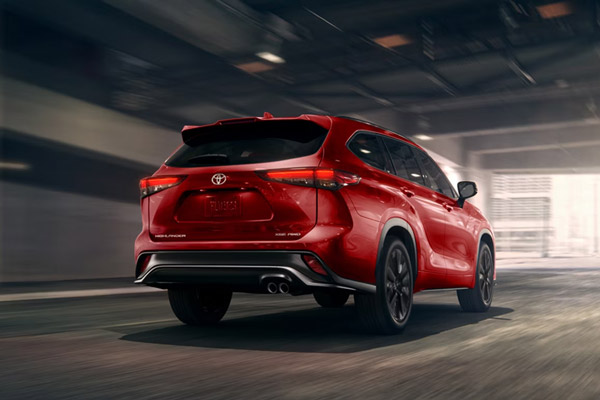
Of course, the Highlander’s real trump card is its hybrid powertrain. This hybrid system, composed of a 2.5-liter engine and electric motors, produces a combined 243 horsepower. While the power is somewhat weaker, it achieves a qualitative leap in fuel economy.
In short, if you prefer the linear power delivery and deep, rich sound of a large-displacement naturally aspirated engine, along with its long-term reliability, the Pathfinder’s V6 is absolutely a worthwhile investment. However, if you value instantaneous explosive power and unparalleled fuel efficiency more, the Highlander’s turbocharged and hybrid powertrains offer a more modern advantage.
2. Fuel Economy and Towing Capability: The Game of Efficiency and Strength
The differences in power performance directly lead to these two vehicles having different emphasis points regarding energy consumption and practicality.
Fuel-Saving Champion vs. Towing Champion
In terms of fuel economy, the Toyota Highlander Hybrid demonstrates an overwhelming advantage. According to official data, the Highlander Hybrid achieves an astonishing fuel consumption rating of 35 miles per gallon on both city streets and highways. This means you can save a substantial amount of money at the gas pump, especially in today’s era of high fuel prices.
In comparison, the fuel economy of the Nissan Pathfinder appears to be moderate. Its two-wheel-drive version can achieve up to 27 miles per gallon on the highway, while the combined city/highway fuel consumption for the four-wheel-drive version hovers around 21-23 miles per gallon. Although not poor by any means, there is still a clear gap compared to the Highlander Hybrid.
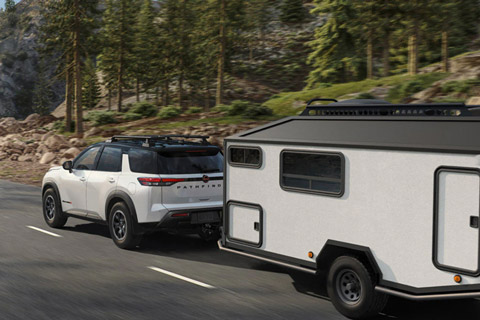
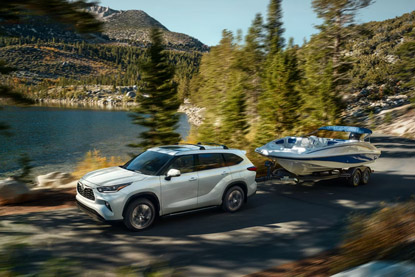
However, when it comes to towing capability, the plot twists. The Nissan Pathfinder boasts a maximum towing capacity of up to 6,000 pounds, easily sufficient to tow a small speedboat, camping trailer, or flatbed trailer. Meanwhile, the Pathfinder is also equipped with a dedicated tow mode and Downhill Speed Control, which effectively reduces the jerky sensation caused by frequent transmission shifting, making trailer towing much more composed. The Toyota Highlander, on the other hand, has a maximum towing capacity of 5,000 pounds. While still sufficient for most families’ needs, it is a full 1,000 pounds less than the Pathfinder.
From this, it is clear that your lifestyle will directly determine the winner in this category. If you frequently need to tow heavy equipment, the Pathfinder is undoubtedly the stronger choice. Conversely, if what you face daily is congested urban commuting and long-distance road trips, the extreme fuel economy of the Highlander Hybrid is difficult to resist.
3. Interior and Technology Configuration: A Stark Contrast in Tech Atmosphere
Stepping inside the cabin, both vehicles offer a wealth of high-tech features, but there are clear divergences in design philosophy and details.
Nissan Pathfinder: A Driver-Focused Digital Cockpit
Inside the 2026 Pathfinder, Nissan spares no effort in creating a sense of technology and luxury. The most eye-catching feature is its dual 12.3-inch large screens — one serving as a fully digital instrument cluster, and the other as the central infotainment display. This configuration is still quite rare among vehicles in the same class.
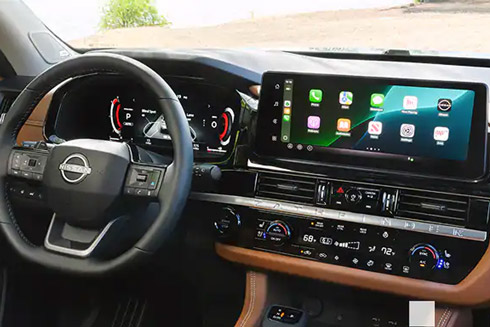
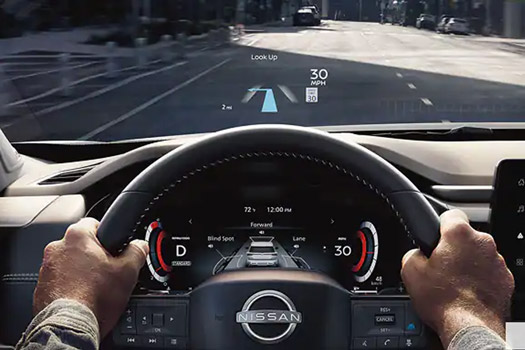
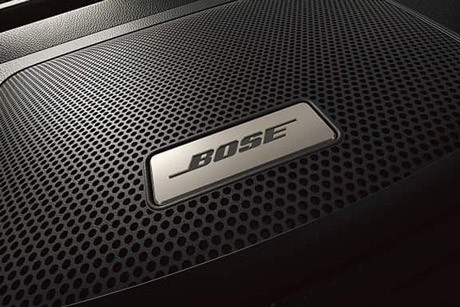
Furthermore, the Pathfinder offers a 10.8-inch Head-Up Display that can project key information such as vehicle speed and navigation directions onto the windshield, allowing the driver’s line of sight to always remain on the road. In terms of audio, an available Bose® premium sound system with 13 speakers provides an immersive auditory feast.
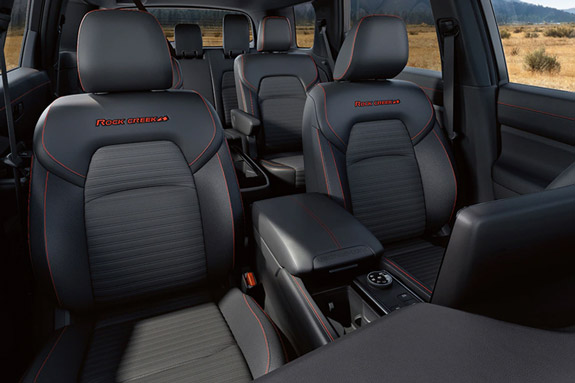
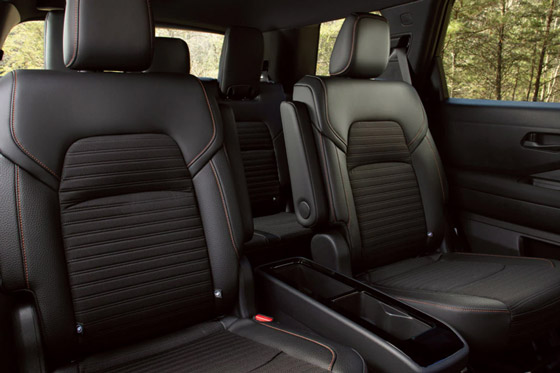
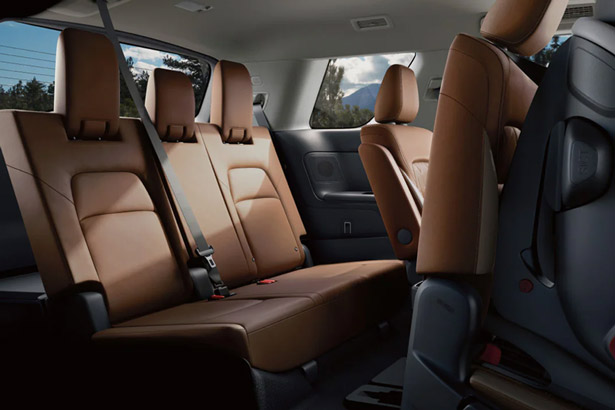
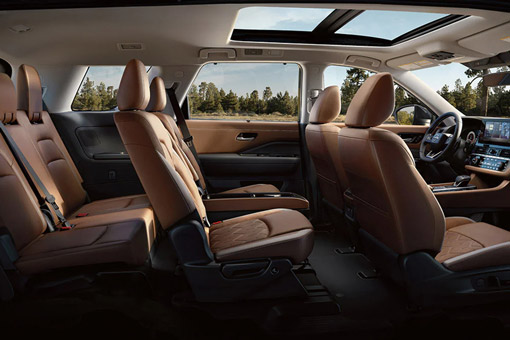
Regarding comfort, the Pathfinder offers optional second-row captain’s chairs. These seats not only offer excellent comfort but also can be easily slid and folded via the EZ FLEX system, allowing third-row passengers to enter and exit even when a child safety seat is installed. Even more thoughtfully, the Pathfinder’s front windshield and front side windows utilize acoustic laminated glass, resulting in a remarkably quiet cabin.
Toyota Highlander: Equally Tech-Savvy, but Slightly More Traditional
The Highlander is no slouch either on higher trim levels, offering a 12.3-inch Toyota Multimedia touchscreen and a 12.3-inch digital instrument cluster. Its infotainment system responds quickly and supports voice control.
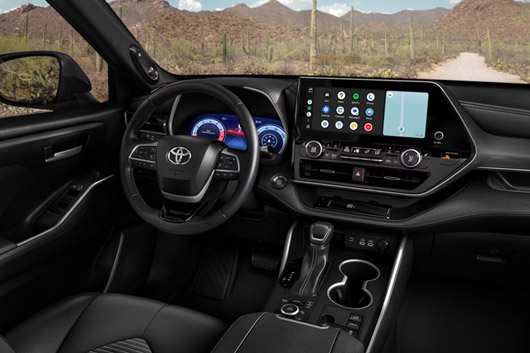
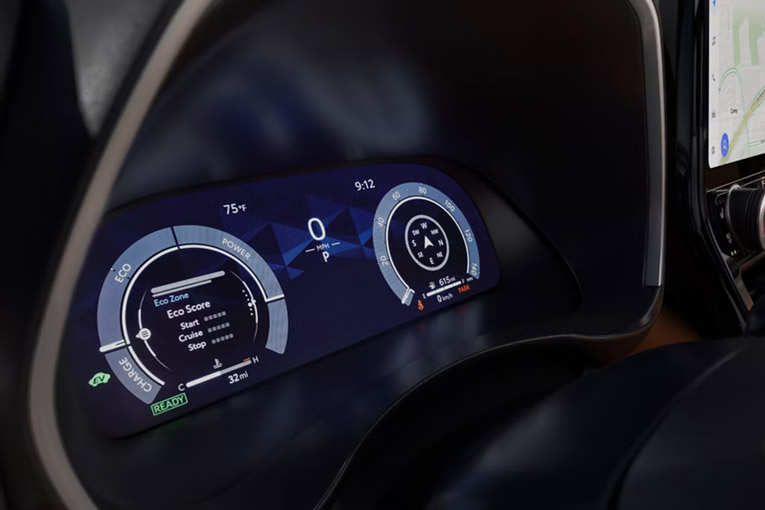
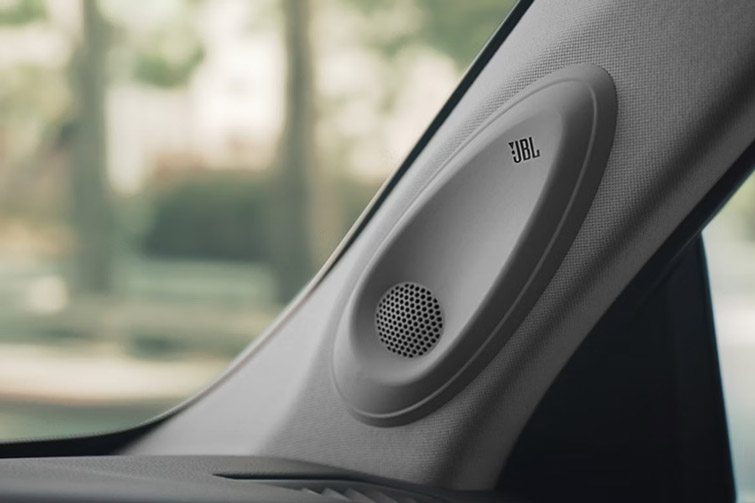
For audio, the Highlander is equipped with a JBL® premium audio system featuring 11 speakers and 1,200 watts of power, delivering stunning bass performance. In addition, the Highlander also offers configurations like a panoramic sunroof and captain’s chairs. However, the Highlander’s Head-Up Display measures 10 inches, and some tech features rely more on paid subscription services, such as cloud-based navigation and the Wi-Fi hotspot.
Interior Space Comparison:
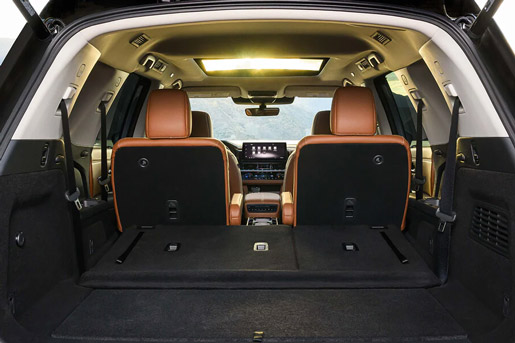
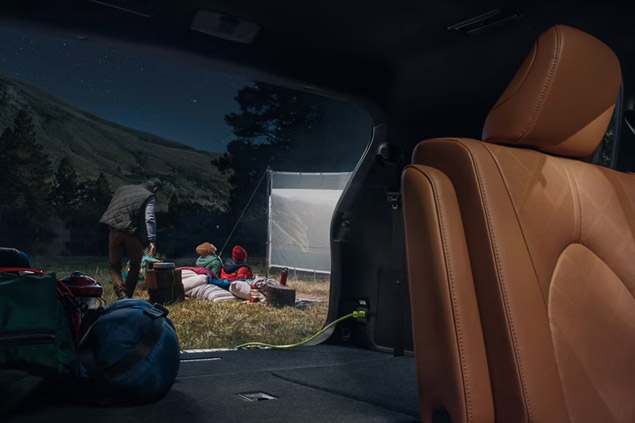
In terms of space utilization, both vehicles can comfortably accommodate 8 passengers. With the second and third rows folded down, the Nissan Pathfinder can provide a massive 80.5 cubic feet of storage space, and it also features a hidden underfloor storage compartment, which is very suitable for storing valuables or snacks. The Highlander’s storage space is also flexible and versatile, but it slightly trails behind in absolute cargo volume.
4. Safety Performance: All-Round Protection
For a family SUV, safety is a non-negotiable baseline. Fortunately, both of these vehicles place safety as their highest priority.
Nissan Pathfinder: Top-Tier Safety Certification
The 2026 Pathfinder performs excellently in safety crash tests. It not only earned the TOP SAFETY PICK+ highest distinction from the Insurance Institute for Highway Safety (IIHS) but also received a 5-Star Overall Vehicle Safety Rating from the National Highway Traffic Safety Administration (NHTSA). This is more than enough to prove that its body structure is extremely robust.
In terms of active safety, the Pathfinder comes standard with the Nissan Safety Shield® 360 suite, which encompasses Automatic Emergency Braking with Pedestrian Detection, Blind Spot Warning, Lane Departure Warning, Rear Cross Traffic Alert, and High Beam Assist. The more advanced ProPILOT Assist system combines Adaptive Cruise Control with Lane Centering, greatly alleviating driving fatigue in highway and congested traffic conditions.
Toyota Highlander: A Mature Safety System
The Highlander similarly comes standard with the Toyota Safety Sense 2.5+ (TSS 2.5+) system, whose functions are largely on par with Nissan Safety Shield® 360, including a Pre-Collision System, Dynamic Radar Cruise Control, Lane Departure Alert with Steering Assist, and Lane Tracing Assist. On higher-grade models, the Highlander also offers a 360-degree Panoramic View Monitor and Parking Assist with automatic braking.
Subtle Differences in Safety:
Both are extremely safe, but the crash test certifications attained by the Pathfinder for the 2026 model year are more eye-catching. Additionally, Nissan provides an Intelligent Forward Collision Warning with predictive sensing capability, which can monitor the dynamics of two vehicles ahead simultaneously, offering extra safety redundancy. The Highlander’s Lane Tracing Assist also performs excellently on roads with clearly marked lines.
5. Trim Level Configuration and Price Comparison: Which Offers More Bang for the Buck?
Finally, let’s talk about the most practical question — price.
Nissan Pathfinder Lineup:
- Entry-level SV FWD: Starting MSRP $39,900, standard with a 12.3-inch center touchscreen and Safety Shield® 360.
- Core model SL AWD: Starting MSRP $44,500, adds optional features like a 12.3-inch digital instrument cluster, wireless charging, and Bose audio, delivering extremely high value for the money.
- Off-road special Rock Creek AWD: Starting MSRP $45,000, offers increased horsepower, all-terrain tires, and exclusive exterior and interior styling.
- Top-tier Platinum AWD: Starting MSRP $51,400, features all luxury configurations, including a panoramic sunroof, Bose audio, ventilated seats, and a standard maximum towing capacity of 6,000 pounds.
Toyota Highlander Lineup:
- Mainstream choice XLE: Starting MSRP $45,870, equipped with 18-inch alloy wheels, wireless charging, and SofTex-trimmed seats.
- Sporty style XSE: Starting MSRP $47,940, featuring 20-inch black alloy wheels, a sport-tuned suspension, and a distinct exterior appearance.
- Luxury-oriented Limited: Starting MSRP $50,325, adds JBL audio, a 12.3-inch touchscreen, and front and rear parking assist.
- Flagship choice Platinum: Starting MSRP $53,525, bringing together top-tier features like a Head-Up Display, panoramic sunroof, and Panoramic View Monitor.
- Hybrid Models: The hybrid version starts with the XLE grade at $47,620 and goes up to the Platinum grade at $55,275.
Value Analysis:
It can be clearly seen that the Nissan Pathfinder’s starting price is more attractive. Even when upgrading to the very well-equipped SL AWD version, the price is only $44,500. Compared to the Highlander XLE at $45,870, the Pathfinder’s configuration also includes a 12.3-inch digital instrument cluster, a larger center screen, and a more powerful V6 engine. In short, at an equivalent price point, the Pathfinder often delivers richer comfort and technology features, while the Highlander’s value is embodied more in its brand reputation and unrivaled hybrid powertrain.
Conclusion: How Exactly Should You Choose?
After a comprehensive comparison, we can conclude that the 2026 Nissan Pathfinder and the Toyota Highlander are both outstanding three-row SUVs, but each is better suited to different groups of people.
Choose the 2026 Nissan Pathfinder first if you:
- Are passionate about V6 engines: You are enamored with the smoothness, quietness, and long-term reliability of a large-displacement naturally aspirated engine.
- Have heavy towing needs: You require a maximum towing capacity of 6,000 pounds to pull heavy toys like boats and RVs.
- Pursue value for money and a high-tech feel: You want to obtain cutting-edge tech features like dual 12.3-inch screens and a Head-Up Display on a smaller budget.
- Seek a quieter cabin environment: You appreciate its standard acoustic laminated glass and excellent NVH control.
- Occasionally need off-road capability: The Rock Creek edition provides factory off-road upgrades, saving you the hassle of aftermarket modifications.
Choose the 2026 Toyota Highlander first if you:
- Consider fuel economy the number one priority: You place extreme importance on the ultra-low fuel consumption delivered by the hybrid powertrain and want to significantly cut down on vehicle operating costs.
- Prefer the low-end torque and explosiveness of a turbo engine: You enjoy the instant acceleration feeling brought by 310 lb-ft of torque during city driving.
- Trust Toyota’s long-term value retention: You value the deep accumulation of the Toyota brand in terms of reliability and second-hand resale value.
- Have requirements for the brand’s service network: You prefer the complimentary ToyotaCare maintenance plan and roadside assistance service offered by Toyota.
In the final analysis, the best three-row SUV is the one that best matches your personal lifestyle and driving preferences. We recommend that you visit your local dealership and test drive both vehicles yourself, using your physical senses to determine which driving experience moves your heart more. Whichever path you choose, both possess the ability to lead your family toward broader horizons.
Looking for top-quality new or used cars? Trust DG Motors for fast, reliable service—or visit our Phnom Penh showroom today!