Contents
hide
- I. The Dilemma of Traditional Inspection: Why Do Manual Checks Often Fail?
- II. This Is Exactly Where AI Comes In: From “Seeing” to “Insight”
- III. Core Advantages: AI’s Three Magic Weapons to Defeat Human Inspectors
- IV. The Limitations That Current AI Prediction Still Faces
- V. Foreseeing the Future: An Era of Transparent Used Cars Dominated by AI
- Conclusion: Embrace AI, but Keep Your Hands on the Wheel
Buying a used car is, in essence, a game of information asymmetry. You might be drawn to a coupe with a gleaming exterior and a spotless interior, and the salesperson will assure you that it is in “perfect condition, lady-driven, only used for commuting.” Yet, after you have paid the full amount with joy and taken it to a repair shop for maintenance, you are told that the frame rail shows signs of repair or that the airbag was once deployed. These “hidden accident records” are precisely the biggest fear of used car consumers.
Therefore, an urgent question stands before us: In 2025, can the booming development of artificial intelligence help us predict these secrets buried deep beneath the sheet metal? Furthermore, has AI evolved to the point where, with just a few photos or a short audio clip, it can sniff out a black history that has been deliberately erased?
This article will take you deep into the intersection of artificial intelligence and used car inspection. Starting from the limitations of traditional appraisal, it will analyze all the way through to the black technology of deep learning algorithms, and ultimately deliver a rational and highly anticipated answer.
I. The Dilemma of Traditional Inspection: Why Do Manual Checks Often Fail?
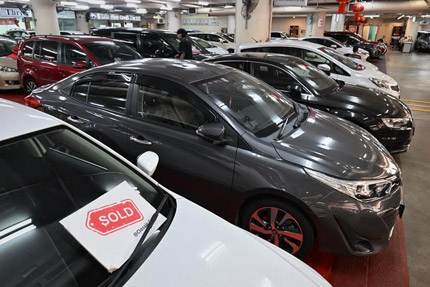
First, we need to understand why hidden accident cars are so difficult to eliminate. Even seasoned veteran mechanics often find themselves struggling when facing modern sophisticated repair craftsmanship.
On the one hand, this is an extreme challenge to the limits of physical strength and experience. Traditional inspection relies on the naked eye to observe paint thickness, fingers to feel the shape of weld spots, and ears to listen for abnormal engine noises. However, the human senses tire easily and are highly susceptible to deception by ambient lighting. Worse still, today’s “meticulously restored cars” have reached the pinnacle of skill: repairers reapply sealant using factory processes and even forge the factory texture on the putty layer, making it nearly impossible to distinguish with the naked eye.
On the other hand, information silos are a fatal blind spot. A vehicle may have suffered a major accident in City A, been repaired privately without going through an insurance claim, and then made its way to a used car market in City B thousands of miles away. Because data is not interconnected, the vehicle’s maintenance and insurance claim records can appear completely blank on search platforms. Consequently, relying solely on manual physical inspection is like the blind men feeling the elephant — it is exceedingly difficult to piece together the complete truth. Given this, the industry urgently needs a new tool that can break down the boundaries between physical and data realms, and artificial intelligence has precisely stepped into the spotlight.
II. This Is Exactly Where AI Comes In: From “Seeing” to “Insight”
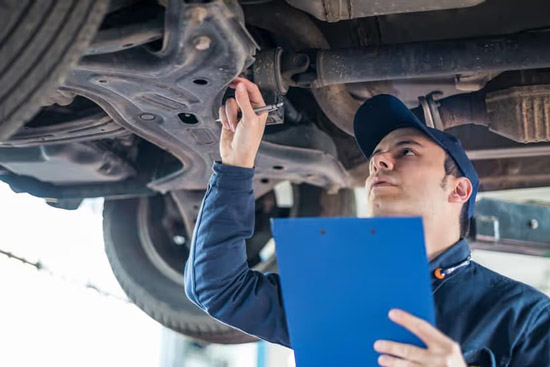
To answer whether AI can predict hidden accidents, we must first clarify the true meaning of “prediction” in this context. Strictly speaking, AI is merely an anomaly detection system trained on massive amounts of data. Its working logic is far more rigorous than the “gut feelings” of traditional mechanics.
First, the most intuitive application is deep scanning through computer vision. Today’s AI models, trained on millions of photos of damaged and repaired vehicles, can already identify microscopic features that the human eye overlooks. For instance, it not only detects micron-level differences in paint thickness, but also judges whether a door has undergone stretched sheet-metal repair by analyzing the reflective curvature of the metal surface. Incidentally, this technology can even infer whether a component has been removed by examining the fracture pattern of the coating on the edges of fastening screws.
Second, natural language processing and generative AI play a crucial role in historical data mining. Hidden accident records are often buried deep within the massive unstructured data on the internet — for example, repair photos posted by a certain body shop on social media several years ago, or old chat logs in some car enthusiast group. Meanwhile, AI can automatically cross-reference the vehicle’s VIN and license plate number, scanning the entire web within milliseconds and piecing together these information fragments. Furthermore, it can even identify logical loopholes where descriptions do not match physical reality: for example, the odometer shows only 30,000 kilometers, but AI analyzes the wear pattern of the seat fabric from auction records and finds it corresponds to a state of over 100,000 kilometers — this automatically triggers an odometer tampering alert.
Finally, the most forward-looking application lies in IoT data and voiceprint recognition. The prediction of the future is not merely about finding damage after the fact, but about listening for trouble beforehand. Using specific acoustic sensors, AI can analyze the voiceprint spectrum of the engine and identify abnormal resonant frequencies caused by post-repair structural damage, something that is utterly undetectable in traditional inspections.
III. Core Advantages: AI’s Three Magic Weapons to Defeat Human Inspectors
Since AI can do so much, what exactly are its core advantages over traditional manual inspection? We can boil it down to three dimensions:
Perceptual Precision That Surpasses the Human Body
The human eye cannot see folds and deformations hidden inside the A-pillar, but an AI detector based on millimeter-wave or terahertz imaging can. Specifically, AI never gets tired, never slacks off because it is a Friday afternoon. It can apply a constant and stringent standard, conducting deviation analysis between the scan results and the cloud-based 3D digital model.
Unrivaled Data Memory and Correlation Ability
A human inspector might remember a few hundred common fault codes, but AI can remember hundreds of millions. To give an example, for a car that looks flawless, AI suddenly issues a “high-risk accident” warning. The reason turns out to be that three years ago, on an obscure online forum, someone posted a complaint that the car’s frame number had been exposed to fire in a repair shop. This kind of cross-platform, cross-year correlation ability is beyond the reach of the human brain.
Objective and Emotion-Free Assessment
During the transaction phase, humans are often influenced by the “halo effect” — a car is polished to a mirror shine and the price is low, making it easy to subconsciously overlook flaws. In contrast, AI has no emotions. It only believes in feature vectors and probability distributions, entirely eliminating subjective bias and fraudulent guidance from the parties involved in the transaction.
IV. The Limitations That Current AI Prediction Still Faces
However, while we praise AI’s powerful capabilities, we must also squarely face a brutal reality: current AI is still incapable of 100% “hidden accident prediction.”
This is mainly constrained by several key difficulties:
- “Undetectable Repair” completely deceives the sensors. If an accident car has not gone through insurance, has been repaired at a top-tier workshop using “paintless dent repair” techniques that do not damage the original paint surface, has even had its parts replaced with genuine dismantled components, and has generated no fault codes whatsoever, then any current civilian-level AI vision or OBD inspection equipment is likely helpless. In short, AI can only detect anomalies that exist; it is very difficult for it to detect anomalies that have been perfectly erased and left no digital trace.
- Data privacy and the silo effect. This is a critical bottleneck. The intelligence of AI depends on the quality of the data fed to it. However, many insurance companies, 4S dealerships, and repair shops, out of privacy and business protection concerns, do not fully open their entire datasets to the public. As a result, AI models are often working “on an empty stomach,” and their prediction coverage is naturally greatly reduced.
- The gap in cost and popularization. Top-tier industrial-grade AI inspection equipment (such as large CT scanners or infrared thermal wave imaging) is bulky and expensive, making it very difficult to popularize among roadside used car dealers. Therefore, for ordinary consumers, what they can access are mostly lightweight AI solutions at the mobile app level, whose depth of prediction is far from comparable to laboratory equipment.
V. Foreseeing the Future: An Era of Transparent Used Cars Dominated by AI
Nevertheless, we are at an inflection point of exponential evolution. Looking to the future, AI will not merely be an inspection tool; it will evolve into the guardian of a full-lifecycle “vehicle digital passport.”
In the near future, the combination of blockchain and AI will become standard. From the moment the car rolls off the production line, every maintenance record, every insurance claim, and even the impact-force sensor data from every rear-end collision will be encrypted and uploaded to the chain. Once someone tries to tamper with the mileage or conceal repair records, the AI consensus mechanism will immediately detect the breakpoints in the data ledger and permanently mark them.
Going a step further, predictive AI will evolve from “whether there has been an accident” to “where a failure is about to occur.” When inspecting a used car, the AI system, by analyzing the previous owner’s driving style data (frequency of hard acceleration and sudden braking) and combining it with physical simulation models, can even predict that, although the gearbox is not broken now, it is highly likely to require a major overhaul within six months after purchase. This kind of prediction is precisely the advanced form of preventing problems before they happen.
Therefore, let us return to the original question: “Can artificial intelligence predict whether a used car has hidden accident records?”
The answer is: partially yes, and it is evolving rapidly.
It can identify the vast majority of disguised structural damage and historical data fraud with astonishing accuracy, greatly reducing your probability of falling into a trap. However, it still cannot temporarily replace the final physical road test and lift inspection conducted by a conscientious human inspector. The wisest approach is to treat the AI report as a high-precision “filter” and “clue provider” to guide your decision, rather than treating it as a certificate for skipping an inspection.
Conclusion: Embrace AI, but Keep Your Hands on the Wheel
Artificial intelligence has already thoroughly torn apart the iron curtain of information asymmetry in the used car market. As a consumer, you are far luckier than your counterparts from five years ago — you now hold in your hands numerous AI tools for price checking, record searching, and damage identification. However, as technology advances, deception techniques also evolve. True safety comes from a clear-headed understanding of the boundaries of AI’s capabilities: make good use of its piercing eyes to filter out falsehoods, while retaining the final confirmation based on physical reality by humans. Only in this way can you navigate the complex used car market and safely drive home the car you truly desire, free of hidden ailments.
Looking for top-quality new or used cars? Trust DG Motors for fast, reliable service—or visit our Phnom Penh showroom today!